
Local service guide
Furniture delivery in Charlotte, NC
Furniture delivery in Charlotte starts with identifying whether you need a retailer’s delivery service or a mover for furniture you already own. North Carolina excludes new furniture and retail deliveries from its household-goods moving regulation, while regulated in-state household movers need a Commission-issued C-number. Before booking, agree on placement, assembly, access, the total charge, and damage handling in writing. [1] [2]
Choose the service by the work you need
Describe the pickup and the finish you expect. For a store purchase, ask the retailer who will deliver it and who handles a missed appointment or damage complaint. For furniture you own, ask the carrier whether it will perform the job as a regulated North Carolina household-goods move. The Commission excludes interstate shipments from its jurisdiction, so do not assume its in-state rules cover a trip across the state line. [1]
Ask the provider to define its service labels. Specify whether the crew must bring the piece through the entrance, carry it to a named room, climb stairs, assemble it, and remove packaging. Put each requested task in the quote. For a private-seller pickup, agree who will release the item, when the crew can collect it, and whether anyone must disassemble it first.
Get a quote that reflects the access
Send the same item list, photos, addresses, and access description to each provider you compare. Ask whether the charge includes travel, waiting, stairs, elevator use, and carrying furniture between the truck and the entrance. The Commission lists long carries, shuttle service, and stairs or elevators among possible extra services for regulated moves, with applicability depending on how the mover bills the job. [1]
For regulated in-state moves, the Commission describes hourly billing for distances of 35 miles or less and weight-and-distance billing beyond 35 miles. Ask the mover to explain its billing basis and any travel charge. Request a written estimate, while recognizing that the Commission does not require one for shipments under 500 pounds or requests made fewer than five business days before the move. [1]
For a retail order, get the total price including shipping and the delivery date in writing. Ask what you would owe if the crew cannot complete delivery because the piece will not fit, and what happens if you need to change the appointment. Keep the answer with your order confirmation. [2]
Measure the route before committing
Measure the destination and the full access path before ordering. NCDOJ warns that most retailers will not return your money because furniture does not fit. Share the narrowest doorway, stair landing, and turning space with the provider, and ask it to assess the route before you commit. [2]
For a building with shared access, ask management about delivery hours, elevator reservations, loading access, and any insurance paperwork it requires. Pass those instructions to the dispatcher and ask for acknowledgment. Include the unit number, entry instructions, and a contact who can meet the crew.
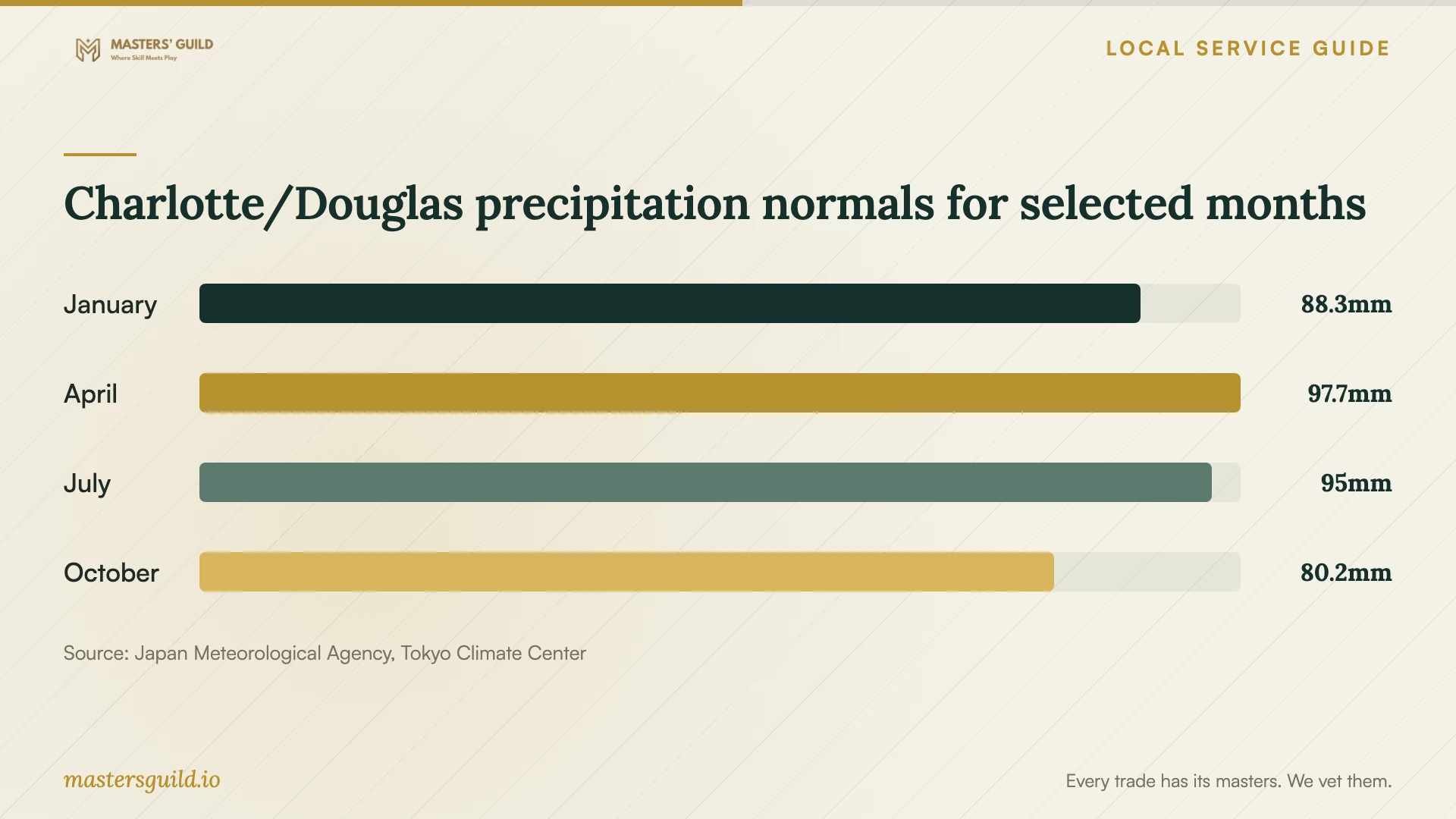
Plan a protected unloading route and ask how the crew will cover furniture between the truck and your door. The Charlotte/Douglas climate table reports precipitation normals in each month. Use that as a reason to discuss rain protection, then use the delivery-day forecast for scheduling decisions. [3]
Settle damage protection before pickup
For a regulated household move, ask about both the mover’s insurance and your valuation choice. The Commission distinguishes the insurance a carrier holds from the valuation that governs settlement of your loss or damage claim. Select valuation before loading starts; the Commission says you cannot change it once the move begins. [1]
Photograph the furniture before pickup, including existing marks, corners, legs, and removable parts. For a private purchase, ask the seller to let you or your representative inspect it before the crew loads it. Agree how the provider will document condition at collection and delivery.
Inspect before signing acceptance
For new furniture, inspect the item before accepting delivery or approving payment. NCDOJ advises consumers to refuse damaged or defective furniture and warns that a retailer may agree to repair an accepted item without having to replace it or refund the purchase. If you discover defects after acceptance, send the retailer a written complaint with photographs and copies of your purchase documents. [2]
For a regulated household move, inspect with the driver, record damage, and obtain the claim form. The Commission says that noting damage on the delivery paperwork does not replace filing a claim. Keep damaged items and their packaging, retain copies of the moving documents, and file with the mover as soon as possible, no later than nine months after delivery. [1]
Charlotte/Douglas precipitation normals for selected months
Local details that affect your job
North Carolina credential checks depend on the delivery
For a regulated household-goods move within North Carolina, ask for the mover’s C-number and check the Commission’s carrier list. The Commission updates that list monthly and provides 919-733-7766 for checking current status. New furniture and retail deliveries fall outside this regulation, so use the retailer’s written delivery and complaint terms for those purchases. [1]
Engineered-wood furniture has a specific liability limitation
For moves covered by its guide, the North Carolina Utilities Commission describes a liability limit for ready-to-assemble particleboard and similar engineered-material furniture: $0.60 per pound per article or $50 per article, whichever is greater, regardless of valuation selected. Before moving an assembled bookcase or desk of this type, ask the mover to confirm the applicable protection and discuss whether disassembly is feasible. [1]
Match the booking questions to your delivery
| Your situation | What to establish | Next step |
|---|---|---|
| New furniture from a retailer | The Commission excludes new furniture and retail deliveries from household-goods regulation. | Get the retailer’s delivery, return, warranty, and damage terms in writing. |
| Furniture you own moving within North Carolina | Regulated intrastate household-goods movers need a C-number. | Check certification and agree on the estimate and valuation before pickup. |
| A route crossing the state line | The North Carolina Commission excludes interstate shipments from its jurisdiction. | Ask the carrier which terms and protections govern the shipment. |
| Assembled particleboard furniture | The Commission describes a special liability limit even when you select higher valuation. | Discuss construction, condition, disassembly, and protection before booking. |
Your hiring checklist
- Send item dimensions, photos, pickup and delivery addresses, and the requested room placement.
- Measure doors, turns, stairs, and the final furniture position.
- Ask building management about delivery access and elevator arrangements.
- Get placement, assembly, packaging removal, and access charges in writing.
- Confirm the arrival window, payment method, and procedure for a failed delivery.
- Agree on furniture protection and photograph condition before pickup.
- Arrange for someone to inspect the furniture and retain the delivery paperwork.
Frequently Asked Questions
Does a furniture delivery provider need a North Carolina C-number?
A regulated intrastate household-goods mover does. The Commission excludes new furniture and retail deliveries from its jurisdiction. Describe the purchase and route to the provider before deciding which credential check applies. [1]
Will the crew assemble my furniture?
Confirm assembly in writing. For regulated moves, the Commission says crews reassemble items they disassembled at origin, but do not assemble items that others disassembled. Ask about your specific piece before pickup. [1]
Should I accept a new sofa with damage?
NCDOJ advises refusing damaged or defective furniture before accepting delivery or signing payment approval. Photograph the issue and contact the retailer to document your next step. [2]
Does the mover’s insurance guarantee replacement value?
For regulated North Carolina moves, the Commission says your valuation choice governs claim settlement. Basic protection limits liability to $0.60 per pound of the damaged or lost item. Ask about full value protection and applicable limitations before loading. [1]
Sources and scope
This guide combines the sources below with practical planning guidance. Figures apply to the stated geography and period; request a written quote for your property.