
Local service guide
Charlotte electrical repairs: hiring and planning
For electrical repairs in Charlotte, choose a contractor whose North Carolina electrical license classification covers the proposed work, and agree on the diagnostic charge before the visit. Ask the contractor to separate troubleshooting, repairs and any inspection coordination in the quote. For flood or meter-box damage, confirm the current reconnection steps with your utility before scheduling the work. [1] [2]
Describe the problem before choosing the repair
Arrange a troubleshooting visit when you cannot identify the cause. Tell the electrician which outlets, lights or appliances lose power, whether the problem affects one room or several, and what you were using when it happened. Include any recent water exposure or work on the property. Ask the contractor to explain the diagnosis before you authorize a repair.
For smoke, fire or an immediate threat to life, leave the affected area and contact emergency services. Avoid opening electrical equipment, touching exposed wiring or approaching a damaged meter box to collect information. Take photographs only from a safe position. Tell the contractor about heat, burning smells or visible damage when arranging the visit so they can assess the urgency.
If neighboring properties also lack power, check your utility's outage information before booking household troubleshooting. In its September 2024 storm announcement, Duke Energy directed customers to its outage map for restoration estimates. Ask the utility whether it has identified an area outage; tell the electrician if your home still has a problem after the utility restores service. [2]
Check the license against the actual job
Ask for the business name, electrical license number, classification and expiration date. The North Carolina State Board of Examiners of Electrical Contractors provides a license-search route on its licensing page. Compare the contractor's details with the board's record, and ask for an explanation if the quote uses a different business name. [1]
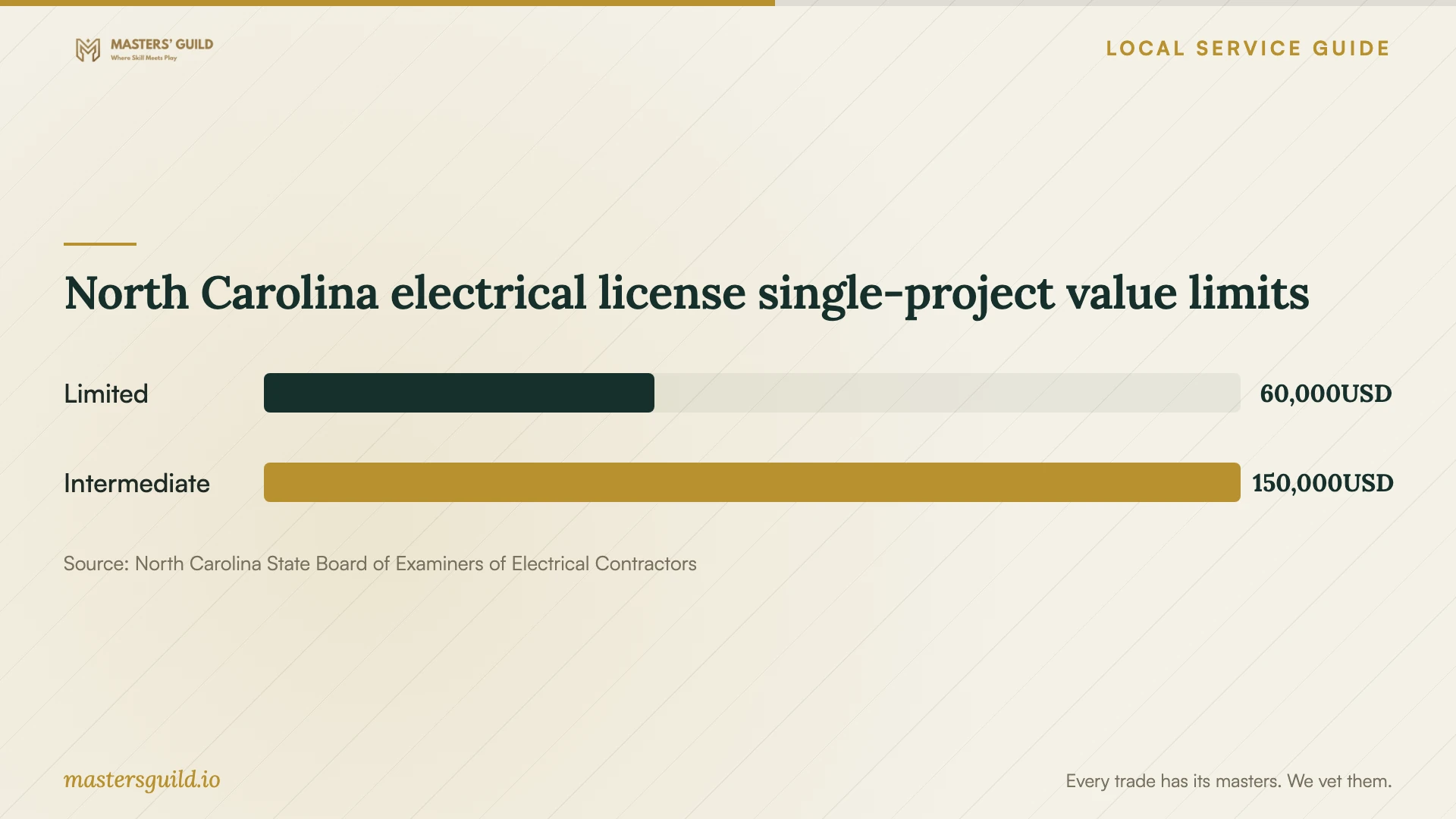
The board lists Limited, Intermediate and Unlimited licenses, plus seven Special Restricted classifications. Those restricted classifications cover limited phases of electrical contracting. A contractor's specialty credential therefore needs a scope check before you hire them for a broader household repair. Ask the contractor to identify the classification that covers your proposed work. [1]
Request proof of insurance and a written description of the work. For any proposed wiring alteration or service work, ask who will confirm the permit and inspection requirements for your address, who will arrange them, and whether the quote includes those tasks. Keep the contractor's answer with the estimate rather than assuming all electrical repairs follow the same process.
Agree on diagnosis, repair and payment
Ask whether the first visit includes a service charge, a set diagnostic allowance or hourly troubleshooting. Have the contractor state what happens if they find a problem outside that allowance. Set an approval point: the electrician should contact you with the findings, proposed repair and revised total before proceeding beyond the agreed scope.
Compare written estimates for the same work. Request separate descriptions for parts, labor, access or wall repair, and any permit or inspection coordination. Ask whether the estimate includes taxes and any after-hours charge. If the electrician proposes replacing additional equipment, ask what finding supports that recommendation and whether it belongs in the immediate repair or a separate project.
Ask how the contractor will test the completed repair and document the result. Request the warranty terms in writing, including whom to contact if the same symptom returns. Before payment, review the invoice against the approved scope and keep any inspection or utility correspondence with your property records.
Coordinate storm damage with the utility
Separate the property's repair work from the utility's restoration work when arranging storm-damage service. In its September 28, 2024 Carolinas announcement, Duke Energy said it could not reconnect flooded homes or businesses until their electrical systems passed inspection by a licensed electrician. Where damage existed, it also called for repairs and verification from the local building inspection authority before restoration. [2]
That announcement also told owners of damaged meter boxes, including boxes pulled away from a structure, to enlist an electrician for reattachment or a permanent repair. Duke Energy noted that some cases could require county inspection before reconnection. Use this historical guidance to frame your questions, then confirm the current requirements with Duke Energy if it serves your address. [2]
Before accepting a storm-repair quote, ask who will communicate with the utility, obtain any required inspection verification and arrange the next step toward reconnection. Ask which documents you should receive. Avoid treating the electrician's completion date as a promised utility reconnection date; request separate expectations from each party.
Record problems that occur during summer use
The supplied National Weather Service report for Charlotte recorded 23 days with maximum temperatures of at least 90 degrees Fahrenheit in July 2026, compared with a 1991–2020 July normal of 18 days. This describes one month's weather, not the condition or capacity of your home's wiring. [3]
If you noticed electrical problems while using cooling equipment, describe which equipment was running and whether other devices shared the affected area. Ask the electrician to investigate the symptom before recommending a circuit or panel change. The weather report cannot establish an overload, explain a breaker trip or justify an upgrade at your property. [3]
North Carolina electrical license single-project value limits
Local details that affect your job
North Carolina restricted licenses need a scope check
The state board distinguishes general electrical license classifications from seven Special Restricted classifications, including residential dwelling and plumbing, heating and air conditioning specialties. Before hiring someone for household troubleshooting beyond their specialty, ask them to identify the license scope that covers the repair and verify their details through the board's license-search route. [1]
Flood damage can require inspection verification before restoration
Duke Energy's September 2024 Carolinas guidance required flooded electrical systems to pass inspection by a licensed electrician before reconnection, with repairs and local inspection-authority verification where damage existed. If Duke Energy serves your home, confirm its current requirements and include responsibility for inspection coordination in the repair agreement. [2]
A damaged meter box needs a separate repair conversation
In the same announcement, Duke Energy directed property owners to hire an electrician for damaged or detached meter boxes, including at properties that still had power. It noted that county inspection could be necessary before reconnection in some cases. Report the damage to the utility and ask the electrician to confirm the repair and inspection sequence for your address. [2]
Choose the next step for your repair
| Situation | Next step | Question to resolve |
|---|---|---|
| Several neighboring properties lack power | Check utility outage information before arranging household diagnosis. | Has the utility identified an area outage? |
| A recurring problem affects part of your home | Arrange troubleshooting with a contractor whose license covers the work. | What diagnosis does the initial charge include? |
| Floodwater reached electrical equipment | Confirm current utility requirements and arrange electrician assessment. | Who will obtain any inspection verification needed for reconnection? |
| The meter box is damaged or detached | Discuss repair with an electrician and report the damage to your utility. | Does this case require inspection before reconnection? |
Your hiring checklist
- Record the affected rooms, devices and circumstances without opening electrical equipment.
- Give the contractor any photographs you can take from a safe position.
- Verify the business name, license classification and expiration date with the state board.
- Request proof of insurance and a written work description.
- Agree on diagnostic charges and an approval point for additional work.
- Ask who will confirm and arrange any permit, inspection or utility coordination.
- Keep the final invoice, warranty terms and any inspection verification.
Frequently Asked Questions
Does a North Carolina electrical license cover every repair?
Check the classification. The state board assigns specific scopes and limitations, and its Special Restricted licenses cover limited phases of electrical contracting. Ask the contractor which classification covers the work in your estimate and verify the license details with the board. [1]
Can Duke Energy reconnect a flooded home once an electrician visits?
A visit alone did not satisfy Duke Energy's September 2024 guidance. The utility required the electrical system to pass inspection by a licensed electrician and, where damage existed, required repairs and local inspection-authority verification. Confirm the current requirements for your property before arranging reconnection. [2]
How should I compare repair quotes without a local price guide?
Ask each contractor to quote the same diagnostic allowance and proposed scope. Compare included parts, labor, access repairs, taxes and any inspection coordination. Agree on how the contractor will obtain your approval if the diagnosis changes the repair or total.
Does hot weather mean I need a panel upgrade?
Ask an electrician to assess your equipment and symptoms before approving an upgrade. Charlotte's July 2026 weather report describes outdoor conditions; it does not measure your electrical demand, wiring condition or panel capacity. Tell the electrician which devices were operating when the problem occurred. [3]
Sources and scope
This guide combines the sources below with practical planning guidance. Figures apply to the stated geography and period; request a written quote for your property.