
Local service guide
Duct and Vent Cleaning in Charlotte, NC
Arrange Duct and Vent Cleaning in Charlotte by asking a contractor to inspect the system, show the contamination, and give you a written scope and total before work starts. EPA recommends air duct cleaning as needed for substantial mold, pests, or excessive debris, rather than routine cleaning. Ask for separate cleaning and repair charges: North Carolina exempts ductwork and dryer vent cleaning, while component repairs can receive different tax treatment. [1] [2]
Decide whether you need cleaning or an inspection
Start with what you can see. EPA identifies substantial visible mold inside hard-surface ducts or other system components, vermin infestation, and excessive dust or debris as reasons to consider cleaning. Ask the contractor to show you the affected areas. A dusty return grille does not establish that the ducts contain heavy deposits. [2]
Ask for an explanation before accepting a mold diagnosis. EPA says an expert must identify suspected mold and may need laboratory analysis. Correct the moisture source before cleaning. For wet or moldy duct insulation, EPA recommends removal and replacement because cleaning cannot resolve that condition. [2]
Avoid buying cleaning on a promise to prevent illness or reduce energy bills. EPA says duct cleaning has not demonstrated prevention of health problems, and little evidence supports efficiency gains from cleaning ducts alone. Discuss unexplained health symptoms with your doctor. [2]
Get a quote you can compare
Request a written agreement naming the system components, total cost, and exclusions. EPA advises homeowners to compare at least three providers and have the contractor clean all components of a contaminated system. Its description includes supply and return ducts, registers, coils, drain pans, fans, and the air-handler housing. [2]
Give each bidder the same information: your system count, equipment locations, accessible registers, and the problem you want investigated. Ask each to separate inspection, cleaning, dryer exhaust work, component repairs, and optional treatments. Have the provider explain any inaccessible areas before you agree to the scope.
Ask for an expected work duration and any interruption to heating or cooling. If the provider bills by the hour, EPA recommends requesting an estimate of the hours or days required. Agree on how the contractor will obtain your approval for extra work. [2]
Check cleaning methods and optional treatments
Ask how the crew will collect loosened debris. EPA recommends equipment that exhausts particles outdoors, or HEPA vacuum equipment when it exhausts indoors. The provider should protect furnishings, use methods suited to the duct material, and seal and reinsulate access holes after cleaning. [2]
Tell the bidder if you know your system contains flexible ducts or fiberglass lining. EPA recommends soft-bristled brushes for fiberglass duct board and fiberglass-lined metal ducts. Ask the crew to inspect for suspect asbestos-containing materials before disturbing insulation or register boots; EPA calls for specialized contractors to handle those materials. [2]
Require a separate explanation for chemical treatments. EPA does not recommend routine encapsulating sealants and says no biocides have EPA registration for fiberglass duct board or fiberglass-lined ducts. Before approving a biocide, ask to see its label and the reason physical cleaning and moisture control cannot resolve the problem. EPA does not certify duct-cleaning companies. [2]
Prepare access and inspect the finished work
Clear a route to equipment and registers, move fragile belongings, and agree on a place for pets during the visit. For a condominium or shared building, ask your property manager who controls access to equipment and the dryer exhaust outlet. Confirm any access arrangements with the crew before the appointment.
Ask the provider to show you the cleaned components before you sign off. EPA recommends a visual inspection and notes that contractors may use remote photography inside ducts. Check that the crew reattaches registers, restores access openings, and demonstrates system operation. Ask the provider to address visible debris or damage. [2]
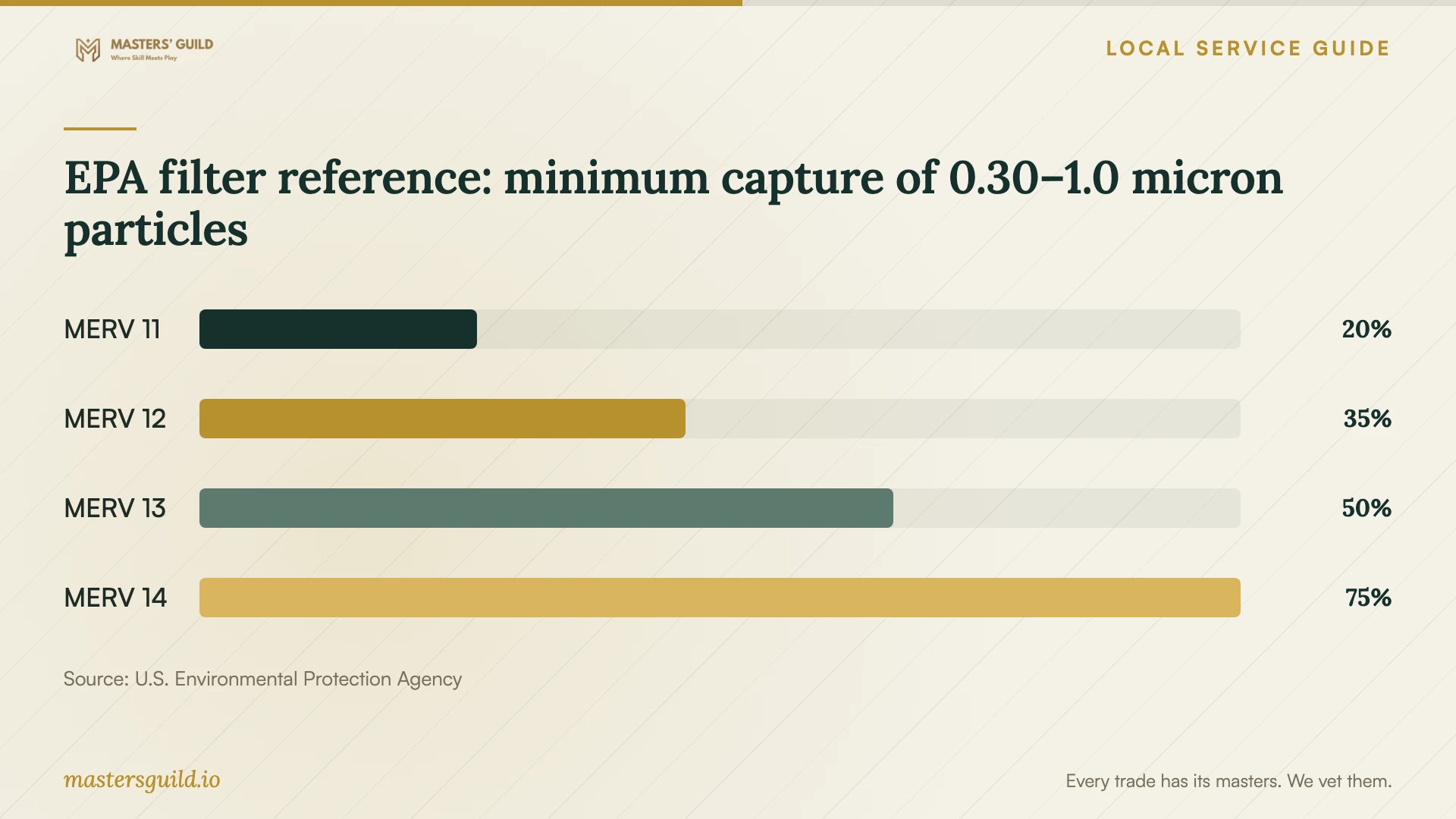
Keep up with filter maintenance after the visit. EPA advises choosing an efficient filter that your system fan and filter slot can accommodate and following manufacturer replacement instructions. Ask your HVAC technician about compatibility before increasing the MERV rating. The chart compares filter performance, not the benefits of duct cleaning. [3]
EPA filter reference: minimum capture of 0.30–1.0 micron particles
Local details that affect your job
North Carolina exempts duct and dryer vent cleaning
For your Charlotte estimate, check the cleaning charge before accepting sales tax on it. The North Carolina Department of Revenue lists dryer vent cleaning and cleaning ductwork to remove mold, dust, or other pollutants as exempt. If a provider taxes a cleaning-only charge, ask them to explain the classification using the state chart. [1]
Separate repairs from cleaning in a bundled job
North Carolina lists repairs, maintenance, or replacement of central air-conditioning component parts, including ductwork sections, as taxable, subject to the chart's exceptions. It treats an entire ductwork-system replacement as a capital improvement when substantiation requirements are met. If your inspection leads to replacement recommendations, request a revised, itemized scope and ask the provider to explain each charge's tax treatment. The state warns that the facts of a transaction can change the result. [1]
Choose the next step from the inspection findings
| Finding | Next step | Question to ask |
|---|---|---|
| Dust on return grilles only | Clean accessible grilles and assess further evidence | Can you show heavy deposits inside the system? |
| Excessive debris or particles from supply registers | Consider cleaning after investigating the cause | Which components need cleaning? |
| Suspected mold on hard-surface ducts | Confirm the finding and correct moisture | Can you show the affected area and explain the moisture source? |
| Wet or moldy duct insulation | Discuss removal and replacement | Which sections need replacement, and what caused the moisture? |
| Cleaning plus duct-section repairs | Request separate scope and tax explanations | How have you classified the cleaning and repair charges? |
Your hiring checklist
- Describe the visible problem and ask the contractor to document its location.
- Give each bidder the same system and access information.
- Request an itemized scope with exclusions and a total.
- Ask how the crew will protect your duct material and collect debris.
- Review optional treatments before authorizing them.
- Separate cleaning from repairs and ask about tax classification.
- Clear access and confirm property-manager arrangements if needed.
- Review cleaned components and system operation before signing off.
Frequently Asked Questions
How often should I book air duct cleaning?
EPA recommends cleaning as needed rather than on a routine schedule. Ask for inspection evidence before committing to recurring cleaning. Continue filter changes and heating and cooling maintenance according to the equipment manufacturer's guidance. [2] [3]
Does a duct-cleaning quote include the dryer vent?
Ask the provider to name dryer exhaust cleaning as a separate item or an explicit inclusion. Do not assume that a quote covering heating and cooling ducts includes it. Request the proposed access method and any exclusions.
Should I approve sanitizer during the appointment?
Ask the provider to show the contamination, identify your duct material, explain the need, and provide the product label before you decide. EPA cautions about chemical treatments and says no biocides have EPA registration for fiberglass duct board or fiberglass-lined ducts. [2]
Can a better filter replace duct cleaning?
Choose filtration and cleaning according to different needs. EPA's MERV guidance compares particle capture and stresses system compatibility. Its duct-cleaning guidance recommends considering cleaning for substantial contamination. A higher filter rating does not establish that existing duct contamination has been removed. [2] [3]
Sources and scope
This guide combines the sources below with practical planning guidance. Figures apply to the stated geography and period; request a written quote for your property.