
Local service guide
Data recovery and backup in Charlotte, NC
Arrange data recovery and backup in Charlotte by defining the immediate job: retrieve missing files, restore a verified backup, or respond to a suspected attack. Ask the provider for a written diagnostic scope, approval limit, data-handling terms and a restore test. For ransomware, isolate affected systems and involve incident-response support before restoring business operations; CISA recommends recovery on a clean network. [4]
Define the recovery job before handing over equipment
Give the provider a short incident history: the device or account involved, when you last accessed the files, what changed, and what you have tried. Identify the folders, databases or applications you need first. Ask the provider to explain its proposed diagnostic work before you authorize repairs, resets or recovery attempts.
Separate file delivery from a return to working operations. If you need an accounting database, ask whether the provider will test it in the application. If you need a server restored, specify the applications and dependencies that must work at handover. Agree on who will check the result and what counts as completion.
For suspected ransomware, disconnect affected equipment from the network and contact your IT or incident-response team. CISA recommends isolating impacted systems first and powering devices down only when network disconnection is not possible, because shutdown loses potential evidence in volatile memory. Ask responders to coordinate evidence preservation and recovery. [4]
Compare written quotes and approval terms
Request an itemized quote covering diagnosis, recovery work, any outside laboratory, transport, return storage and tax. Ask which charges you owe if you decline the recovery proposal or the provider retrieves none of your priority files. Define any no-recovery payment condition in writing, including how the provider treats partial results.
Ask for separate dates for diagnosis, a recovery proposal and delivery. For urgent work, name the files you need first and ask whether the provider can deliver them before the remaining data. Require approval before the provider exceeds your spending limit or transfers equipment to another company.
NCDOR generally taxes retail repair, maintenance and installation services sourced to North Carolina unless a statutory exemption applies. Its definition includes troubleshooting and attempts to restore property to working condition. Ask the seller to identify the treatment of each quoted service, hardware purchase and subscription rather than assuming the whole package has one tax treatment. [3]
Agree on custody, access and deletion
Before handover, request a receipt identifying the equipment and a record of who receives it. Ask where the provider will store recovery copies, who can access them, whether subcontractors will handle them, and how you will receive the recovered data. Agree on retention and deletion terms for working copies after you accept delivery.
For customer or employee records, include an incident contact and reporting procedure in the agreement. North Carolina DOJ says businesses holding North Carolina residents' personal information for another company must notify the owner or licensee immediately after discovering a security breach. Ask the provider to explain how it will meet that responsibility. [1]
CISA recommends formalizing security requirements in contracts with managed service providers and limiting their access to their assigned responsibilities. Ask your provider to describe the access it needs, how you will authorize that access, and how you will remove it after the job. [4]
Specify a backup service you can test
List the business information you want protected, including data held in cloud applications. Tell the provider how much recent work you could afford to lose and how long you could operate without each system. Ask for a backup schedule, retention period and recovery procedure that address those limits.
CISA recommends maintaining offline, encrypted backups of critical data and testing their availability and integrity in a disaster recovery scenario. It warns that ransomware can delete or encrypt accessible backups. Ask the provider how it protects backup copies from compromised production accounts and how you would recover if those accounts became unavailable. [4]
Make a restore demonstration part of handover. Choose representative files and a critical application, agree on a safe test destination, and check the result with the person who uses the data. Ask who reviews backup failures, who receives alerts and who schedules future restore tests. Keep a copy of the recovery instructions accessible during an outage.
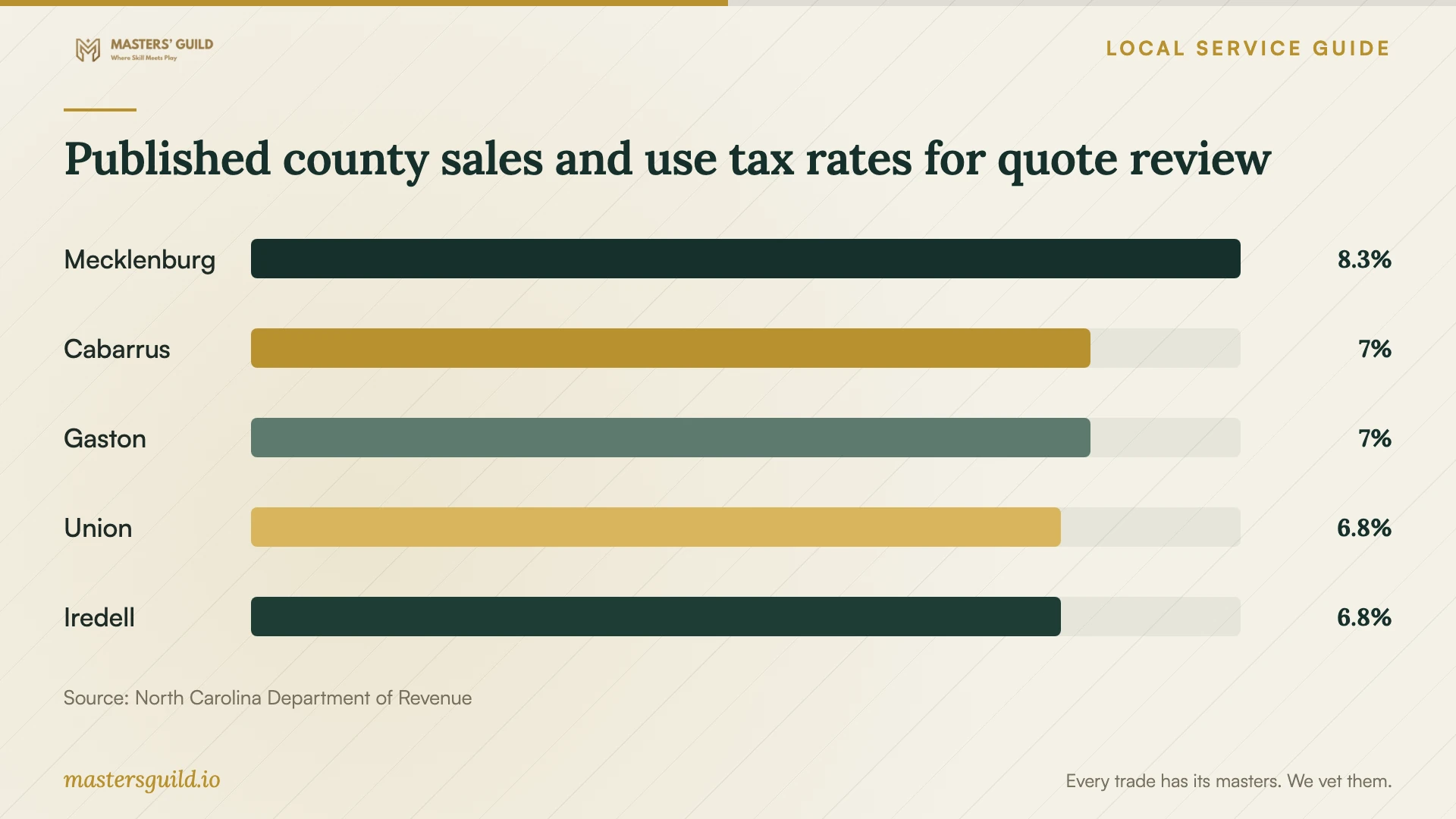
Published county sales and use tax rates for quote review
Local details that affect your job
Mecklenburg's tax increase affects quote review
NCDOR lists Mecklenburg County at 8.25% after an additional 1% local tax took effect July 1, 2026. For a taxable transaction sourced to Mecklenburg, ask the seller to confirm the current rate and show the tax calculation. If you compare a Charlotte quote with one from a neighboring county, have each seller explain sourcing and taxability before comparing totals. [2] [3]
North Carolina breach duties require a separate decision
North Carolina DOJ says businesses located in the state, or owning or licensing North Carolina residents' personal information, must notify affected people after a qualifying security breach. Notification must occur without unreasonable delay, subject to the stated law-enforcement exception. If your loss involves suspected unauthorized access to customer records, arrange a breach assessment alongside recovery and identify who will handle required notifications and reporting. An ordinary missing-file incident does not by itself establish a qualifying breach. [1]
Choose the scope that matches your situation
| Situation | Scope to request | Question before approval |
|---|---|---|
| Missing files without signs of an attack | Diagnostic assessment and targeted file recovery | Which priority files will you attempt to retrieve, and what will I owe for partial results? |
| Existing backup available | Backup verification and a planned restore | Can you demonstrate that the required files and applications work? |
| Ransomware or suspected network compromise | Incident response, evidence preservation and recovery on a clean network | Who will assess the compromise before we restore operations? |
| Ongoing business backup | Offline encrypted backup protection and regular restore testing | Who checks failures and proves that we can recover? |
Your hiring checklist
- Write down the incident timeline and any recovery attempts you have made.
- List priority files and the applications you need to use them.
- Ask for diagnostic charges, an approval limit and partial-recovery payment terms.
- Confirm equipment custody, subcontractors and the location of working copies.
- Agree on secure delivery, acceptance checks and deletion of retained copies.
- Request an itemized tax explanation for services, hardware and subscriptions.
- Include a restore demonstration and name the person responsible for future backup checks.
Frequently Asked Questions
Can I use the same provider for recovery and ongoing backups?
You can request both, but compare separate scopes and acceptance criteria. Ask the provider to describe its recovery capabilities, any outside laboratory work, and its plan for operating backups after handover. Require a restore demonstration before accepting the backup setup.
Does recovering files resolve a ransomware incident?
Arrange incident-response work alongside recovery. CISA says ransomware may follow an earlier unresolved compromise and recommends identifying associated malware before rebuilding from backups. Ask who will investigate unauthorized access, preserve evidence and confirm a clean recovery environment. [4]
Should every quote include 8.25% tax?
NCDOR lists 8.25% for Mecklenburg County, but applicability depends on the transaction's tax treatment and sourcing. Ask the seller to identify taxable items and explain exemptions or differing treatment. Do not use the county rate as proof that every recovery service or backup subscription is taxable. [2] [3]
Does a failed drive mean I must notify customers?
A failed drive alone does not establish a security breach. North Carolina DOJ's definition concerns unauthorized access or acquisition of covered personal information with specified misuse or risk of harm. If you suspect exposure, ask an incident-response specialist and legal adviser to assess the facts and notification duties. [1]
Sources and scope
This guide combines the sources below with practical planning guidance. Figures apply to the stated geography and period; request a written quote for your property.