
Local service guide
Moving Services in Charleston, WV: Plan Your Move
Arrange Moving Services in Charleston, WV by comparing written offers for the same inventory, checking who will transport your belongings, and settling truck access before booking. Ask each mover to document packing, stairs, carrying distance, payment terms, and responsibility for damage. For curbside loading, ask the city which application fits your address; Charleston lists bagged-meter, loading-zone, and temporary street-sidewalk closure forms. [1]
Choose the help you need
Start with a room-by-room inventory and decide which tasks you want to keep. You might pack boxes yourself and hire help for transport, or ask one company to pack, load, deliver, and place your belongings in the destination rooms. For labor-only help, identify who supplies and drives the vehicle and who provides blankets, straps, and handling equipment.
Flag anything that needs a separate handling plan, such as a piano, large safe, glass cabinet, or furniture that needs disassembly. Send measurements and photographs before accepting an offer. Ask the mover to name items it declines to handle and identify any separate crew that will perform part of the work.
Compare written quotes for the same move
Request an itemized written quote using the same inventory, pickup and delivery addresses, packing tasks, and access information for each company. Ask whether the mover charges by time or offers an agreed total. For an hourly offer, ask about crew size, minimum hours, travel time, breaks, and when billing starts and stops.
Have the mover explain possible charges for stairs, a long carry, waiting, extra stops, storage, packing materials, and furniture assembly. Ask how you will approve additional work and what happens if you add belongings. Compare the work included alongside the quoted amount.
Ask for the business’s legal name, the company that will perform the move, proof of insurance, and written damage terms. Ask which protection covers your belongings and what limits or exclusions apply. Record the deposit, cancellation terms, balance due, accepted payment methods, and delivery arrangements before you commit.
Resolve truck parking before move day
Charleston’s Traffic, Parking and Transportation Department regulates curbside activities and handles street-obstruction and street-closing permits. The department lists a Bagged Meter Request Form, Loading Zone Permit Application, and Temporary Street-Sidewalk Closure Permit. Ask staff which application, if any, fits your loading arrangement before promising the mover a curb space. [1]
Describe the address, truck position, loading time, and any sidewalk or street space you expect to occupy. Ask about approval timing, charges, and who must submit the paperwork. Confirm those details before agreeing on the mover’s arrival time.
At both homes, walk the route from the proposed truck position to the entrance. Photograph steps, gates, tight turns, and overhead obstacles. Ask the mover to review that route and put any revised access charges in writing. For a shared building, confirm elevator reservations and loading rules with the manager.
Check the scope of West Virginia oversight
West Virginia Code §24A-1-3(14) includes household-goods carriers and vehicles used exclusively to transport household goods among exemptions from Chapter 24A. The section begins with an exception for provisions that specifically state otherwise. This provision addresses that chapter; it does not establish a blanket exemption from other laws or requirements. [2]
Ask the mover which requirements apply to your route and business arrangement, and request supporting documents. For a shipment crossing a state line, check authorization for that trip before booking. Do not use this state exemption section as proof that a particular company holds interstate authorization. [2]
Prepare your belongings and delivery
Agree on a weather plan for exposed loading. Ask who brings floor protection and covers, where boxes can wait under shelter, and how the crew will respond if conditions make carrying unsafe. Keep medicines, keys, identification, essential documents, and immediate household supplies with you.
Photograph fragile or valuable items before packing and label boxes by destination room. Agree on who disconnects appliances and disassembles furniture. At delivery, inspect belongings with the crew, record missing or damaged items, and keep copies of the inventory, agreement, receipts, and correspondence.
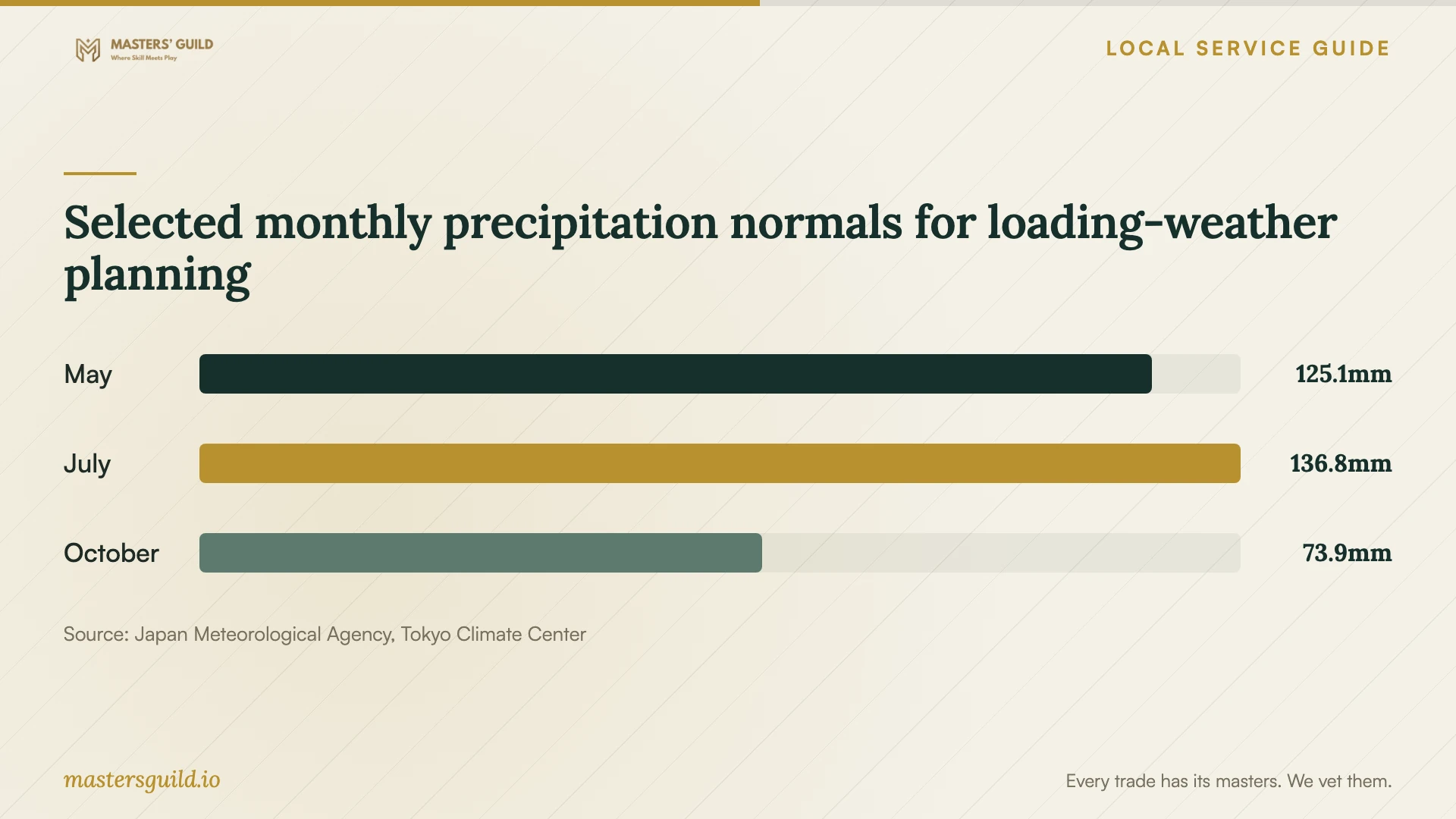
Selected monthly precipitation normals for loading-weather planning
Local details that affect your job
Identify the right curbside application
For loading that involves meters, a loading zone, or street-sidewalk space, start with Charleston’s Traffic, Parking and Transportation Department. Its page lists separate forms for those arrangements. The Parking Operations Center is at 915 Quarrier Street, Suite 2, telephone 304-348-8158. Ask staff to identify the correct application and confirm permission before you finalize the truck position. [1]
Check credentials against the household-goods exemption
For a move within West Virginia, avoid accepting or rejecting a company based on an assumed Chapter 24A operating-certificate requirement alone. The Legislature lists household-goods carriers in subdivision (14) of the chapter’s exemption section. Ask for documentation relevant to your move, including the company’s identity, insurance, and written responsibility for belongings. [2]
Match your arrangement to the work
| Your situation | Arrangement to consider | Confirm before booking |
|---|---|---|
| You will pack and provide the vehicle | Labor-only loading and unloading | Who drives, supplies equipment, and handles damage |
| You want one company to handle the household move | Packing and transport together | Packing tasks, inventory, delivery terms, and protection |
| You have a piano, safe, or oversized item | A separate handling plan for that item | Measurements, equipment, crew responsibility, and exclusions |
| You need curbside space | Ask the city about access before final scheduling | Which listed meter, loading-zone, or closure application fits |
Your hiring checklist
- Send each mover the same inventory, photographs, addresses, and packing tasks.
- Measure large furniture and the narrowest points along the carrying route.
- Confirm the truck position and assign responsibility for any city application.
- Record the pricing basis, extra charges, deposit, and cancellation terms.
- Identify the company and crew responsible for each part of the move.
- Keep written protection terms and claim instructions with your agreement.
- Pack an essentials bag and keep keys and important documents with you.
- Inspect the delivery and retain photographs, inventory notes, and receipts.
Frequently Asked Questions
Do I need a permit for the moving truck?
Ask Charleston’s Traffic, Parking and Transportation Department about your proposed position and loading activity. The city lists meter, loading-zone, and temporary street-sidewalk closure applications. Confirm which arrangement applies to your address before reserving space or directing the truck. [1]
Does a West Virginia mover need a PSC operating certificate?
The cited state law lists household-goods carriers among Chapter 24A exemptions, subject to its opening qualification about specifically applicable provisions. Ask the company to explain the requirements for your move and supply supporting documentation rather than assuming an ordinary certificate requirement applies. [2]
How much should I budget?
Request written quotes for your inventory and access conditions. Ask each company to separate transport, labor, packing, materials, storage, and possible additional charges. Confirm what you must pay if the crew waits for keys, cannot use the planned entrance, or needs another trip.
How should I plan for rain?
Agree on covers, floor protection, sheltered staging, and a pause or rescheduling procedure. The station’s monthly precipitation normals provide background for weather preparation. Check the forecast near your move date rather than choosing a date from monthly climate figures alone. [3]
Sources and scope
This guide combines the sources below with practical planning guidance. Figures apply to the stated geography and period; request a written quote for your property.