
Local service guide
Mold Removal in Charleston, WV: Hiring and Permits
Arrange Mold Removal in Charleston, WV by asking an experienced remediator to assess the affected materials and moisture source, then quote cleanup and repairs separately. EPA says homeowners can handle most patches smaller than about 10 square feet, but sewage damage calls for a professional. If the job includes construction repairs, confirm Charleston permits before work starts. [1] [4]
Decide who should handle the cleanup
EPA says you can handle most mold patches smaller than about 10 square feet yourself. For a small hard-surface patch, its guidance calls for detergent and water followed by complete drying. Porous materials such as carpet and ceiling tiles may require disposal. Do not paint or caulk over moldy surfaces. [4]
For growth exceeding that area or extensive water damage, EPA directs readers to its broader remediation guidance. Hire someone with mold cleanup experience and check references. For sewage or other contaminated-water damage, choose a professional with experience cleaning and repairing buildings affected by that water. [4]
Describe what you can see without opening walls for a quote. Share photographs, the rooms affected, any known leak, and whether the patch has returned after cleaning. Ask the assessor to explain what they can establish during the visit and what would require further investigation.
Compare the cleanup scope before comparing totals
Ask each bidder to identify the surfaces they plan to clean, materials they propose to remove, and areas they have not assessed. Request separate amounts for investigation, cleanup, disposal, moisture-source repair, and reconstruction. Have the contractor describe any proposed containment and equipment rather than accepting an unexplained treatment charge.
Ask which professional or government cleanup guidance the contractor follows. EPA recommends checking remediation experience and references, and asking contractors to follow EPA, ACGIH, IICRC, or other professional or government guidance. A training claim should prompt a question about who will supervise your work. [4]
Before signing, agree on how the contractor will document completion and handle newly discovered damage. Ask for written approval before extra demolition or spending. Set out who will repair removed finishes, move belongings, and coordinate any separate trades.
Arrange repair permits before construction
Charleston’s Building Department issues permits for repairs, maintenance, remodeling, roofs, plumbing, electrical work, and HVAC work. The city states that construction requires a permit before work begins. Ask the department to classify your proposed cleanup and repair scope, especially if the contractor will remove building materials or rebuild an affected area. [1]
Put permit responsibility in the contract. The city warns homeowners against obtaining a permit on someone else’s behalf and requires applicable inspections, including the final inspection. Ask your contractor who will submit the application and arrange inspections before you agree to a start date. [1]
Check credentials for the repair portion
West Virginia’s contractor definition covers specified construction, alteration, repair, and demolition undertakings costing $5,000 or more for residential work, subject to exclusions. If your remediation includes that work, ask the bidder to identify the applicable contractor classification and provide their credentials. This definition does not establish a mold-specific license. [2]
For HVAC work, the Division of Labor distinguishes a technician’s personal certification from the employer’s contractor license. Its FAQ bases applicable contractor thresholds on materials and labor for the entire project, rather than the HVAC portion alone. Ask who will perform any equipment or system repairs and which credentials cover that scope. [3]
If you know or suspect the HVAC system contains mold, EPA advises against running it because it could spread mold throughout the building. Discuss that concern when arranging the assessment. If you have health concerns, consult a health professional before starting cleanup. [4]
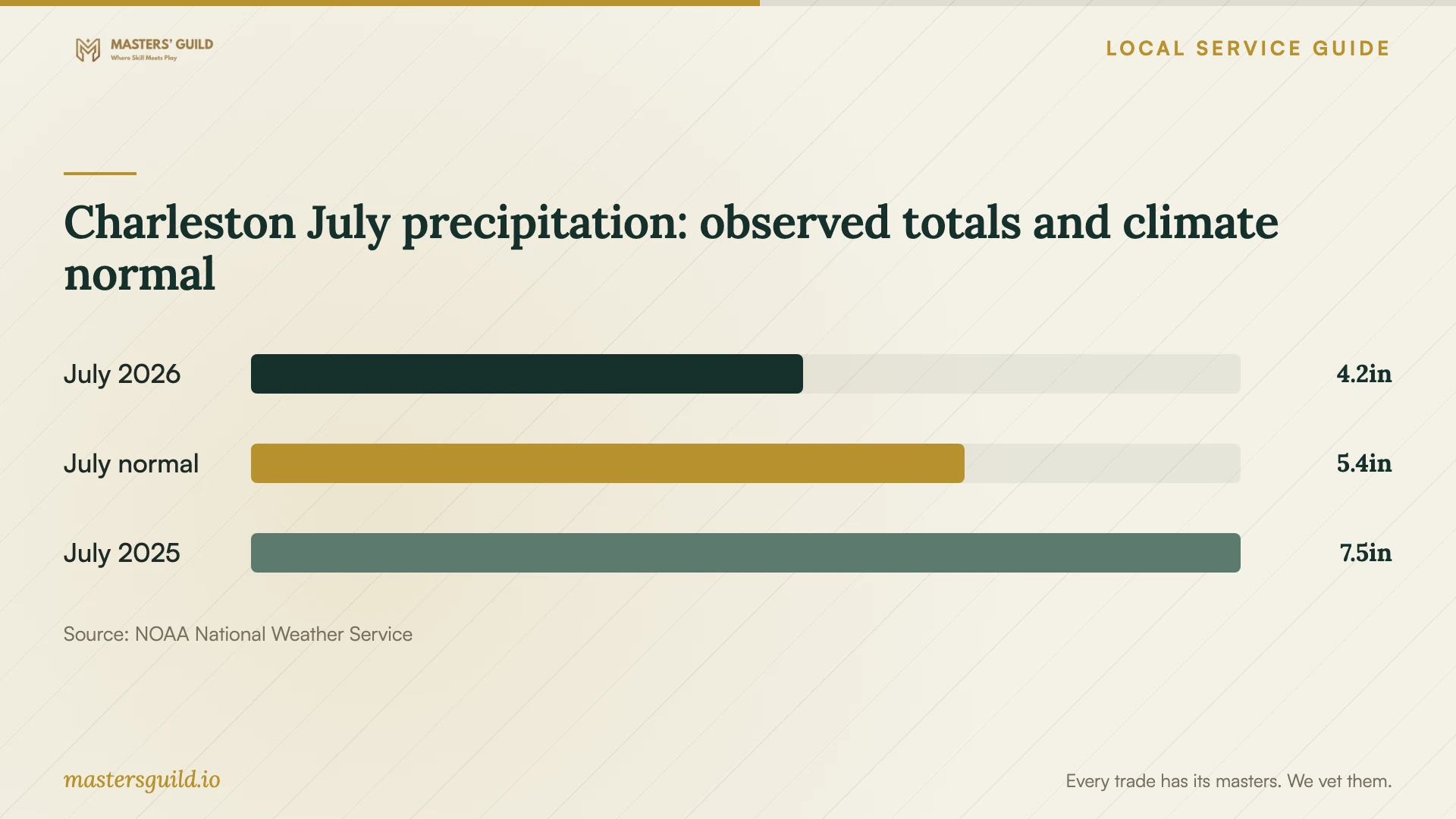
Charleston July precipitation: observed totals and climate normal
Local details that affect your job
Charleston permit application and payment steps
Submit permit applications to the Permit Coordinator at 915 Quarrier St Suite 5, Charleston, WV 25301. The city lists 304-348-6833 for the Permit Office. For eligible online payment, obtain the permit number first; the department can send a permit copy after receiving payment confirmation. Confirm this sequence before scheduling construction repairs. [1]
The local fee waiver still requires a permit
Charleston waives construction permit fees for total job costs up to $2,500, while still requiring permits before construction begins. The city lists separate requirements and fee amounts for plumbing, electrical, and HVAC permits. Ask the Permit Office which applications and fees apply to your repair scope. [1]
West Virginia HVAC certification exemptions need a scope check
The state HVAC FAQ lists exemptions that include routine equipment maintenance and certain work on an owner’s or immediate family member’s single-family dwelling. For hired system repairs or alterations, ask the provider to explain the technician certification and contractor classification that apply. Do not assume a company’s contractor license covers each worker’s certification. [3]
Choose your next step from the damage you can identify
| Situation | Next step | Question to resolve |
|---|---|---|
| Small hard-surface patch under about 10 square feet | Consider EPA’s home cleanup guidance | Can you address the water problem and dry the surface? |
| More than 10 square feet or extensive water damage | Consult broader EPA remediation guidance and assess professional help | Which materials need cleaning or removal? |
| Sewage or other contaminated-water damage | Hire a professional experienced with contaminated-water damage | Does the provider have relevant cleanup and repair experience? |
| Known or suspected HVAC contamination | Do not run the system; seek guidance before further action | Who will assess the system and handle any repairs? |
| Cleanup includes construction repairs | Confirm Charleston permits before construction starts | Who will apply and arrange inspections? |
Your hiring checklist
- Photograph visible damage and record the known leak or water event.
- Describe recurring growth and any concern about HVAC contamination.
- Request references for comparable mold cleanup work.
- Get an itemized scope for cleanup, disposal, repairs, and reconstruction.
- Confirm who will apply for construction permits and arrange inspections.
- Ask for credentials covering the people and trades doing repair work.
- Agree on written approval for added work and completion documentation.
Frequently Asked Questions
Does a small repair qualify for a permit exemption?
Charleston states that construction work requires a permit before work begins. The city’s waiver for construction jobs costing up to $2,500 concerns permit fees. Ask the Building Department to confirm the requirements for your exact scope. [1]
Can I paint over the affected area after treatment?
EPA advises cleaning mold and drying surfaces before painting or caulking. Ask the contractor to identify what they will clean or remove and how they will address the water problem before restoring finishes. [4]
Does a contractor license cover the HVAC technician?
The West Virginia Division of Labor says technician certification belongs to an individual and does not cover all employees. Its FAQ lists exemptions, including routine equipment maintenance. Ask who will perform your system repairs and which credentials apply. [3]
How should I budget without a verified local price range?
Request a written assessment and itemized quotes. Compare the same affected areas and repair responsibilities, then ask each bidder to identify exclusions and how they will price hidden damage. Keep cleanup, moisture-source repairs, and replacement finishes distinct in your budget.
Sources and scope
This guide combines the sources below with practical planning guidance. Figures apply to the stated geography and period; request a written quote for your property.