
Local service guide
Lawn mowing in Charleston, WV: Hiring and Planning
For lawn mowing in Charleston, WV, request a written quote that separates the first cut from recurring visits and states whether the provider includes trimming, edging, clipping removal, and cleanup. Share photos, access details, and any city notice before agreeing to a start date. If you received a high-grass courtesy letter, prioritize the correction deadline: the city describes a five-day grace period. [1]
Define the mowing job before comparing prices
Send the provider photos of the front, back, and side yards. Identify the areas you want cut, places you want left untouched, and obstacles such as garden beds, exposed roots, toys, or irrigation equipment. Include gate width, steps, and slopes so the provider can assess access before committing to the job.
Ask for separate prices for an initial cleanup and recurring maintenance. Have the provider specify mowing, trimming around fences and beds, edging along pavement, and clearing cuttings from walkways. Agree on whether the crew will leave clippings on the lawn, bag them, or remove them from the property.
Use property-specific quotes to set your budget. Ask whether the provider charges per visit or under a seasonal agreement, whether the total includes applicable taxes, and which conditions trigger an extra charge. Require approval before the crew performs work beyond the agreed scope.
Choose a recurring schedule you can adjust
Ask the provider to recommend an interval after inspecting your lawn, then agree on how you will approve changes. For weekly or every-other-week service, record the areas included and the price per completed visit. Ask how the provider handles a visit when you decide the lawn does not need cutting.
Set a weather policy before booking. Ask who decides to postpone a cut, how the crew communicates a delay, and when you can expect a replacement visit. Discuss soft ground and standing water with the provider rather than insisting on a fixed day regardless of yard conditions.
For a seasonal agreement, ask for the start and end terms, cancellation rules, and treatment of missed visits. If you want leaf removal or other cleanup, list those tasks separately. Avoid assuming that a recurring mowing payment includes work you have not discussed.
Arrange an overgrown-lawn correction
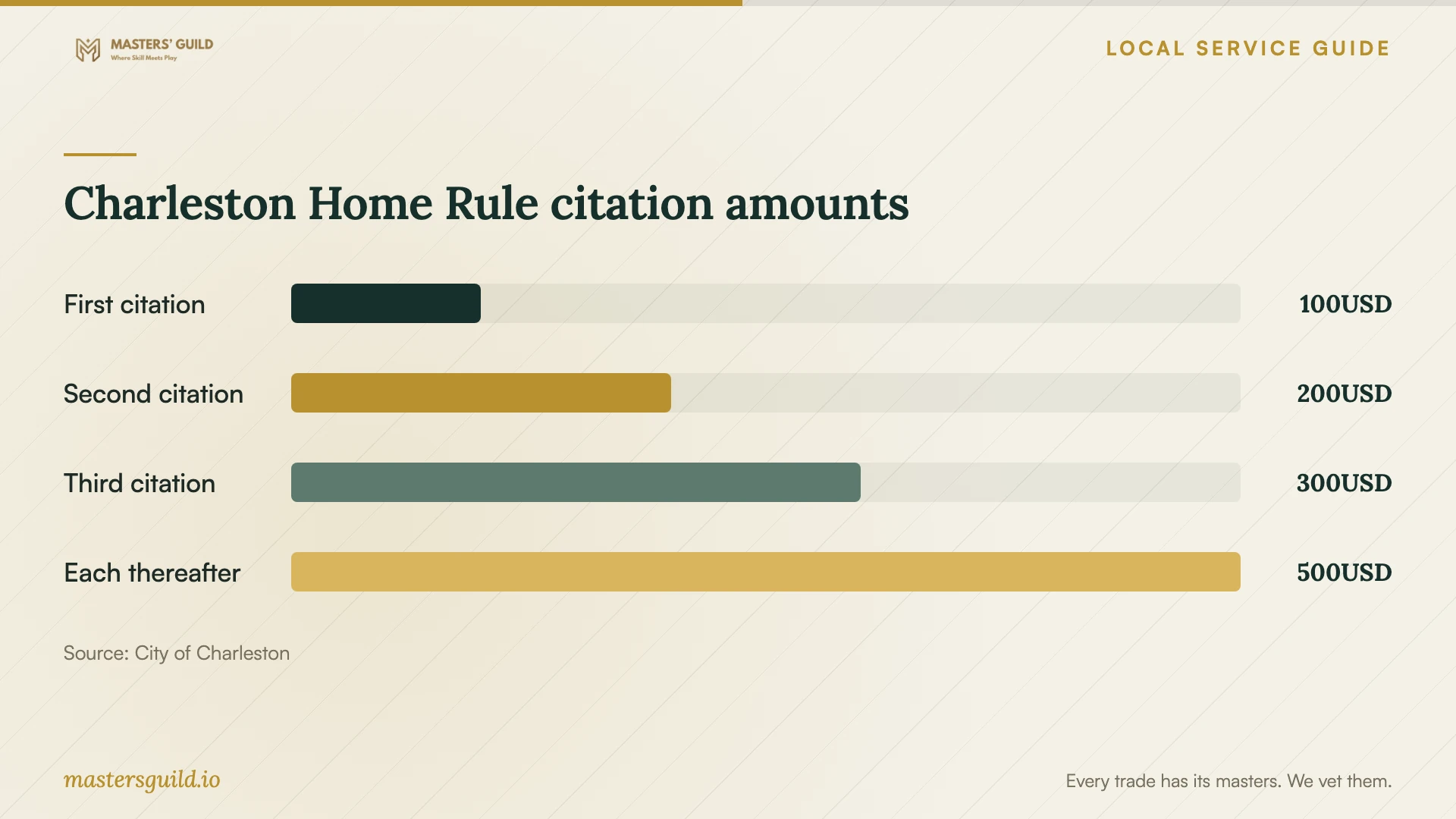
Charleston's Home Rule page includes high grass and weeds among violations addressed through a courtesy letter with a five-day correction period. The city describes citations within a subsequent 12-month period of $100 for the first citation, $200 for the second, $300 for the third, and $500 for each citation thereafter. [1]
Send the provider the notice and ask for a firm completion date that fits its deadline. Describe debris and vegetation that could interfere with mowing. Request a written correction scope and completion photos, then keep those records with the notice. Contact the city if you need clarification about the required work or deadline.
The city also states that it may file a lien for costs if it corrects violations after an owner fails to do so. Do not treat the citation amounts as a cleanup budget. Ask the provider to price the actual mowing and removal work, and contact the city about any unresolved notice. [1]
Check credentials for the work you authorize
For mowing, request proof of liability insurance and ask how the provider handles damage to fences, windows, plants, or irrigation equipment. Identify who will perform the work and whom you should contact if the crew misses a visit. Record those details alongside the price and scope.
Adding pesticide treatment changes the credential check. West Virginia requires a pesticide application business license for pesticide application for hire. People applying pesticides as a pesticide business must qualify as certified applicators in the appropriate category or as registered technicians under the direct supervision of a certified commercial applicator. [3]
If you want weed treatment, request the business license and the applicator's qualification or supervision details before authorizing it. Ask the provider to identify the treatment areas and give you product-specific instructions for pets, children, and access to the yard. Keep pesticide treatment as a separate approval in your mowing agreement. [3]
Charleston Home Rule citation amounts
Local details that affect your job
Use the city's grass and weeds contact for notice questions
Charleston's call list identifies 304-348-6458 for grass or weeds 10 inches high. Use that contact to ask about a high-grass concern or clarify a correction notice before defining the crew's work. The call-list label alone does not establish the full ordinance or how officials measure a violation. [2]
Confirm the disposal route before adding haul-away
The city lists yard waste at 304-348-6832 and brush or tree-limb pickup at 304-348-6859. If your mowing job includes bagged clippings or brush, ask the relevant office about accepted material, preparation, and collection arrangements before choosing curbside placement or paid removal. The published call list supplies contacts, not pickup eligibility or schedules. [2]
Choose the scope before choosing a provider
| Your situation | Request | Confirm before booking |
|---|---|---|
| Routine lawn maintenance | A recurring mowing quote | Included areas, visit price, trimming, cleanup, and schedule changes |
| Overgrown lawn without a notice | A separate initial-cut assessment | Debris handling, removal charges, and approval for additional work |
| City high-grass courtesy letter | A correction visit tied to the notice | A completion date within the city's stated five-day correction period |
| Clippings or brush to dispose of | An explicit disposal plan | City collection instructions or the provider's haul-away price |
| Mowing plus pesticide treatment | Separate treatment scope and authorization | Pesticide business license and applicator qualification or required supervision |
Your hiring checklist
- Photograph the lawn and identify the exact areas to mow or leave untouched.
- Share gate width, steps, slopes, parking access, and known obstacles.
- Separate the initial-cut price from the recurring visit price.
- Confirm trimming, edging, pavement cleanup, and clipping disposal in writing.
- Agree on rain delays, replacement visits, cancellation, and extra-work approval.
- Share any city notice and obtain a completion date that fits its deadline.
- Request insurance proof and, for pesticide treatment, the relevant license and applicator details.
Frequently Asked Questions
How much should I budget for mowing?
Request a quote for your property and compare the same included tasks. Ask for the initial-cut charge, recurring visit price, disposal charge, and total including applicable taxes. The cited city and state sources do not provide local mowing prices. [1] [2] [3]
Should I choose weekly or every-other-week visits?
Ask the provider to assess your lawn and explain the proposed interval. Agree on how you will change the schedule, approve extra visits, or skip a cut. Include the price for each option so you can adjust the arrangement without renegotiating the whole scope.
Can I leave mowing waste for city collection?
Confirm instructions before placing material out. Charleston lists yard waste questions at 304-348-6832 and brush or tree-limb pickup at 304-348-6859. Its call list does not specify what crews accept or how you must prepare it. [2]
What should I do after receiving a high-grass letter?
Read the notice, contact the city about unclear requirements, and share it with your provider. Charleston describes a five-day courtesy correction period. Request a completion date that fits the notice and keep photos and the work receipt. [1]
Sources and scope
This guide combines the sources below with practical planning guidance. Figures apply to the stated geography and period; request a written quote for your property.