
Local service guide
Kitchen remodeling in Charleston, WV: Hiring Guide
Kitchen remodeling in Charleston, WV starts with a written scope and a contractor who can obtain the city permits for your project. Charleston requires permits before construction begins and warns homeowners against obtaining a permit for someone else's work. Before paying a deposit, ask who will submit plans, obtain building and trade permits, arrange inspections, and complete the work. Compare bids using the same layout, cabinet specifications, appliance models, and exclusions. [1]
Define the kitchen before requesting bids
Start with the problems you want to solve: limited storage, an awkward cooking area, worn finishes, or difficulty using the sink and appliances. Mark what you want to keep and replace. Give bidders a sketch, photographs, and preferred materials. Ask them to price an alternative that keeps the existing sink and appliance positions if you want to compare layouts.
Specify cabinet construction and finish, countertop material, flooring, lighting, sink, faucet, and appliance models. For purchases you have not selected, ask the contractor to state an allowance: the amount included for that purchase. Request an explanation of charges if your selection exceeds it, including markup and installation changes.
Ask for separate prices for options you might drop, such as replacing all cabinets or adding an island. Reserve part of your budget for decisions after demolition. Use project-specific bids to set your spending plan, and ask each contractor to explain assumptions behind the total.
Confirm permits and plans before demolition
Charleston's Building Department issues permits for remodeling and for plumbing, electrical, and HVAC work. It directs applicants to submit applications to the Permit Coordinator at 915 Quarrier St Suite 5. Describe proposed wall removal, sink relocation, wiring changes, and ventilation work to the office, and ask which applications your project requires. [1]
The city's plan-submission guidance calls for two sets of residential plans and specifications. Ask which drawings apply to your interior remodel. Charleston aims to complete residential reviews within three working days when possible, barring special conditions. Required revisions start a new review period, and the city issues a permit after reviews finish. [3]
Name the person who will submit plans, answer review comments, and schedule inspections in the contract. Request permit documentation before work starts. Charleston requires all necessary inspections, including the final inspection, for contractors to remain in good standing. Include inspection scheduling and closeout documents in your written scope. [1]
Screen contractors for city permit readiness
Ask each bidder for their business name, city contractor registration information, insurance certificate, and applicable West Virginia contractor-license details. Charleston says it can deny registration or a building permit for missing City Collector registration, delinquent accounts or filings, expired insurance or state licenses, and previous failures to obtain permits and inspections. [2]
Request the names of the people handling plumbing, electrical work, and ventilation. Ask who supervises them and answers your questions during construction. Speak with references about scope changes, cleanup, and unfinished items. Request a sample written change order so you understand how you will approve extra work.
Tie payments to defined milestones and describe what the contractor must complete at each stage. Put material substitutions, allowances, debris removal, and final walkthrough arrangements in writing. Ask a bidder to resolve unclear permit responsibility before you choose their proposal.
Choose appliances before approving cabinets
Give your cabinet installer the installation instructions for your chosen dishwasher, refrigerator, range, and hood. Ask them to confirm openings, door clearance, utility connections, and access for future removal before you approve the cabinet order. Assign responsibility for appliance delivery, installation, and removal of old units in the bid.
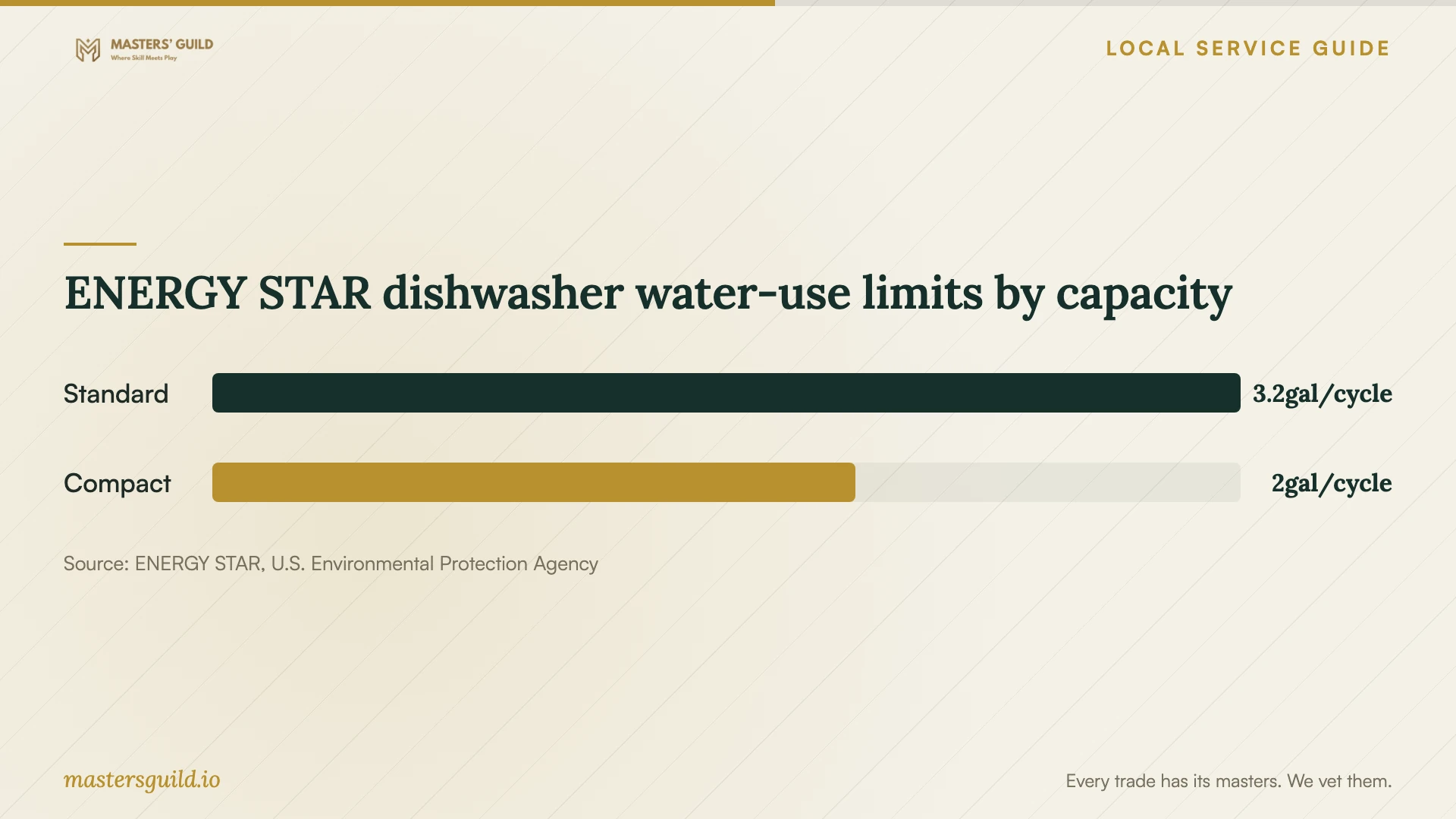
ENERGY STAR's national dishwasher criteria distinguish standard machines, with capacity of at least eight place settings plus six serving pieces, from compact machines below that capacity. The published water-use limits are 3.2 gallons per cycle for standard models and 2.0 for compact models. Compare those capacity categories, then check your selected model's dimensions and installation instructions. [4]
Consider whether the dishwasher can handle your household's dishes in a load you are willing to run. The chart compares certification limits across capacity categories. It does not establish your household's water use, bill savings, purchase price, or a particular appliance's performance. [4]
Agree on work sequence and kitchen access
Before demolition, ask the contractor to confirm material delivery dates and the order of work. Identify the days when you expect to lose access to the sink, cooking equipment, and refrigerator. Arrange a temporary meal-preparation area and agree on worker access, tool storage, and debris placement.
Write down how you will handle discoveries behind cabinets or walls. Ask the contractor to photograph the condition, explain the proposed response, and give you a written price and schedule change before you authorize additional work. Keep a shared record of selections and substitutions.
At the final walkthrough, test doors, drawers, faucets, lighting, and appliances with the contractor. Record incomplete items and an agreed completion date. Request inspection closeout records, product manuals, warranty information, and care instructions before settling the remaining work.
ENERGY STAR dishwasher water-use limits by capacity
Local details that affect your job
A small-job fee waiver does not remove permit requirements
Charleston waives construction permit fees for total job costs up to $2,500, while requiring permits before construction begins. For a small kitchen project, call the Permit Office at 304-348-6833 with your scope. Ask about the required application and any plumbing, electrical, or HVAC fees, which the city lists separately. [1]
Resolve city registration before committing to a start
Charleston can deny contractor registration or a permit because of City Collector registration problems, delinquent filings, expired insurance, or an expired state contractor license. Ask your preferred bidder to confirm that their city records are current before you commit to demolition or a delivery schedule. [2]
Allow time to answer plan-review comments
The city describes three working days as a conditional residential review target and starts a new review period when it requires revisions. Ask your contractor to include time to answer comments and obtain approval before promising a demolition date. [3]
Resolve these questions before choosing a contractor
| Your situation | Ask before signing | Next step |
|---|---|---|
| You want to change the layout | Which plans and building or trade permits will you obtain? | Confirm application requirements with the Building Department. |
| The bidder asks you to obtain their permit | Who will take responsibility for the hired work? | Resolve this before signing; the city warns against obtaining permits for someone else. |
| Your construction project costs $2,500 or less | Does the construction-fee waiver apply, and what trade fees apply? | Confirm permit requirements despite the construction-fee waiver. |
| The contractor promises a fast start | Have you completed plan review and obtained the permit? | Allow for review comments and a new review period after required revisions. |
| You have not chosen appliances | Which model dimensions and installation instructions will you use? | Choose appliances before approving cabinet details. |
Your hiring checklist
- Write a scope showing what you will keep, replace, and relocate.
- Send each bidder the same material selections and appliance models.
- Ask the Building Department which permits and drawings apply.
- Request registration information, insurance documentation, and applicable license details.
- Assign responsibility for permits, review comments, and inspections in the contract.
- Compare allowances, exclusions, payment milestones, and change-order terms.
- Confirm deliveries and arrange a temporary meal-preparation area.
- Agree on the final walkthrough, unfinished-item list, and closeout documents.
Frequently Asked Questions
Do I need a permit for a kitchen remodel?
Charleston states that all construction work requires a permit before work begins and lists remodeling, plumbing, electrical, and HVAC among its permit categories. Describe your scope to the Building Department and ask which applications apply. [1]
Can I obtain the permit for my hired contractor?
The city warns homeowners against obtaining a permit on behalf of someone else because of possible legal issues. It allows homeowners to perform their own work with proper permits and an inspection confirming code compliance. Assign permit responsibility for hired work before signing. [1]
How long will residential plan review take?
Charleston aims for three working days when possible, barring special conditions. Required revisions start a new review period. That target covers review, not the total remodel schedule. Ask your contractor for dates tied to approvals and material deliveries. [3]
How should I compare kitchen-remodel quotes?
Give bidders the same scope and selections. Compare material specifications, allowances, exclusions, permit responsibility, payment milestones, and written change-order terms. Ask each bidder to identify unresolved selections so you can assess what the quoted total includes.
Sources and scope
This guide combines the sources below with practical planning guidance. Figures apply to the stated geography and period; request a written quote for your property.