
Local service guide
Interior Design in Charleston, WV: Plan Your Project
For Interior Design in Charleston, WV, choose a designer around the work you need: furnishing a room, planning a layout, or coordinating a renovation. Ask for a written scope, deliverables, purchasing terms, and responsibility for construction coordination before signing. For renovation work, confirm permits before construction begins; the city requires permits for all construction work. If you own a historic home, check its district boundary and possible rehabilitation-credit eligibility before approving alterations. [1] [2] [3]
Choose the scope before choosing the designer
Write down what you want to change and what you want to keep. For a furnishing project, request a furniture layout, finish palette, product list, and purchasing plan. For a renovation, ask the designer to identify which drawings and specifications they will provide, who will check construction feasibility, and who will coordinate with the contractor.
Use your first conversation to test how the designer handles your constraints. Bring photographs, approximate dimensions, existing furniture measurements, and examples of rooms you like. Explain daily problems: a blocked walkway, insufficient storage, glare at a desk, or seating that does not fit your household. Ask the designer to describe a proposed approach before discussing individual products.
Compare complete proposals
Give each candidate the same brief. Request a proposal that names the rooms, deliverables, revision allowance, site visits, and exclusions. Ask whether the designer charges a fixed fee, hourly fee, purchasing fee, or a combination. Request written approval before anyone exceeds the agreed design budget.
Set separate spending limits for design, furniture and finishes, delivery and installation, and construction. Ask who places orders, receives deliveries, checks damage, and handles returns. Have the designer explain markups, discounts, deposits, cancellation terms, and charges for replacement selections. Compare these obligations alongside the fee.
Ask to see comparable completed work and the documents behind it, such as a layout or finish schedule. For an alteration project, ask how the designer communicates changes to the contractor and resolves conflicting measurements. Request a schedule with decision deadlines, approval points, and an agreed process for unavailable products.
Assign permit and inspection responsibilities
Charleston's Building Department issues permits for remodeling, repairs, and electrical, plumbing, and HVAC work, among other construction activities. The city requires permits before construction begins. Before approving a renovation scope, ask the department which applications and inspections apply to your proposed work. [1]
The city allows homeowners to perform their own work with proper permits and an inspection confirming code compliance. It also warns homeowners against obtaining a permit on someone else's behalf. Ask your contractor to explain who will obtain the permits and arrange inspections, then record those responsibilities in the agreement. [1]
Before ordering cabinetry or other items that depend on construction measurements, ask the designer and contractor to approve the dimensions and connection locations. Identify who can authorize a substitution or layout change. Keep the approved drawings and change records together so each participant works from the same instructions.
Check historic-home constraints before final selections
Charleston distinguishes National Register districts from the area subject to its local historic design-review process. The city states that only properties within the original East End Historic District undergo that process through the Charleston Historic Landmarks Commission. Ask Planning to confirm your property's location and whether your proposed alterations require review; do not infer the answer from an East End address alone. [2]
For a historic residence, ask a prospective designer how they would retain features you value while addressing storage, lighting, and layout. If you intend to pursue rehabilitation credits, request a scope that separates proposed rehabilitation work from furnishing purchases and ask the State Historic Preservation Office to confirm eligible expenses before you commit. [3]
West Virginia's residential rehabilitation-credit guidance requires a National Register-listed building where the applicant resides, generally without income-producing use. The work must meet the Secretary of the Interior's rehabilitation standards. Applicants must spend at least 20% of the assessed building value on rehabilitation and complete substantial rehabilitation within a 24-month period. These conditions warrant checking eligibility before setting the renovation budget. [3]
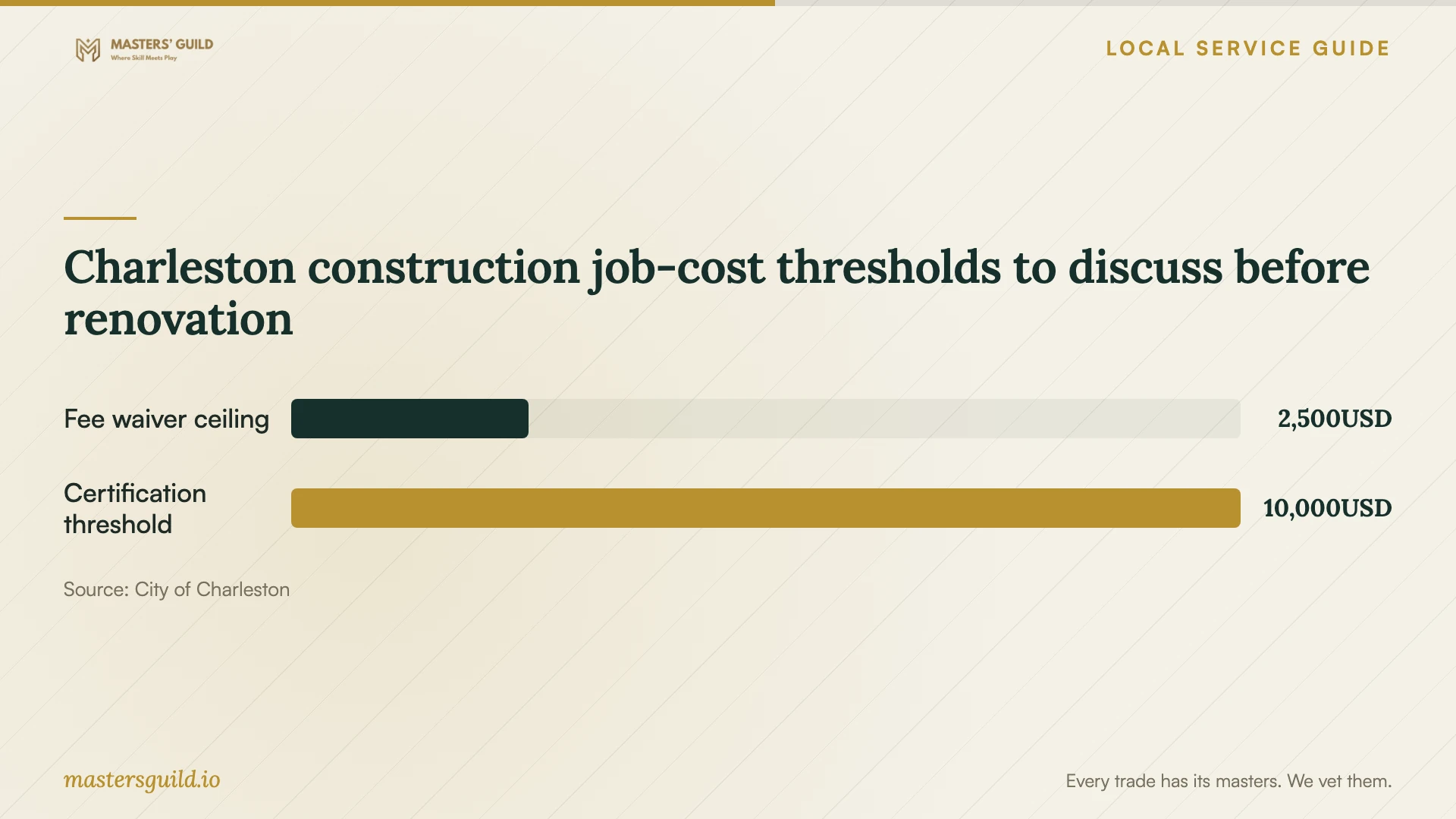
Charleston construction job-cost thresholds to discuss before renovation
Local details that affect your job
Permit submission and small-project paperwork
Submit permit applications to the Permit Coordinator at the City of Charleston Building Department, 915 Quarrier St Suite 5, Charleston, WV 25301. The permit office number is 304-348-6833. The city waives construction permit fees for total job costs up to $2,500, but still requires construction permits. For work without an existing contract, job costs exceeding $10,000 require Contract Certification. Ask who will prepare the applicable paperwork before hiring. [1]
Original East End district review
The city's historic-preservation page distinguishes the original East End Historic District from its expansion and other National Register districts. Only properties within the original district fall under the stated Historic Landmarks Commission design-review process. Confirm the boundary and review requirements before asking a designer to finalize alterations. [2]
State rehabilitation-credit approval sequence
The West Virginia State Historic Preservation Office accepts residential rehabilitation-credit applications throughout the year through GOapply and recommends approval before project work begins. For a potentially eligible Charleston residence, discuss the proposed interior and exterior work with that office before demolition or purchases tied to the rehabilitation scope. [3]
Match the project to the proposal
| Your project | Request from the designer | Before committing |
|---|---|---|
| Furniture and finish selections | Layout, product list, purchasing terms | Approve a spending limit and return responsibilities |
| Room layout with construction | Drawings, specifications, contractor coordination | Confirm permit applications and inspections with the city |
| Original East End historic property | An approach suited to the proposed alterations | Confirm applicable Historic Landmarks Commission review |
| Potential historic rehabilitation-credit project | A rehabilitation scope and expense breakdown | Check state eligibility and seek application approval before work |
Your hiring checklist
- List the rooms, daily-use problems, retained furniture, and spending limit.
- Prepare photographs, dimensions, and examples of your preferred finishes.
- Request written deliverables, revisions, exclusions, and payment terms.
- Clarify purchasing markups, delivery handling, returns, and cancellation charges.
- Assign responsibility for construction coordination and ask the city about applicable permits.
- For a historic home, confirm district boundaries and potential credit eligibility before approving alterations.
- Agree on decision deadlines and written approval for changes.
Frequently Asked Questions
How much should I budget for a designer?
Request a project-specific proposal. The supplied official sources do not establish local interior-design fees. Compare quotes using the same deliverables, then separate design fees, purchases, delivery, installation, and construction. Ask each designer to explain additional charges before signing.
Does a project under $2,500 avoid a construction permit?
Charleston requires permits for all construction work. The $2,500 provision waives construction permit fees for qualifying total job costs; it does not waive the permit requirement. Confirm the applications that apply to your scope with the Building Department. [1]
Does every Charleston historic district require city design review?
The city's historic-preservation page states that only properties within the original East End Historic District undergo its Historic Landmarks Commission design-review process. Confirm your property's boundary and proposed work with Planning before finalizing alterations. [2]
Can interior rehabilitation qualify for the state residential historic credit?
The state includes eligible interior and exterior work on a listed building. Applicants must also meet residence, rehabilitation-standard, spending, and timing requirements. Ask the State Historic Preservation Office about your scope; it recommends submitting and obtaining application approval before work begins. [3]
Sources and scope
This guide combines the sources below with practical planning guidance. Figures apply to the stated geography and period; request a written quote for your property.