
Local service guide
Plan concrete work in Charleston, WV
Arrange concrete work by comparing site-specific written quotes that explain the proposed repair or replacement, drainage, preparation, and cleanup. Resolve permit responsibility before scheduling: Charleston requires a permit before construction begins and lists driveways, retaining walls, repairs, and maintenance among permitted work. Have each bidder explain the work limits and provide instructions for using the completed surface. [1]
Define the problem before choosing a method
Show each bidder the same area and explain how you intend to use it. Describe the vehicles you plan to park on a driveway, the entrances a walk must serve, or the furniture you want on a patio. Mark uneven edges and damaged sections. Share photographs of standing water or runoff you have observed.
Have the contractor explain the reason for repair, leveling, partial replacement, or a new pour. Get the proposed limits on a sketch or marked photograph. If bidders recommend different methods, compare the problems each intends to address and the work each excludes before comparing totals.
For steps, retaining walls, or concrete connected to the house, discuss whether drawings or another professional's assessment should precede the final quote. Identify who will resolve design questions and who will pay for that work. Keep unresolved design decisions separate from an agreed construction scope.
Assign permit and contractor responsibilities
Charleston's permit page names driveway work, retaining walls, and excavation in city right-of-way. The city requires inspections, including a final inspection. Put the permit applicant, inspection arrangements, and responsibility for applicable fees in the written agreement. [1]
The city warns homeowners against obtaining a permit on someone else's behalf because of possible legal issues. If a hired contractor proposes that arrangement, clarify it with the permit office before agreeing. Homeowners performing their own work must obtain proper permits and an inspection confirming code compliance. [1]
West Virginia's contractor definition covers residential undertakings costing $5,000 or more, subject to listed exclusions. At that threshold, obtain the bidder's license details and confirm applicability to your undertaking before signing. Also review insurance documentation and examples of similar completed projects. [2]
Compare the complete written quote
Have each bidder describe the measured area, proposed thickness, excavation, base preparation, reinforcement if proposed, joints, and finish. Include demolition, hauling, drainage changes, and restoration of disturbed landscaping. Identify allowances for conditions the contractor cannot inspect before excavation.
Agree on how you will approve and pay for changes. Require a written description and price before authorizing extra work. Confirm whether the total includes taxes and fees, and record exclusions. If you reduce the scope to meet your budget, have the contractor identify the problems that will remain.
Plan drainage, access, and completion
Review finished elevations with the contractor at doors, garage openings, adjoining pavement, and property boundaries. Trace the proposed route for water. For questions involving public drainage or the street edge, use the engineering contact below before finalizing the affected work.
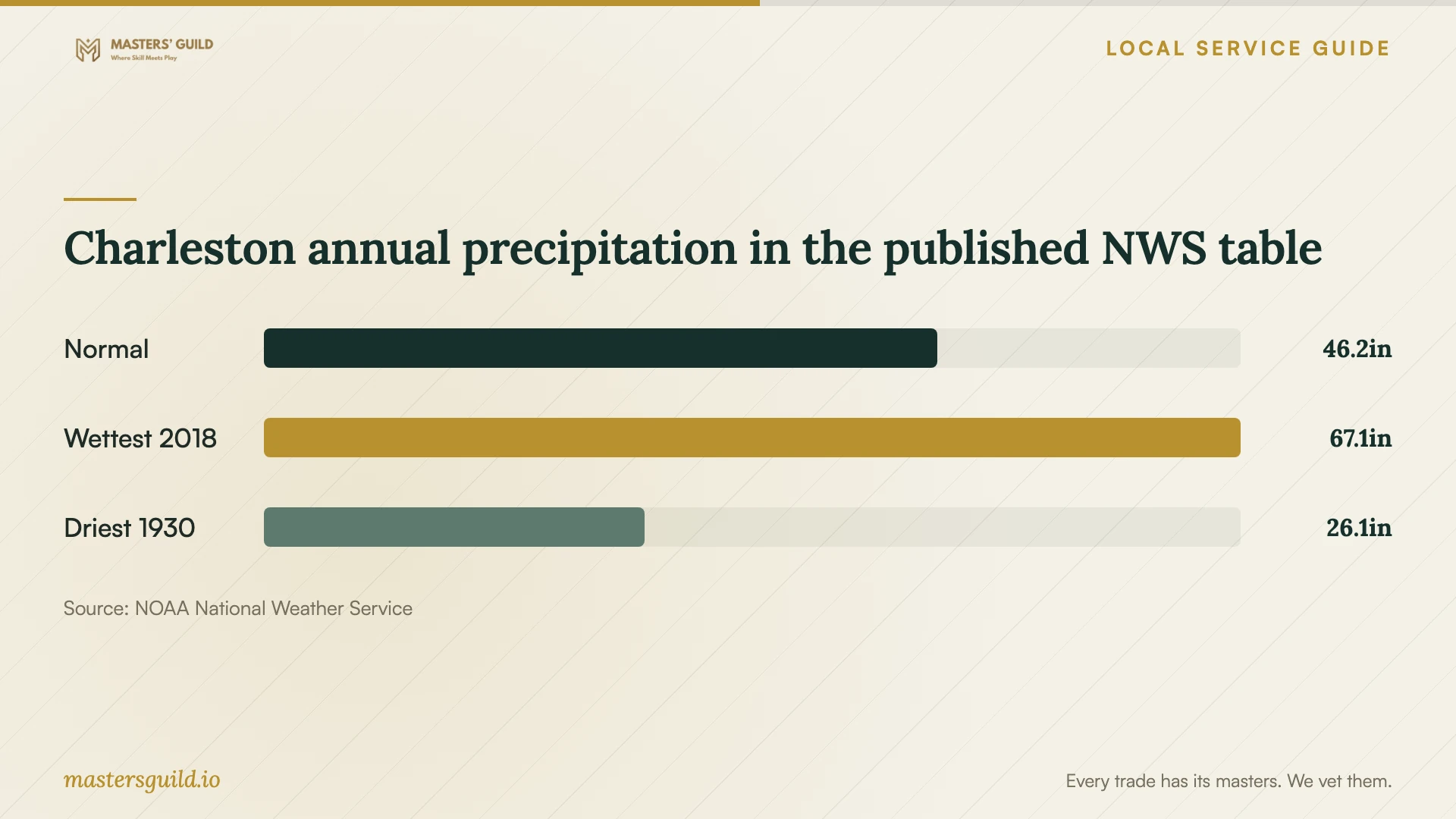
The National Weather Service lists a 1991–2020 normal annual precipitation total of 46.24 inches for Charleston. Use that historical background to prompt a drainage discussion, then base your proposal on observations at your property. Discuss who will postpone a pour and what weather protection and curing arrangements the contractor proposes. [4]
Agree on truck access, parking, material storage, and a route into your home before setting the date. Obtain separate instructions for foot traffic, furniture, and vehicles. At handover, review cleanup, completion records, care guidance, and the written process for reporting a concern.
Charleston annual precipitation in the published NWS table
Local details that affect your job
Confirm where to submit the application
The permit page directs applicants to the Permit Coordinator at 915 Quarrier St, Suite 5. The department directory lists Development Services at that address in Suite 1. Both pages give 304-348-6833. Call to confirm the submission location and application requirements before making a trip. These are two city listings, not independent corroboration of the suite number. [1] [3]
Check the fee and document thresholds
Charleston waives construction permit fees for total job costs up to $2,500; its permit requirement still applies. For work exceeding $10,000 without an existing contract, the permit page requires Contract Certification. Confirm which documents your contractor will submit and keep the permit number with your agreement. [1]
Resolve street-edge and stormwater questions
The city lists rights-of-way, retaining walls, and stormwater drainage among the City Engineer's duties. Contact that office at 114 Dickinson Street, 304-348-8106. If your driveway meets the street or your proposal raises a wall or drainage question, describe the work and confirm what review applies before accepting the final scope. [3]
Resolve these points before accepting a bid
| Situation | Next step | Written record |
|---|---|---|
| Bidders propose different repair methods | Compare work limits and problems each proposal leaves unresolved | Marked scope and exclusions |
| Your contractor wants you to obtain their permit | Clarify the arrangement with the permit office; the city warns against obtaining another person's permit | Agreed permit applicant |
| Residential undertaking costs $5,000 or more | Confirm applicability of the state contractor definition and its exclusions | Contractor license details |
| Work raises right-of-way, retaining-wall, or stormwater questions | Confirm the review with the City Engineer | Review and permit responsibilities |
| You need driveway or entrance access during work | Agree on an alternate route and instructions for resuming use | Access plan |
Your hiring checklist
- Photograph the area and mark the proposed work limits.
- Describe vehicle use, entrance access, and observed water problems.
- Compare each bidder's explanation of repair or replacement.
- Record permit and inspection responsibilities in the agreement.
- Review license applicability and insurance documentation.
- Include preparation, removal, drainage, finish, and restoration in the quote.
- Agree on written change approvals and payment milestones.
- Collect reopening instructions, care guidance, and completion records.
Frequently Asked Questions
Do I need a permit for a concrete driveway?
Charleston requires a permit before construction begins and lists driveways among permitted work. Confirm the application and inspections for your scope with the permit office, then record who will handle them in the agreement. [1]
How should I budget for the project?
Use a written quote based on a site visit and defined work limits. Have the contractor identify demolition, preparation, drainage, restoration, fees, and exclusions. For an allowance, agree on how the contractor will document the actual cost and obtain your approval.
How long should I keep vehicles off new concrete?
Obtain the contractor's written instructions for your project, including the planned concrete, curing method, and anticipated conditions. Agree on alternate parking before scheduling and confirm permission to resume vehicle use with the contractor.
Sources and scope
This guide combines the sources below with practical planning guidance. Figures apply to the stated geography and period; request a written quote for your property.