
Local service guide
Basement Remodeling in Charleston, WV
For Basement Remodeling in Charleston, hire a contractor who will assess moisture, confirm the proposed room use with the Building Department, and include permits and inspections in a written scope. The city requires permits before construction and reviews remodeling applications for floodplain compliance. Resolve those questions before committing to a bedroom, bathroom, or finished living area. [1] [2]
Choose the room use before requesting bids
Describe how you want to use the space: family room, office, bedroom, bathroom, or storage. Give bidders the same sketch and identify what should remain unfinished. Ask them to measure ceiling clearance beneath beams and ducts, review the stairs, and show how you will reach equipment, shutoffs, and cleanouts after construction.
For a bedroom, ask the Building Department and contractor to confirm the applicable escape-opening and room requirements before pricing window work. For a bathroom, request a plan for drains, venting, and any proposed pumping equipment. If you want a separate dwelling, ask the city whether the proposed use is permitted before treating it as a standard basement finish.
Resolve water concerns before covering walls
Show each bidder stains, damp areas, cracks, and any history of water entry. Photograph the basement after rain if you can. Ask the contractor to explain the suspected water source and price the proposed correction apart from interior finishes. Avoid accepting a finish-only quote while you still have unexplained dampness.
Charleston's Floodplain Manager reviews construction and remodeling applications for compliance with the city's Floodplain Ordinance. The city determines whether a property lies in a Special Flood Hazard Area before issuing a building permit. Ask for that determination before paying for a detailed basement conversion design. [2]
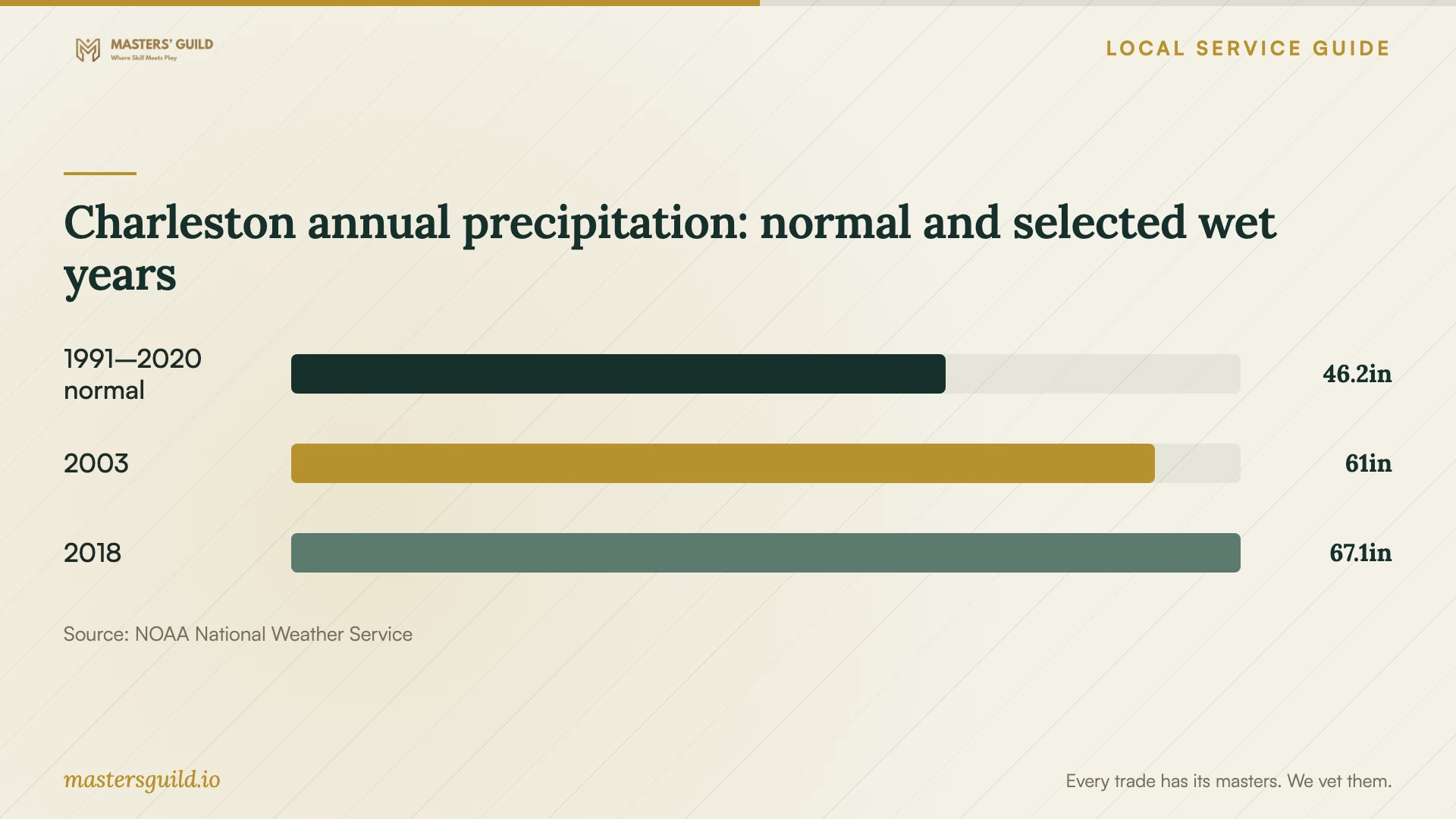
The National Weather Service lists a 1991–2020 annual precipitation normal of 46.24 inches for Charleston, with 67.05 inches in 2018 and 61.01 inches in 2003. Use this weather context to prompt questions about drainage and past water entry. Annual rainfall totals cannot establish whether your basement leaks or your property lies in a floodplain. [5]
Make permits and inspections part of the agreement
Charleston requires a permit before construction begins and lists remodeling, electrical, plumbing, and HVAC among the work its Building Department permits. Ask the contractor to identify the applications your scope needs, who will submit them, and who will arrange inspections. The city requires all required inspections, including the final inspection. [1]
The city allows homeowners to perform their own work with proper permits and an inspection confirming code compliance. It also warns homeowners against obtaining permits on someone else's behalf because of possible legal issues. If a hired contractor asks you to pull the permit, discuss that arrangement with the Building Department before proceeding. [1]
Ask the bidder to show inspection points in the schedule and explain when you can approve finishes. Include responsibility for correcting inspection findings in the agreement. Keep copies of the permit, approved scope, change orders, and final inspection documentation with your house records.
Check credentials and compare complete quotes
West Virginia's statutory contractor definition includes compensated residential undertakings costing $5,000 or more, subject to listed exclusions. The same section defines residential and general building contractor classifications. Ask a basement-remodel bidder for their contractor license number and classification, then confirm that those credentials fit the proposed work with the licensing authority. [3]
Request the names of the people handling electrical, plumbing, and HVAC work, along with their credentials and insurance documentation. Ask for references from projects with a similar scope, particularly if yours includes water correction or excavation for a window. Use those conversations to ask how the contractor handled changes and inspections.
Compare written inclusions rather than total prices alone. Request separate amounts for demolition, water correction, framing, insulation, trade work, wall finishes, flooring, fixtures, permits, and cleanup. Identify allowances for items you have not chosen and require written approval for changes. Ask each bidder to explain exclusions and the conditions that could change the price.
Plan radon testing and construction access
The West Virginia Department of Health encourages residents to test homes for radon. In its January 9, 2024 announcement, the department said residents could request a free testing kit by emailing [email protected] or calling 304-352-5039. Contact the program to confirm current availability and testing instructions before planning an occupied basement. [4]
Share the test result with your contractor and ask how any needed radon work would fit the layout. Before construction, agree on material access, debris removal, dust control, storage, and the route workers will use through the house. Ask for a schedule that identifies decisions you must make and any planned utility interruptions.
Charleston annual precipitation: normal and selected wet years
Local details that affect your job
Use the Building Department's permit submission route
Submit permit applications to the Permit Coordinator at the City of Charleston Building Department, 915 Quarrier St Suite 5, Charleston, WV 25301. The Permit Office number is 304-348-6833. The city waives construction permit fees for total job costs up to $2,500; that fee waiver does not remove its requirement to obtain a permit before construction. [1]
Check floodplain status before buying finishes
Ask Charleston's Floodplain Manager for a property determination and whether the proposed basement use complies with the Floodplain Ordinance. For properties close to a flood hazard area, the manager may recommend or require an Elevation Certificate. A licensed surveyor or registered professional engineer must complete that certificate, so establish whether you need one before finalizing your design budget. [2]
Clarify paperwork for work without an existing contract
Charleston requires a Contract Certification for job costs exceeding $10,000 when work has no existing contract. Ask the Permit Coordinator which documents apply to your arrangement, and use a written construction agreement to define scope, payments, changes, and inspection responsibilities. [1]
Choose the next step for your basement
| Situation | Next step | What to settle before construction |
|---|---|---|
| Damp walls or past water entry | Request an assessment and a separate correction scope. | The proposed water correction and how you will assess its result. |
| Property in or near a flood hazard area | Consult the city's Floodplain Manager. | Applicable renovation restrictions and any Elevation Certificate requirement. |
| Proposed bedroom or separate dwelling | Review the intended use with the Building Department. | Whether the proposed use and layout can receive approval. |
| Bathroom or HVAC changes | Ask the contractor to identify the relevant city permit applications. | Trade responsibilities, equipment layout, and inspection scheduling. |
| You intend to do the work yourself | Obtain the proper permits and arrange inspections. | Your own work scope and the city's code-compliance review. |
Your hiring checklist
- Write down the proposed room uses and measure the area you want finished.
- Gather photographs and notes about past water entry or dampness.
- Request the city's property-specific floodplain determination.
- Ask the state radon program about current testing options and follow its instructions.
- Give each bidder the same scope, finish choices, and unresolved questions.
- Confirm contractor credentials, insurance, and the people handling trade work.
- Put permits, inspections, allowances, changes, and payment stages in writing.
- Agree on access, dust control, cleanup, and completion documentation.
Frequently Asked Questions
Do I need a permit to remodel a basement?
Within Charleston city limits, the city requires a permit before construction and includes remodeling among permitted work. Ask the Building Department which building and trade applications your scope needs. For a property outside city limits, confirm requirements with the authority serving that address. [1]
Can I pull the permit for my contractor?
Charleston warns homeowners against obtaining permits on someone else's behalf. Assign permit responsibility in the agreement and discuss any request to pull a hired contractor's permit with the Building Department. The city permits homeowners to do their own work with proper permits and inspections. [1]
How much should I budget?
Obtain written quotes after contractors inspect the space and you clarify the intended use. Ask for separate prices for water correction, trade work, construction, and finishes. Keep an uncommitted amount for unresolved conditions, and require bidders to identify allowances and exclusions before comparing totals.
Does a dry basement rule out floodplain restrictions?
Ask for a property-specific determination regardless of the basement's present condition. Charleston's Floodplain Manager determines Special Flood Hazard Area status before permit issuance and reviews remodeling for ordinance compliance. The city notes that properties in that area can face stricter renovation standards. [2]
Sources and scope
This guide combines the sources below with practical planning guidance. Figures apply to the stated geography and period; request a written quote for your property.