
Local service guide
Yard cleanup in Charleston, SC: Plan the Job
For yard cleanup in Charleston, hire a crew with a written scope that includes removal and disposal of the debris it generates. The City requires contractors to handle that waste. Before accepting a quote, identify the areas to clear, plants to preserve, access constraints, and any tree work that needs separate review. [1]
Write a scope that includes the final haul
Describe the result you want in each part of the yard. For example, ask the crew to remove fallen leaves from the lawn, pull specified weeds from beds, gather fallen branches, and sweep the paths. Mark plants and ground cover you want to keep. Avoid an instruction such as clear everything unless you intend that result.
Ask the contractor to include loading, hauling, and disposal in the written price. Charleston requires contractors to remove and dispose of debris they generate within the City. A proposal to leave the contractor's waste at the curb for municipal pickup conflicts with that requirement. [1]
Send photographs of the whole yard and close views of the heaviest debris. Include gate openings, steps, the route from the backyard to the truck, and a place where the crew can load. Ask the contractor to inspect the property before fixing a price if photographs leave the scope uncertain.
Compare complete quotes
Give each bidder the same task list. Request separate amounts for cleanup labor, hauling and disposal, and optional work such as mulch installation or shrub pruning. Ask whether the contractor offers a fixed total or charges for time, and how you will approve work beyond the agreed scope.
For a time-based quote, ask how many workers will attend and whether the hourly charge covers the crew or each worker. Agree on a spending limit and a point at which the contractor must pause for your approval. For hauling, ask how the contractor will price an additional load.
Ask where the contractor plans to take the debris. Charleston County convenience centers do not accept commercial yard waste, trash, or construction and demolition debris. Require a disposal plan that fits contractor waste rather than assuming the crew can use a resident drop-off site. [3]
Before booking, request proof of insurance and agree on a completion check. Walk the yard with the crew lead, confirm the marked plants remain, inspect paths and beds, and check that the crew has removed the agreed debris. Keep optional improvements separate so you can judge whether the cleanup itself is complete.
Choose the right disposal route for DIY work
If you prepare your own waste for City collection, place leaves, twigs, weeds, and grass clippings in brown paper bags designed for yard debris. Supply the bags yourself and keep household garbage out of them. The City specifies 4-foot lengths and 4-inch diameter for limbs and stumps, stacked clear of obstructions. [1] [2]
Place resident trash at the curb no earlier than two days before scheduled pickup. Check your address-specific collection day before choosing a cleanup date, and check service alerts rather than relying on an old holiday notice. [2]
For a resident drop-off, confirm the destination accepts your material. The County excludes yard waste from the Signal Point Road convenience center and from blue recycling carts. County convenience-center rules require proof of residency and advance appointments for double-axle trailers, box trucks, and moving vans. [3]
Separate soil, sod, construction scraps, paint, and chemicals from ordinary vegetation before you begin. The City excludes dirt, sod, construction and renovation debris, and hazardous waste from single-family residential collection. Ask the relevant disposal operator about each separate material instead of adding it to a leaf bag. [1]
Set boundaries for tree work and wet-ground access
Ask a tree specialist to assess standing-tree removal before including it in a cleanup agreement. Charleston defines Grand Trees as trees at least 24 inches in diameter measured 4.5 feet above grade, excluding pines and sweet gums. The City's removal rules also address property use, acreage, and protected buffers, so size alone does not settle every case. [4]
If removal needs a City permit, start with a tree inspection request. After inspection, the City issues a permit if the tree meets its removal standards; the Zoning Administrator may require an arborist's documentation. The City does not require a pruning permit for Grand or Protected Trees, but it requires a qualified tree service and specified pruning standards. [4]
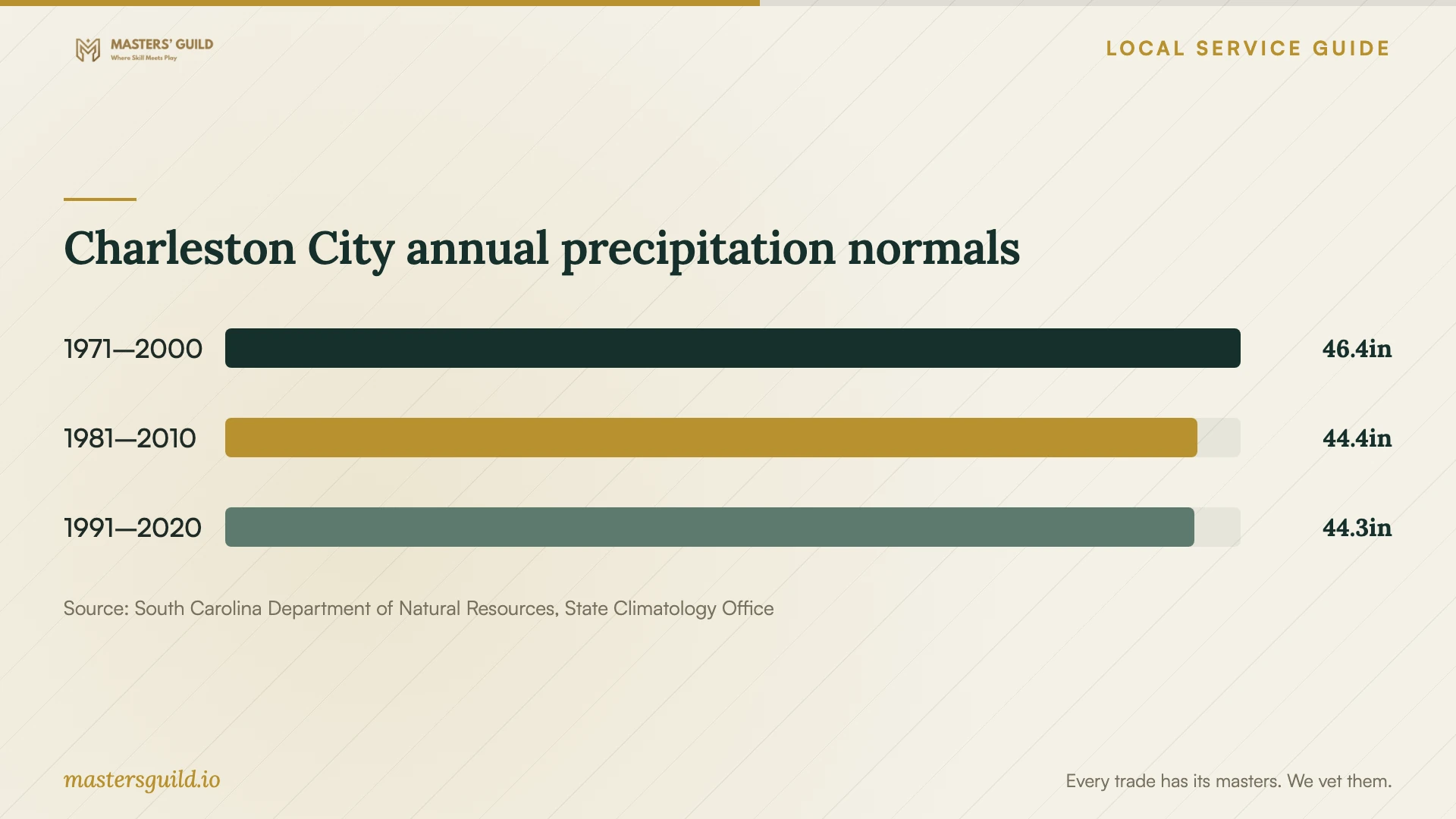
Agree on a rain-delay plan and a route for equipment before the crew arrives. Ask the contractor to pause if the ground cannot support the planned access without damage. The State Climatology Office reports 44.26 inches of annual precipitation for Charleston City in the 1991–2020 normals. That long-term figure gives rainfall context; use conditions at your property to choose the workday. [5]
Charleston City annual precipitation normals
Local details that affect your job
Contractor debris requires contractor disposal
Within the City of Charleston, the contractor must remove and dispose of debris it generates. Put that responsibility in the quote and confirm the destination before booking. Do not accept municipal curbside pickup as the disposal plan for the crew's waste. [1]
Signal Point does not accept yard waste
The County's Signal Point Road convenience center at 1716 Signal Point Road does not accept yard waste. For your own cleanup, confirm another eligible resident destination before loading. The County also requires advance appointments for double-axle trailers, box trucks, and moving vans; these resident arrangements do not authorize commercial yard-waste disposal. [3]
Tree removal starts with a property-specific check
Before authorizing standing-tree removal, check the City's rules for your tree and property. If a permit is necessary, submit a tree inspection request first. Flag any critical-line buffer or Daniel Island Visual Buffer Zone location during that inquiry because the City applies additional restrictions there. [4]
Match the cleanup to a disposal and work plan
| Your situation | Planning choice | Local rule to account for |
|---|---|---|
| You will rake and bag your own vegetation | Check your City collection day before starting | Use brown paper yard-waste bags; set trash out no earlier than two days before pickup |
| You will hire a cleanup crew | Include hauling and disposal in its agreement | The contractor must remove debris it generates within the City |
| You will take your own debris to a County center | Confirm eligibility, material acceptance, and vehicle requirements | Signal Point excludes yard waste; specified large vehicles require an advance appointment |
| The job includes standing-tree removal | Check the tree and property rules before authorizing removal | Required removal permits begin with a City tree inspection request |
Your hiring checklist
- Photograph the yard, debris piles, gates, steps, and loading route.
- Mark plants to preserve and list the areas you want cleared.
- Request a written price covering labor, loading, hauling, and disposal.
- Ask the contractor to identify its disposal destination.
- Separate optional pruning, mulch, and tree removal from the cleanup scope.
- Agree on access, a rain-delay plan, and approval for extra work.
- Walk the finished yard with the crew lead before accepting completion.
Frequently Asked Questions
Can my landscaper leave cleanup debris for City pickup?
The City requires contractors, including landscapers and tree surgeons, to remove and dispose of debris they generate. Include that work in the agreement rather than planning to use your residential collection service. [1]
Can I put leaves in plastic bags or the blue recycling cart?
Use brown paper yard-waste bags for City collection of leaves and other small vegetation. Charleston County excludes yard waste from the blue recycling cart and prohibits plastic bags in its convenience-center yard-debris area. [2] [3]
Does ordinary tree pruning need a City permit?
The City says pruning a Grand or Protected Tree does not require a permit. It still requires a qualified tree service using its specified pruning standards. Treat removal as a separate inquiry because different rules apply. [4]
How should I ask for a cleanup price?
Provide the same photographs and task list to each bidder. Request a total that identifies labor, hauling, disposal, and optional work. For hourly work, clarify the crew size, billing basis, spending limit, and approval process for additional work.
Sources and scope
This guide combines the sources below with practical planning guidance. Figures apply to the stated geography and period; request a written quote for your property.