
Local service guide
Tile Setting in Charleston, SC: Plan and Hire
Arrange Tile Setting in Charleston, SC by having an installer inspect the surface and quote preparation, installation, cleanup, and room access in writing. Confirm the property's permitting jurisdiction before setting a start date. For city properties, resolve floodplain requirements and any preservation review of exterior changes: Charleston requires building permits for development in its Special Flood Hazard Area, including storm damage flooring repairs. [1] [2] [4]
Describe the work before comparing installers
Give each installer the same job description: room or exterior area, dimensions, existing finish, proposed tile, and repair or replacement boundaries. Include photographs of cracks, loose pieces, stains, thresholds, and adjoining surfaces. Request a site inspection before accepting a final scope.
For a repair, discuss how the installer will investigate the affected area and match replacement tile and grout. Agree on an acceptable appearance before removal. For replacement work, name the person who will assess the exposed surface and explain any additional preparation before you approve its cost.
For a shower, request a written waterproofing plan, drain coordination, and proposed testing or inspection steps. Identify who takes responsibility for the complete assembly and who handles plumbing. Have the installer name the products and manufacturer instructions they plan to follow.
Resolve approvals before setting a start date
Charleston's Permit Center asks applicants to confirm city jurisdiction through its interactive GIS map. Use the exact property address to establish which office to contact. Describe the complete renovation, including removal, surface repairs, and any plumbing changes, when asking about permits. [4]
The city requires a building permit for all development in its Special Flood Hazard Area and includes storm damage flooring repairs among its examples. For a property in that area, discuss the flooring scope with city staff before work begins. Include other renovations so staff can assess the combined undertaking. [1]
Put responsibility for applications, fees, and inspections in the agreement. Charleston says the permit status changes to Issued at midnight following payment; contacts can then print the placard and commence work. Have the contractor confirm issuance before scheduling demolition. [4]
Confirm the credential for the complete project
Ask the contractor for their credential number and its scope, then confirm the appropriate credential with the South Carolina Residential Builders Commission. LLR prohibits registered residential specialty contractors from undertaking work outside their registration, including hiring or subcontracting others to perform that work on their behalf. [3]
LLR's floor-covering classification lists asphalt, vinyl, rubber, linoleum, and carpet without naming ceramic tile. That list alone does not settle which credential fits your tile project. Describe the proposed materials and associated work to the Commission; its published contact number is 803-896-4696. [3]
Request proof of insurance and examples of projects with a similar scope. Identify the installation crew and the person coordinating separate trades. Record their responsibilities in the agreement, especially when your bathroom renovation includes work beyond tile.
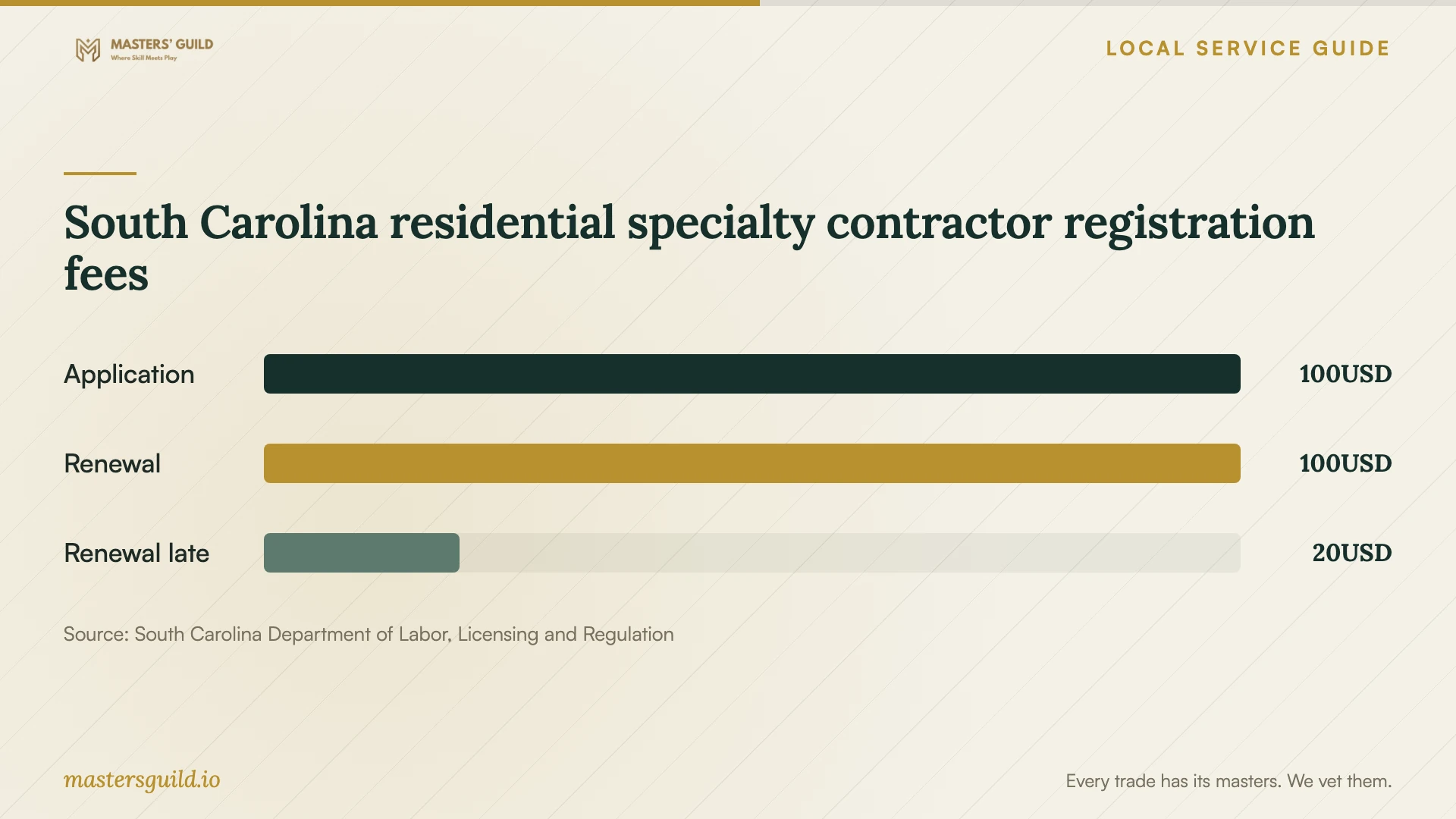
LLR publishes application and renewal fees for residential specialty contractor registration. The fee chart provides context for checking a contractor's registration costs. Use the Commission's scope guidance to determine whether that registration applies to the proposed work. [3]
Compare quotes and arrange room access
Request itemized quotes covering removal, disposal, surface preparation, setting materials, tile, grout, trim, and fixture removal or reinstatement where applicable. Identify allowances and exclusions. Agree on how the installer will document concealed conditions and obtain written approval for additional work after removal.
Approve the layout before installation. Discuss grout color, exposed edges, cuts around fittings, and transitions into adjoining rooms. Have the installer show the proposed arrangement at the doorway or another prominent viewpoint, and record your selections for the crew.
Request separate dates for demolition, installation, and return to use. Confirm when you can walk on the floor, replace furniture, or use the shower under the selected product instructions. Arrange alternative bathroom access if needed. Agree on dust protection, material storage, delivery access, and daily cleanup.
For exterior work, discuss weather protection and the procedure for postponing installation. Have the installer explain how they will check site conditions against the selected product instructions. Include responsibility for protecting stored materials and unfinished areas during interruptions.
South Carolina residential specialty contractor registration fees
Local details that affect your job
Combine renovation costs for floodplain review
Charleston applies a one-year cumulative substantial-improvement rule: improvements reaching 50% or more of the building's value require compliance with current city floodplain requirements. If you plan tile replacement alongside other renovations, ask floodplain staff to review the combined costs before committing to the scope. Prepare the other project estimates along with the tile quote. [1]
Check preservation review before buying exterior tile
Within historic districts, Charleston's Board of Architectural Review reviews alterations and renovations visible from the public right-of-way. The city says staff handle most minor alterations, including repairs and sitework. For an exterior entry, porch, or piazza change, prepare photographs and proposed materials and ask which review route applies. General BAR questions go to 843-724-3765. [2]
Assign follow-up for supplemental permit uploads
Charleston accepts PDF files for permit submissions and directs applicants to notify the Permit Center after uploading supplemental documents through the Customer Self Service portal. City staff do not receive notifications of those uploads. Name the person responsible for that follow-up so a revised scope or additional document receives staff attention. [4]
Choose the next step for your tile project
| Project situation | Next step | Information to prepare |
|---|---|---|
| Limited tile repair | Request an inspection and agree on an acceptable match. | Photographs, spare tile, and repair boundaries. |
| Shower replacement | Define responsibility for waterproofing and associated trades. | Proposed products, drain work, and testing questions. |
| Flooring in the city's Special Flood Hazard Area | Resolve building permitting before work. | Address, flooring scope, and other renovation costs. |
| Visible exterior alteration in a historic district | Ask BAR staff which review route applies. | Existing photographs and proposed materials. |
| Uncertain permitting jurisdiction | Check the Permit Center's city-limits map. | Exact property address. |
Your hiring checklist
- Prepare matching job descriptions, photographs, dimensions, and tile selections for each installer.
- Confirm the property's jurisdiction and discuss the complete renovation with the responsible permitting office.
- Resolve floodplain and exterior preservation questions before scheduling removal.
- Confirm the credential appropriate to the materials and complete work scope with LLR.
- Record preparation, waterproofing where applicable, disposal, exclusions, and change approvals.
- Approve grout color, layout, edge treatment, and transitions.
- Agree on room access, protection, cleanup, and return-to-use instructions.
Frequently Asked Questions
Does tile replacement require a Charleston permit?
Ask the responsible permitting office about your address and complete scope. Charleston requires building permits for development in its Special Flood Hazard Area, including storm damage flooring repairs. The city's cited guidance does not establish a blanket exemption for tile work elsewhere. [1] [4]
Does an interior bathroom need BAR review?
The city describes BAR review of alterations visible from the public right-of-way within historic districts and identifies jurisdiction over Landmark Overlay properties. This guidance does not establish a universal rule for interior bathroom work. Confirm the property's status and proposed removal with preservation staff. [2]
Which registration should a tile installer hold?
Confirm the appropriate credential for your materials and complete scope with the Residential Builders Commission. LLR's floor-covering classification names several materials without naming ceramic tile. Give the Commission the full project description before relying on a registration label. [3]
How should I compare installation prices?
Compare written quotes for the same scope and materials. Separate removal, preparation, installation, and associated work. Have each installer explain allowances for concealed conditions and the process for approving extras. Include your layout and finish choices before accepting a price.
Sources and scope
This guide combines the sources below with practical planning guidance. Figures apply to the stated geography and period; request a written quote for your property.