
Local service guide
Mold Removal in Charleston, SC: Hiring and Repairs
Arrange Mold Removal in Charleston by asking a contractor to assess the affected materials and moisture source, then provide a written cleanup and repair scope. Before approving rebuilding, check whether your property needs floodplain permits or historic review. For a flooded HVAC system, have an experienced professional check and clean it before restarting it. [1] [2] [3]
Choose a contractor around the moisture problem
Describe what you can see and smell, when you first noticed it, and any known leak or flooding. South Carolina’s environmental agency explains that mold can appear as spots, produce a musty odor, or remain hidden behind walls and under floors. Ask the contractor to explain what they can assess without opening surfaces and what would require further investigation. [3]
Request evidence of insurance and relevant cleanup training. Ask who will perform the work, how they will protect adjacent rooms, and who will handle the leak or other moisture repair. Have the contractor identify any work they plan to subcontract and name the person responsible for coordinating it.
Discuss access and household needs before agreeing to a start date. Ask whether you can use the affected room during work, where equipment and removed materials will go, and how the crew will protect your belongings. If anyone has asthma, a chronic lung condition, or a weakened immune system, discuss exposure concerns with a health care provider; SCDES identifies these groups as more susceptible to health effects. [3]
Agree on removal, drying, and completion
Ask the contractor to distinguish materials they propose to clean from materials they propose to remove. SCDES explains that porous items that cannot dry within 24 to 48 hours are harder to disinfect and may need replacement. Its examples include drywall, carpet, mattresses, and particle-board furniture. Request an explanation before authorizing disposal of belongings or building materials. [3]
Include protection of neighboring areas in the written scope. State guidance recommends plastic shielding around cleanup work and sealing nearby HVAC ducts to limit the spread of disturbed spores. Ask the crew to explain how it will apply those precautions to your room layout and access route. [3]
Set the completion requirements before work starts. Ask for photographs of exposed areas, a record of drying checks, and written confirmation of what moisture repair was completed. SCDES advises drying wood studs before installing replacement wallboard because damp wood can support renewed growth behind the new surface. Ask how the contractor will confirm that condition before closing walls. [3]
Compare the full scope and budget
Request itemized offers for assessment, protection of adjacent areas, removal, drying, disposal, and rebuilding. Ask each bidder to identify exclusions, equipment charges, and the process for approving additional work if the crew finds damage behind a wall or floor. Choose an offer you can understand and check against the finished work.
Ask for separate milestones for cleanup, drying checks, moisture repairs, and reconstruction. Have the contractor explain which tasks depend on permit or preservation decisions. Avoid accepting a completion date without knowing what the contractor has included and which decisions remain open.
Handle floodwater and HVAC before restarting equipment
Enter a flood-damaged home only after it is safe. SCDES advises drying the home as soon as possible after safe entry and having a professional experienced in mold cleanup check and clean the HVAC system before use. The agency warns that restarting a flooded system may spread mold throughout the house. [3]
Tell the contractor whether water reached ducts or equipment, even if the visible growth appears elsewhere. Ask whether the offer includes the HVAC assessment and cleaning or whether you must arrange that work separately. Obtain clear instructions about equipment use while you wait.
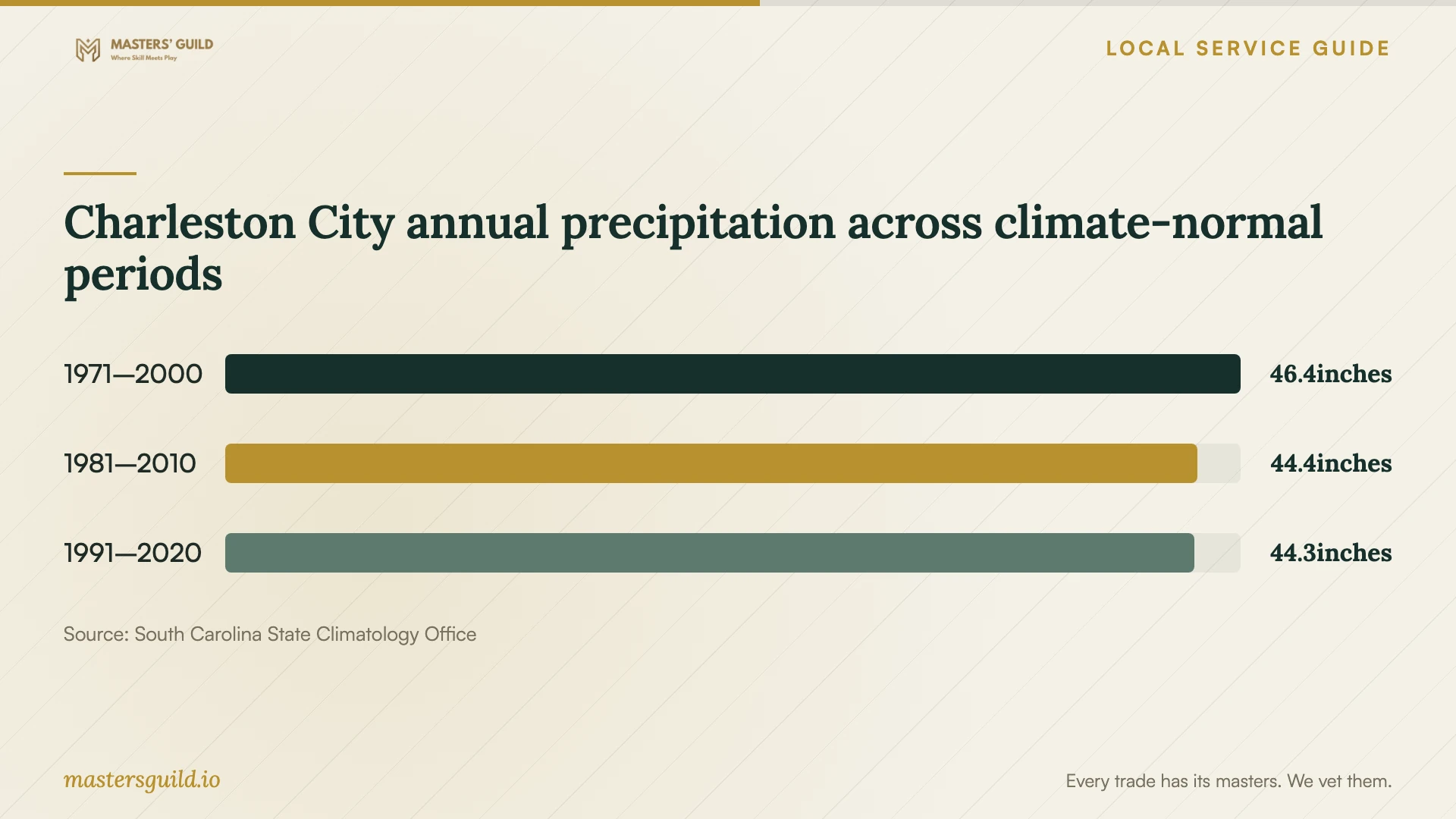
Charleston City annual precipitation across climate-normal periods
Local details that affect your job
Floodplain repairs need an early permit check
For a property inside the City of Charleston’s Special Flood Hazard Area, contact the Permit Center before authorizing storm-damage reconstruction. The city requires a building permit for development there, including repairs to ductwork, flooring, and roofs. Ask the contractor to separate cleanup from the proposed construction work and confirm the permit scope with the city. For larger repairs, ask Floodplain Management about substantial improvement or damage review: the city applies a 50 percent building-value threshold and a one-year cumulative improvement rule. Account for other recent improvements when discussing the project. [1]
Check historic review for the exterior moisture repair
If fixing the water entry involves visible exterior work in a city historic district, check with preservation staff before choosing replacement windows, siding, or other alterations. The Board of Architectural Review reviews alterations and renovations visible from the public right-of-way. The city says staff typically review minor repairs; simple requests such as rot repair can go through the Permit Center or a permit application in the Customer Self-Service Portal. Ask staff which route fits your proposed repair, and prepare photographs and a project valuation. [2]
Match the situation to the next step
| Situation | Next step | Question to resolve |
|---|---|---|
| Musty odor with little visible growth | Request an assessment of possible hidden moisture and mold. | What can you inspect before opening walls or floors? |
| Floodwater reached the HVAC system | Arrange professional checking and cleaning before restarting it. | Does the cleanup offer include HVAC work? |
| Storm repairs in the city’s Special Flood Hazard Area | Confirm the building permit scope with the Permit Center. | Do the flooring, ductwork, or roof repairs need inclusion? |
| Visible exterior alterations in a city historic district | Discuss preservation review before selecting replacements. | Can staff review the repair, or does it need board review? |
Your hiring checklist
- Photograph the affected surfaces and write down the dates of leaks, flooding, and previous repairs.
- Describe any musty odor and identify rooms the contractor needs to inspect.
- Request an itemized scope with cleanup, moisture repairs, and rebuilding listed separately.
- Ask how the crew will protect adjacent rooms and handle household belongings.
- Agree on written approval for added work before the crew opens walls or floors.
- Confirm who will arrange applicable city reviews and permits.
- Set completion requirements, including photographs and drying records, before signing.
Frequently Asked Questions
Can SCDES inspect my home or test it for mold?
SCDES states that it cannot test, monitor, or inspect homes or public buildings for mold or indoor air quality. Arrange an assessment with a contractor and ask what any proposed testing would help decide before paying for it. [3]
Can the crew replace wallboard as soon as it removes the mold?
Ask the crew to confirm drying first. SCDES advises ensuring wood studs are dry before reinstalling wallboard because mold can grow behind the new wallboard if the wood remains damp. Include that check in your agreed completion records. [3]
Does a small exterior repair require a full BAR meeting?
The city says staff typically review minor alterations, including repairs. Simple rot-repair requests can go through the Permit Center or the Customer Self-Service permit process for preservation staff review. Confirm the route for your property and proposed work before scheduling it. [2]
Sources and scope
This guide combines the sources below with practical planning guidance. Figures apply to the stated geography and period; request a written quote for your property.