
Local service guide
Lawn Mowing in Charleston, SC: Plan Your Service
Arrange Lawn Mowing in Charleston, SC by agreeing on the grass species, cutting height, visit schedule, and cleanup before accepting a quote. Ask the provider to price trimming, edging, and debris disposal in writing. Within City of Charleston limits, contractors must remove and dispose of the debris they generate, so confirm that responsibility before booking. [1]
Put the full mowing scope in the quote
Give each provider the same description of the work: front and back lawn, areas outside the fence, trimming around beds and posts, edging along pavement, and cleanup after cutting. Ask them to identify exclusions. Keep fertilizing, weed treatment, shrub pruning, and leaf removal as separate line items unless you want them included.
Request a recurring visit price and a separate price for any initial overgrowth cleanup. Ask whether the provider charges for bagging, hauling, missed access, or an extra visit after a weather delay. The supplied sources do not establish a Charleston mowing price range; compare written quotes for the same work rather than using an unsupported local average.
Describe gate access, steps, slopes, narrow passages, and obstacles before the provider chooses equipment. Ask for proof of insurance and a written process for reporting damage. Agree on who moves outdoor furniture and how the crew will secure gates when leaving.
Choose frequency by growth and cutting height
Clemson Extension recommends removing no more than one-third of the grass height in one mowing. For a centipede lawn maintained at 2 inches, its example calls for mowing when the grass reaches about 3 inches. Use that relationship to discuss frequency with your provider instead of choosing an interval from the calendar alone. [4]
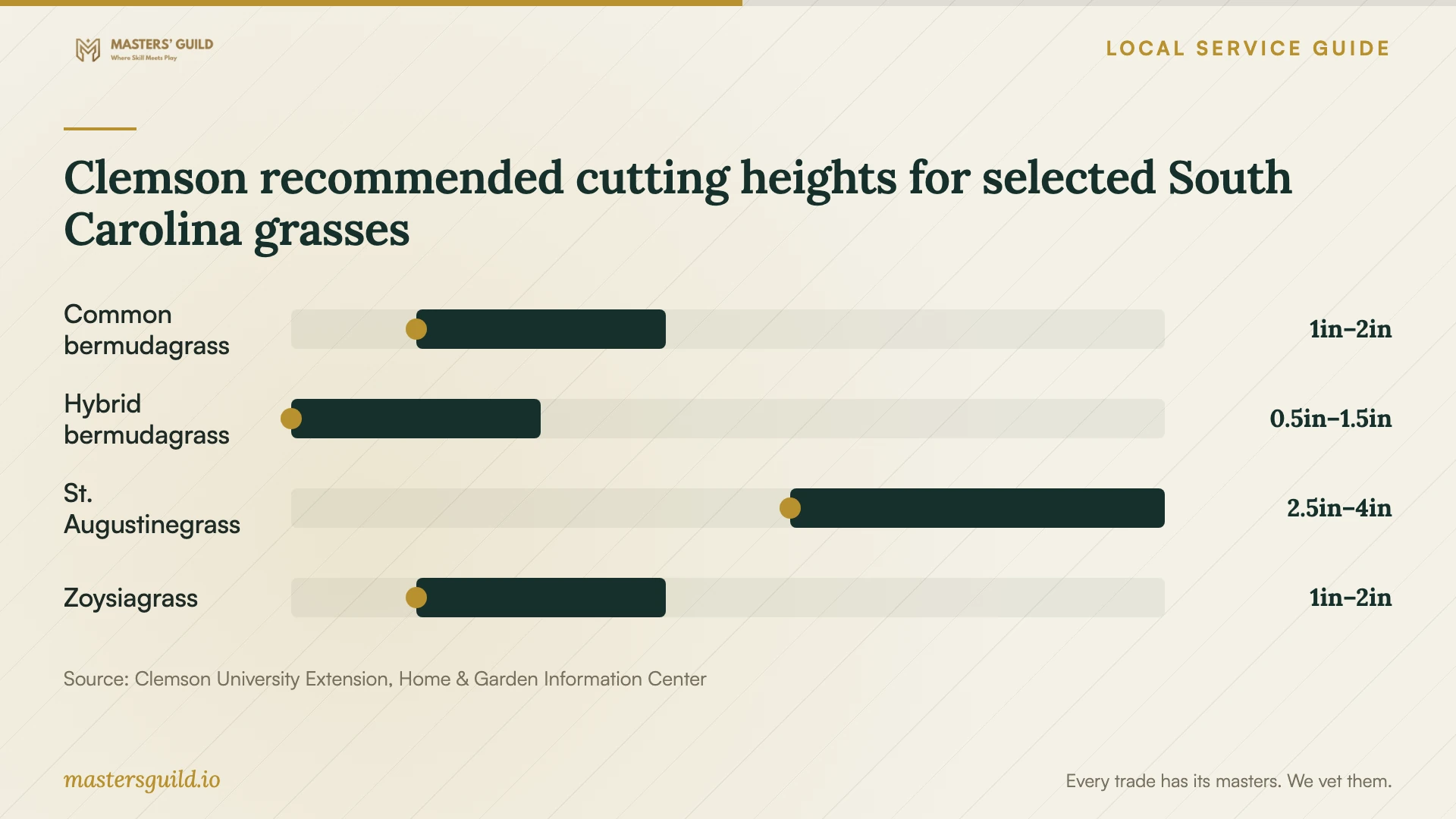
Ask the provider to identify your turf and explain the proposed cutting height. Clemson lists different height ranges for different grasses and recommends a higher cut under heat, drought, or shade stress. If the grass has grown too tall between visits, Clemson advises raising the cutting height and reducing it over subsequent cuts. [4]
Write down how you will approve schedule changes. Discuss when to add a visit, when to pause for slower growth, and how to reschedule if the ground is saturated. Ask the crew to contact you before mowing a wet area that you have marked for review.
Set a clipping and cleanup plan
Clemson recommends returning grass clippings to the lawn because they return nutrients to the soil. Its one-third rule also produces smaller clippings that filter down toward the soil surface. Discuss mulching with the provider, and specify who handles any material they collect or remove. [4]
Within the City of Charleston, the city's landscaper FAQ assigns removal and disposal of contractor-generated debris to the contractor under Ordinance Section 14-51. Ask where the provider will take collected clippings and other debris. Do not accept a cleanup plan that assumes the city will collect a contractor's curbside pile. [1]
Ask the crew to clear stray clippings from pavement and keep them out of streets, gutters, and drain openings. The city explains that wind and rain carry yard waste into drainage systems and that stormwater reaches waterways without wastewater treatment. Walk those areas with the provider when agreeing on the finish standard. [3]
Adjust centipedegrass service through the season
If your lawn is centipedegrass, use Clemson's species-specific maintenance program when discussing mower settings. Its summer guidance gives an ideal height of 1 to 2 inches depending on site conditions, recommends 2 inches in partial shade, and calls for raising the height by one-half to 1 inch during heat or drought stress. [5]
For fall, Clemson advises maintaining the normal height until the weather cools, then raising the blade to about 2 inches once nighttime temperatures fall below 70 degrees Fahrenheit. Ask your provider to review growth and height before extending the summer schedule into autumn. [5]
Clemson notes that coastal South Carolina centipedegrass can begin greening during April, while timing varies with the year's weather. Its spring guidance includes a lower cut before green-up and collection of dead material. Treat that work as a separate seasonal discussion so the provider does not apply a spring setting during routine summer mowing. [5]
Clemson recommended cutting heights for selected South Carolina grasses
Local details that affect your job
Contractor disposal changes the hiring scope
For work inside City of Charleston limits, require the contractor to account for removal and disposal of debris they generate. The city expressly assigns that responsibility to landscapers and other contractors. Confirm municipal boundaries for your address before applying this city policy to a property elsewhere in the region. [1]
Resident cleanup follows a separate collection policy
If you mow and collect clippings yourself, the city's residential policy requires brown paper bags designed for yard waste, which you supply. Place them at the curb no earlier than two days before scheduled pickup. The city FAQ says crews will not collect loose grass or leaf piles. Keep this resident service separate from a hired contractor's disposal obligation. [1] [2]
Drain cleanup belongs in the finish standard
The city identifies yard waste in streets and storm drains as a source of drainage blockages and water-quality problems. Point out the drain approaches near your lawn and ask the mowing provider to include removal of stray clippings there in the cleanup scope. [3]
Match the service plan to your lawn
| Situation | Discuss with the provider | Reason |
|---|---|---|
| Grass reaches the cutting threshold before the next visit | Shorten the interval | Clemson recommends removing no more than one-third of the height per mowing. |
| Grass has become overgrown | Use a higher first cut and staged height reduction | Clemson advises gradual reduction after grass becomes too tall between cuts. |
| Contractor collects debris within city limits | Include hauling and disposal in the quote | The city assigns contractor-generated debris disposal to the contractor. |
| Centipedegrass faces heat or drought stress | Review a temporary height increase | Clemson's centipedegrass program recommends raising the height by one-half to 1 inch during stress. |
Your hiring checklist
- Share lawn photos, access instructions, gate width, and the areas you want cut.
- Ask the provider to identify the grass and state the proposed cutting height.
- Specify mowing, trimming, edging, pavement cleanup, and exclusions in writing.
- Confirm who removes collected debris and whether disposal is included.
- Agree on weather delays, schedule changes, and approval for extra charges.
- Mark irrigation heads, fragile planting edges, and areas needing special care.
- Check insurance documentation and agree on a damage-reporting process.
Frequently Asked Questions
Should I choose weekly or biweekly mowing?
Use grass growth and the agreed cutting height to decide. Clemson recommends removing no more than one-third of the height per cut. Ask the provider to adjust the interval when your lawn would exceed that limit before the next visit. [4]
Can my mowing contractor leave bags for city pickup?
The City of Charleston says contractors must remove and dispose of debris they generate. Require the contractor to explain their disposal plan rather than relying on residential curbside collection. [1]
Do I need all the grass clippings bagged?
Clemson recommends returning clippings to the lawn to recycle nutrients. Discuss mulching as part of routine mowing. If the provider collects material, agree on its removal and disposal before work starts. [4]
What should I compare besides the visit price?
Compare the areas covered, cutting height, trimming and edging, debris removal, weather-delay terms, and extra-charge rules. Ask each provider to quote the same scope and distinguish initial cleanup from recurring visits.
Sources and scope
This guide combines the sources below with practical planning guidance. Figures apply to the stated geography and period; request a written quote for your property.