
Local service guide
Gardening in Charleston: Hiring and Planning Guide
For Gardening in Charleston, hire against a written list of beds, plants, and tasks, and include debris removal in the quote. Within city boundaries, Charleston requires contractors to remove the yard debris they generate. Before approving fertilizer, lime, or replacement planting, consider soil testing and ask the gardener to explain the proposed treatment and follow-up care. [1] [4]
Define the work before comparing offers
Write down the areas you want maintained and the result you expect. Distinguish hand weeding, planting, mulching, shrub pruning, watering, and debris removal. Mark plants you want to keep, including seedlings or dormant plants. Send photographs and describe access through gates, paths, or the house.
For an overgrown garden, request a cleanup quote and a separate maintenance proposal. Ask how the gardener charges, who supplies materials, and which additions require your approval. For recurring work, agree on tasks per visit, weather rescheduling, and a spending limit for replacement plants. Ask for proof of liability insurance and examples of comparable work.
Put debris removal in the agreement
The City of Charleston says contractors must remove and dispose of the debris they generate, including debris from landscapers and tree surgeons. Ask the gardener to include loading, haul-away, and disposal in the written price. Confirm your property's municipality before relying on these city collection rules. [1]
For yard waste you generate yourself, the city requires brown paper bags for leaves, twigs, weeds, and grass clippings; it does not collect loose leaf or grass piles. It also excludes dirt, sod, and sand from single-family residential collection. Confirm a separate disposal plan before a project involves digging out beds or removing turf. [1]
Test soil before approving amendments
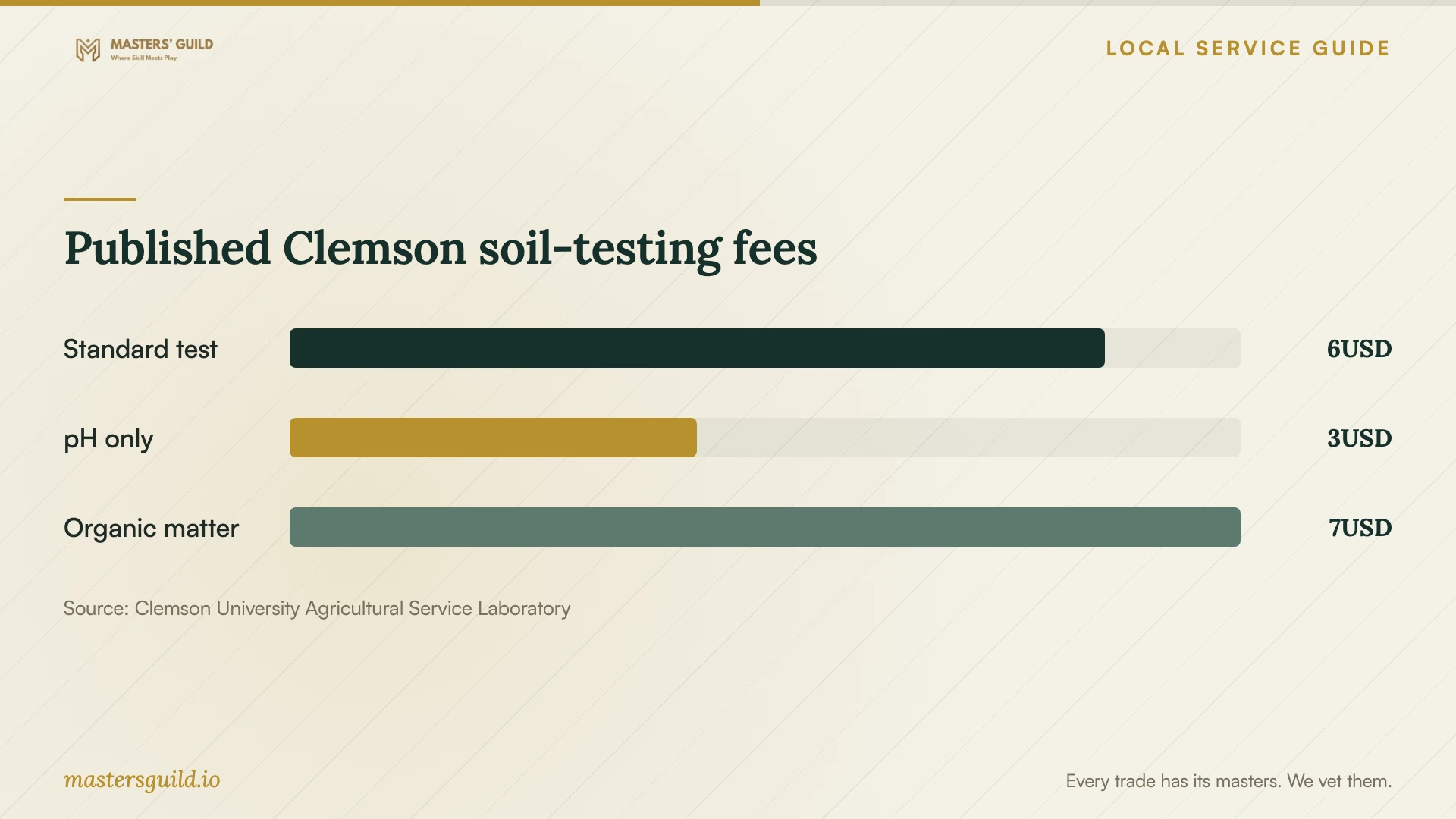
Clemson's Agricultural Service Laboratory uses soil testing to inform fertilizer and limestone applications for gardens, ornamentals, and lawns. Its published standard soil test costs $6 per sample and includes pH, listed nutrients, lime requirements, and recommendations. Ask your gardener whether collecting samples and reviewing results form part of the job, or whether you should arrange testing before the first visit. [4]
Use the report to discuss a specific amendment plan rather than approving an unspecified fertilizer package. Ask the gardener to identify the product, quantity, area to treat, and application charge. Clemson explains that testing helps guard against the expense and environmental hazards of excessive fertilizer applications. [4]
Schedule planting around the crop and site
Clemson places Charleston County in its Coastal Plain gardening region. Its coastal fall vegetable calendar lists garlic from October 1 through November 30, lettuce from September 5 through November 1, and kale and collards from August 1 through October 30. For an October planting job, discuss these crops and leave time for preparation before the relevant window ends. Treat those dates as regional planting guidance and ask the gardener to assess your site. [2]
Check the site before buying vegetable plants. Clemson recommends at least six hours of direct sun for South Carolina vegetable gardens and full sun for fruiting vegetables such as tomatoes and peppers. It identifies raised beds as an option for poorly drained sites. Ask the gardener to assess sunlight, water access, and drainage before proposing a bed location. [2]
Agree on who will water after planting and who will check the plants between paid visits. Request a plant list with quantities and placement before purchase. For a vegetable garden, tell the gardener what you intend to eat and how much space you want to maintain.
Verify credentials for hired pesticide work
For commercial pesticide applications to ornamentals or turf, South Carolina requires an applicator license in Category 3, including applications of general-use products. If your hired gardener proposes treatment in those areas, ask for the applicator's current license and applicable category. Clemson's Department of Pesticide Regulation also requires insurance for commercial pesticide work. [5]
Clemson separately states that any application of restricted-use pesticides requires a licensed applicator, commercial or otherwise. The commercial Category 3 rule does not establish a blanket licensing requirement for homeowners applying general-use products themselves. [5]
Ask the gardener to name the pest or weed, explain the treatment, and provide the product label before you approve the work. Clemson states that pesticide label directions govern application and storage and carry the weight of law. Discuss the label's restrictions affecting children, pets, edible plants, and access to treated areas. [5]
Published Clemson soil-testing fees
Local details that affect your job
City collection does not cover hired gardening debris
Within the City of Charleston, the contractor must remove and dispose of debris from the work. Make disposal part of your quote and completion check. Confirm your property's municipality before relying on these city collection rules. [1]
Soil sample drop-off at Citadel Mall
Clemson's TEACH Center accepts soil samples at 2070 Sam Rittenberg Boulevard, Suite C412, in the Belk wing of Citadel Mall. Bring two cups of dry soil in a labeled plastic zip-top bag or soil sample bag; the center requests a quart-sized bagful for raised beds. Pay online or by check. The center provides a drop box during mall hours and asks visitors seeking Master Gardener advice to call 843-730-5205 ahead. It does not accept plant or insect samples. [3]
Use the coastal vegetable calendar
Charleston County falls within Clemson's Coastal Plain region. Use the coastal columns when arranging vegetable planting. The published fall garlic window extends through November 30, giving you a specific date around which to arrange bed preparation and planting. [2]
Choose the scope that matches your garden
| Your situation | Arrange | Confirm before work |
|---|---|---|
| Overgrown beds | A defined cleanup with haul-away | The contractor removes debris generated within the City of Charleston. |
| Fertilizer or lime proposed | Soil testing and review of recommendations | Who collects samples and what amendments the gardener proposes. |
| Fall vegetable planting | Preparation using Coastal Plain crop dates | Crop choice, sunlight, planting date, and watering responsibilities. |
| Hired pesticide treatment of ornamentals or turf | A commercial applicator with Category 3 credentials | Current applicator license, insurance, and product label, including for general-use pesticides. |
| Ongoing bed care | A written maintenance schedule | Tasks per visit, material allowances, and approval of extra work. |
Your hiring checklist
- List each bed and task, and mark plants to keep.
- Describe gate access, parking, water access, and material delivery needs.
- Request separate prices for cleanup, recurring care, materials, and disposal.
- Agree on who collects soil samples and reviews the results.
- Approve plant varieties, quantities, and placement before purchase.
- Ask for the applicator's current license and category before hiring pesticide treatment.
- Set watering responsibilities and a process for approving extra charges.
Frequently Asked Questions
How much should I budget for gardening?
Request a quote for your actual beds and tasks. Compare labor, plants, mulch, disposal, and follow-up work on the same basis. Clemson lists a $6 standard soil test per sample, but that laboratory fee does not establish a gardener's visit price or include sample collection labor. [4]
Can my gardener leave the debris for city pickup?
Within the City of Charleston, contractors must remove and dispose of debris they generate. Include haul-away in the agreement and confirm completion before closing out the job. [1]
Where can I get help before replacing struggling plants?
The TEACH Center at Citadel Mall offers gardening advice and accepts soil samples. Call ahead to confirm a Master Gardener volunteer is available. Bring photographs for discussion, and remember that the center does not accept plant or insect samples. [3]
Does a hired gardener need a license to apply pesticides to ornamentals or turf?
Yes. Clemson's regulator states that commercial applications of general-use or restricted-use pesticides in Category 3, ornamentals and turf, require an applicator license. Ask for current credentials before approving treatment. Separately, any restricted-use pesticide application requires a licensed applicator, commercial or otherwise. [5]
Sources and scope
This guide combines the sources below with practical planning guidance. Figures apply to the stated geography and period; request a written quote for your property.