
Local service guide
Charleston flooring installation and repair
For flooring installation and repair in Charleston, ask bidders to inspect the existing floor, document moisture concerns, and quote preparation separately from installation. Before scheduling demolition, confirm your property's permitting jurisdiction and floodplain status. The City requires a building permit for development in the Special Flood Hazard Area, including storm-damaged flooring repairs. For residential work, check the contractor's credential against the proposed materials and scope. [1] [2] [3]
Choose the repair scope before shopping for materials
Ask the installer to separate cosmetic damage from problems in the surface beneath the flooring. Walk through the rooms together and identify the boards or areas you want repaired. For a patch, ask how the installer will match the existing material and finish; for replacement, identify the rooms, thresholds, closets, and stairs in the scope.
For wood floors with raised edges, gaps, or distortion, ask the installer to investigate moisture before proposing sanding or replacement. Oregon State University Extension explains that solid wood shrinks and swells as it loses or gains moisture. Describe any leak or storm event and ask who will investigate its cause before the installer covers the surface. [4]
Request separate options for a localized repair and a larger replacement when either could meet your goals. Ask each bidder to explain the finish match, preparation work, and limits of the proposed repair. Decide how much variation you will accept before approving a patch.
Verify the contractor's scope
South Carolina's Residential Builders Commission defines residential specialty contractors as independent contractors undertaking qualifying specialized construction, repairs, or improvements exceeding $500. Its Floor Covering Installers classification includes asphalt, vinyl, rubber, linoleum, and carpet, related accessories, and preparation of the surface to be covered. [2]
That published classification does not expressly list hardwood, laminate, or tile. Ask the bidder to identify the registration or license covering your chosen material and any associated repairs. If the answer remains unclear, ask the Commission to confirm the scope. The Commission prohibits residential specialty contractors from undertaking work outside their registration, including hiring others to perform that work on their behalf. [2]
Request the credential holder's name, credential number, insurance documentation, and the name of the person responsible for the job. For damaged framing or other work beyond the floor covering, ask who will assess and quote it. Put those responsibilities in the agreement before paying a deposit.
Use moisture readings to plan wood flooring
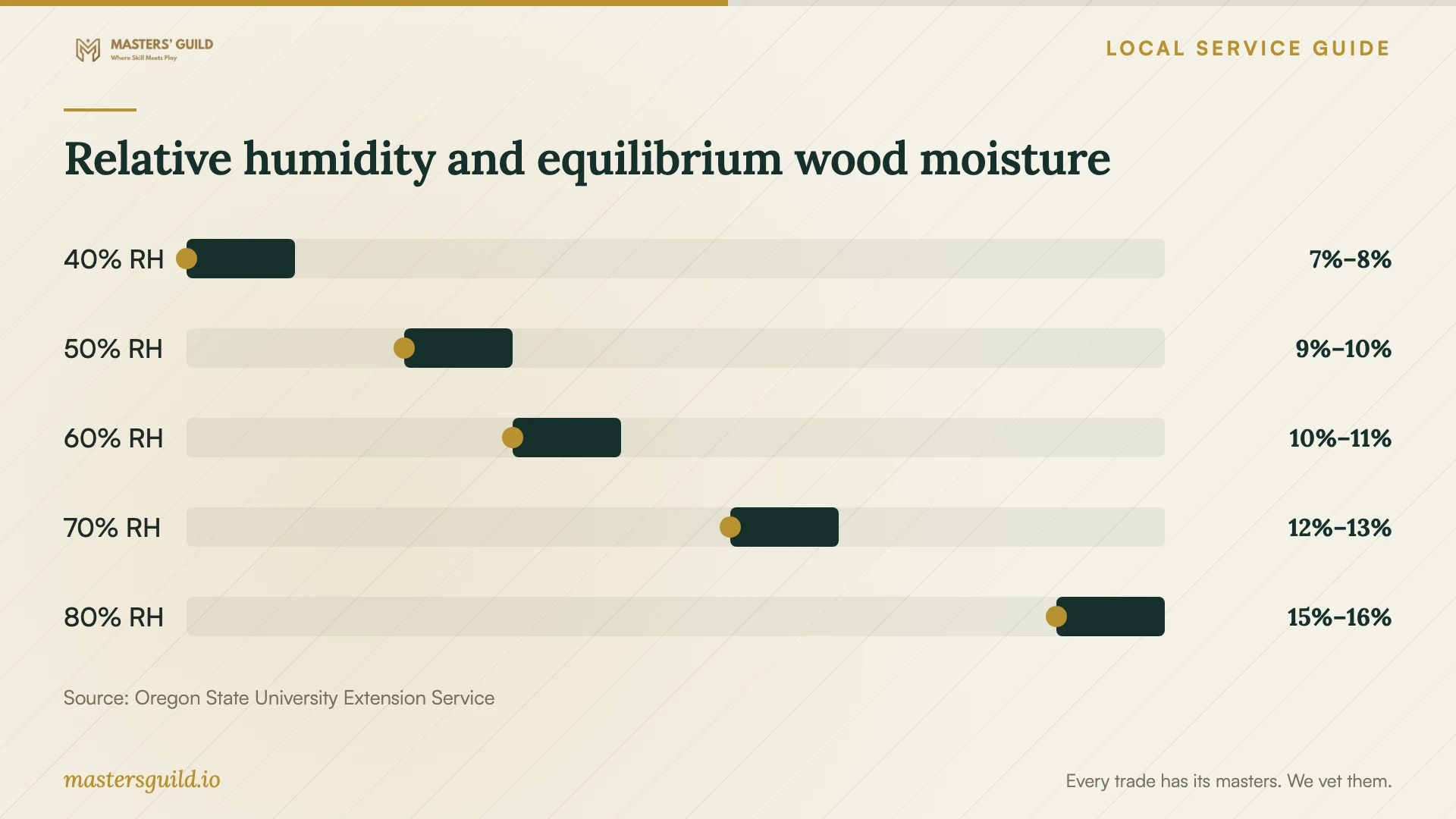
Ask the installer to record indoor conditions and wood moisture readings during the assessment, then explain the chosen flooring manufacturer's acceptance criteria. OSU Extension describes equilibrium moisture content as the balance wood reaches with the temperature and relative humidity around it. Its reference table shows higher equilibrium wood moisture at higher relative humidity. [4]
Use the chart to understand why an installer should assess conditions before installation. The values describe a general wood-moisture relationship, rather than measurements inside Charleston homes or a product acceptance limit. Ask the bidder to document the testing method and distinguish readings from the existing wood, new flooring, and supporting surface. [4]
OSU Extension notes that species, density, moisture distribution, thickness, and temperature affect moisture-meter readings. Ask how the installer accounts for those factors. Agree on who will authorize installation after testing and how the schedule will change if the installer finds conditions outside the product's requirements. [4]
Compare complete quotes and arrange access
Send bidders the same room list and ask them to itemize materials, removal, disposal, surface preparation, installation, trim, and transitions. Request a stated allowance or unit rate for concealed repairs, plus a requirement for your written approval before extra work. Compare the full scope alongside the total price.
Build your budget from written, site-specific quotes. Ask bidders to identify the product, installation method, exclusions, payment stages, and workmanship warranty so you can see what each offer includes.
Before booking, agree on furniture moving, appliance handling, material storage, delivery access, and protection for rooms outside the work area. Ask for separate dates for preparation, installation, and return to use. Have the installer explain the chosen adhesive or finish instructions that determine when you can walk on the floor and replace furniture.
Relative humidity and equilibrium wood moisture
Local details that affect your job
Confirm the permitting authority for your address
The City's Permit Applications page warns that West Ashley, James Island, Johns Island, and Cainhoy contain properties both inside and outside City jurisdiction. Its Fire Marshal guidance directs applicants to the City's map tools to check their project location. Check your address before contacting a permitting office, then describe the flooring work and any supporting repairs to the responsible authority. [3]
Check floodplain requirements before storm repairs
The City's Floodplain Development page requires a building permit for all development in the Special Flood Hazard Area and names storm-damaged flooring repairs. It also applies a substantial-improvement rule when cumulative improvement costs over the past year reach 50% or more of the building's value. If flooring forms part of a larger renovation or damage-repair project, bring the full scope and recent improvement history to the City's floodplain staff before authorizing work. [1]
Choose your next step before booking
| Situation | Next step | Ask the bidder |
|---|---|---|
| Localized surface damage | Request a repair option alongside replacement. | How will you match the material and finish? |
| Wood distortion or a known leak | Request moisture investigation before approving the finish work. | Where will you test, and how will you interpret the readings? |
| Storm-damaged flooring in the City's Special Flood Hazard Area | Arrange the required building permit before work. | Who will handle permitting and coordinate the repair scope? |
| Vinyl or carpet residential work exceeding $500 | Check the applicable residential specialty registration or license. | Which credential covers installation and surface preparation? |
| Hardwood, laminate, tile, or additional structural repairs | Confirm credential scope with the Commission if unclear. | Which credential covers each part of this proposal? |
Your hiring checklist
- List the rooms, damaged areas, existing flooring, and desired result.
- Confirm the property's permitting authority and ask about floodplain status.
- Request a credential number and confirmation that it covers the proposed scope.
- Ask for recorded moisture readings and the selected product's installation criteria.
- Obtain itemized quotes with removal, preparation, trim, and disposal responsibilities.
- Require written approval for concealed repairs and other additional charges.
- Agree on access, furniture moving, payment stages, and return-to-use instructions.
Frequently Asked Questions
Do I need a permit to replace flooring?
Confirm with the authority responsible for your property. The City's floodplain guidance requires a building permit for development in the Special Flood Hazard Area, including storm-damaged flooring repairs. For ordinary replacement outside the Special Flood Hazard Area, ask your permitting authority whether your scope requires a permit. [1] [3]
Does a flooring installer need a South Carolina credential?
The Residential Builders Commission defines qualifying residential specialty contracting for undertakings exceeding $500 and lists a Floor Covering Installers classification. Its stated materials include vinyl and carpet. Ask the Commission about the appropriate credential for hardwood, laminate, tile, or work beyond that published scope. [2]
How long should wood flooring acclimate?
Ask the installer to follow the selected product's instructions and document conditions before installation. OSU Extension explains that wood exchanges moisture with surrounding air. Have the installer explain how the measured conditions and product requirements affect your installation date. [4]
How can I compare flooring quotes?
Give bidders the same scope and ask for itemized totals. Include removal, disposal, preparation, installation, trim, and responsibility for moving furniture. Ask each bidder to state exclusions and explain how you will approve and pay for concealed repairs.
Sources and scope
This guide combines the sources below with practical planning guidance. Figures apply to the stated geography and period; request a written quote for your property.