
Local service guide
Duct cleaning in Charleston, SC: Hiring Guide
Duct cleaning in Charleston should start with an inspection and an itemized written estimate. Consider cleaning if you find substantial visible mold inside hard-surface ducts or on other HVAC components, vermin infestation in ducts, or ducts clogged with excessive dust and debris and/or particles coming from supply registers. EPA advises correcting the underlying causes before cleaning. Compare providers on the components they will clean and how they will protect your home. [1]
Use inspection findings to decide
Have the inspector identify the affected component and show you its condition. EPA's reasons to consider cleaning are substantial visible mold growth inside hard-surface ducts or on other heating and cooling components, ducts infested with vermin, and ducts clogged with excessive dust and debris and/or particles released into the home through supply registers. Describe any particles, odors, leaks, or renovation dust you noticed, but require evidence before agreeing to a cleaning scope. [1]
Treat suspected mold as a finding that needs assessment. EPA says an expert must identify mold and may need laboratory analysis for confirmation. Correct the cause before cleaning, retrofitting, or replacing affected ducts; EPA warns that leaving the cause unresolved can lead to recurrence. [1]
Keep health and energy expectations realistic. EPA says duct cleaning has not been shown to prevent health problems and finds little evidence that cleaning ducts alone improves system efficiency. Discuss unexplained symptoms with your doctor rather than relying on a cleaner's health promises. [1]
Compare inspected quotes and complete scopes
Request a written total for your inspected system. Give bidders the same equipment locations and requested scope, then compare access charges, exclusions, and optional work. If a bidder prices by vent count, have them identify which openings count and whether the price includes returns. Obtain a duration estimate for your job before arranging time at home.
EPA advises cleaning all components of a contaminated system because an uncleaned component can contaminate the system again. Have bidders name the supply and return ducts, registers, grilles, air handler, blower, coils, and drain pans they will address. Identify who will handle components that fall outside the cleaner's qualifications. [1]
If you also want dryer exhaust cleaning, request a separate line item. Describe the route and exterior outlet you want inspected. Keep proposed repairs and replacement work separate so you can review their cost and approval requirements before expanding the job.
Check collection methods and credentials
Have the crew explain where its vacuum exhaust goes. EPA recommends equipment that exhausts particles outdoors, or HEPA vacuum equipment when it exhausts indoors. The provider should protect furnishings, choose brushes suited to the duct material, and seal and reinsulate any access holes it creates. [1]
Check references and experience with systems like yours, and request proof of liability insurance. EPA does not certify or endorse duct-cleaning companies. If the proposal includes residential HVAC contracting, use South Carolina LLR's Licensee Lookup option to check the applicable credential. LLR lists a residential HVAC contractor license category; do not treat that as proof of a separate cleaning-only license requirement. [1] [4]
Review chemical treatments before approving them. Request the product label, intended use, and explanation for why physical cleaning and moisture control would be insufficient. In its October 1997 guidance, available on the page updated February 19, 2026, EPA states that it has registered no biocides for fiberglass duct board or fiberglass-lined ducts. The guidance also advises against routine coatings that encapsulate contaminants. [1]
Resolve moisture and replacement work first
Have an HVAC contractor investigate leaks, standing water in the condensate pan, and wet insulation before you approve cleaning. EPA identifies condensation near cooling coils as a major factor in moisture contamination and recommends checking drainage, repairing leaks, and sealing and insulating ducts in unconditioned spaces such as attics and crawlspaces. [1]
For wet or moldy insulated ducts, obtain a replacement proposal. EPA says cleaning cannot effectively restore affected insulation. Require the contractor to explain the moisture correction and show which sections need replacement, then resolve the local approval questions for that expanded scope. [1]
Arrange access and inspect the result
Agree on equipment access, furniture protection, pets, and the interruption to heating or cooling before the appointment. Clear the agreed work areas and arrange permission for shared-space access. Require your approval before the crew adds repairs or treatments to the written scope.
Walk through the completed work before final payment. EPA recommends visual inspection of the cleaned components, secure reattachment of registers, checks for leakage at access doors, and confirmation that the system works in heating and cooling modes. Request photographs of inaccessible areas and record any deficiencies for the contractor to correct. [1]
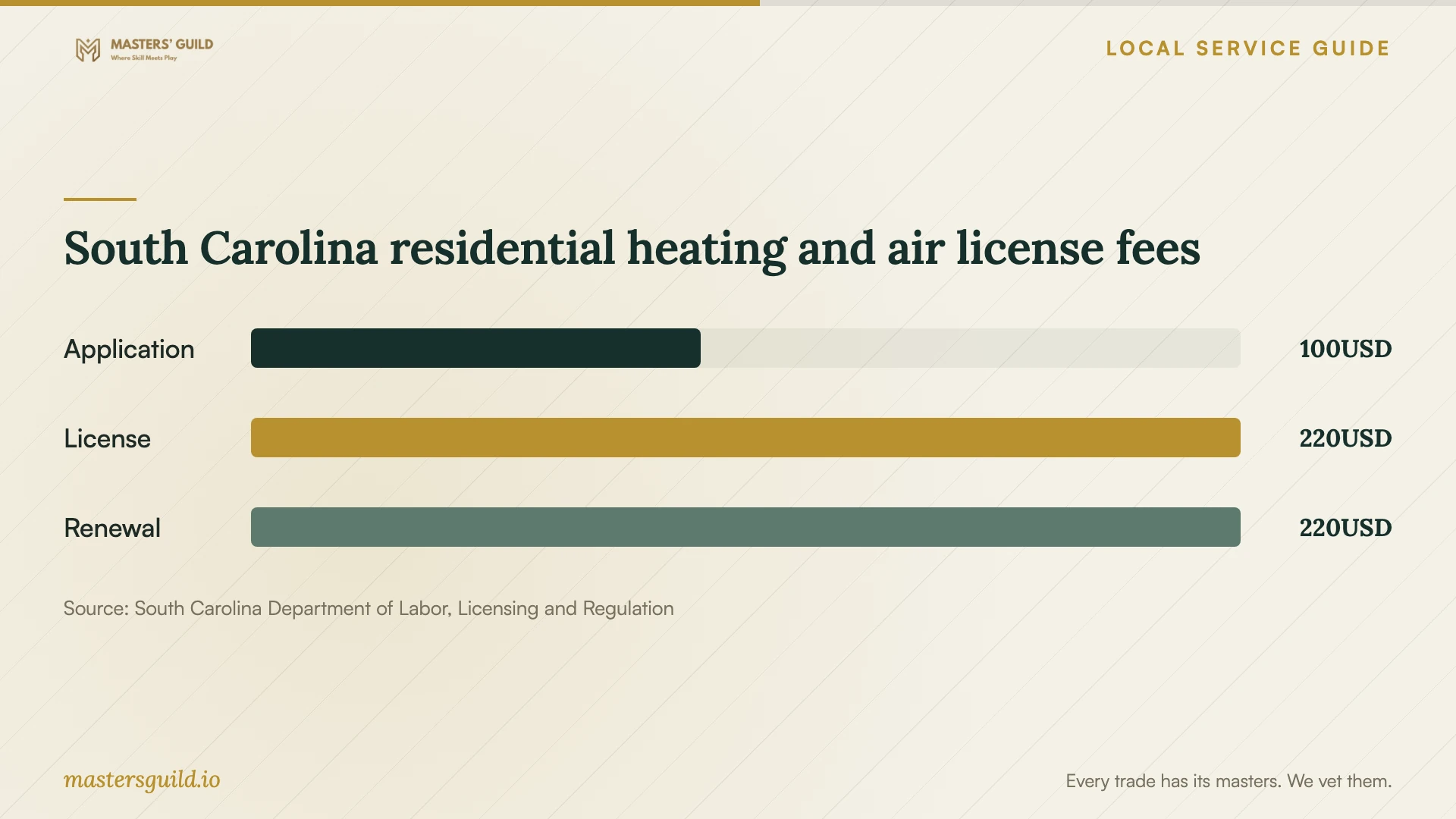
South Carolina residential heating and air license fees
Local details that affect your job
Confirm city jurisdiction for an expanded job
Before approving duct repairs, equipment replacement, or other alterations, check which jurisdiction handles your address. Charleston's Permit Center directs owners to search the city's interactive GIS map to confirm city limits. For a city property, describe the exact proposed scope to the Permit Center at 843-577-5550 or submit questions through CSS. Confirm the permit requirements and submission route before the contractor starts the expanded work. [3]
Resolve preservation review before exterior changes
If the proposal includes a new exterior opening, relocated outlet, or another visible alteration, check BAR jurisdiction before authorizing it. Within historic districts, Charleston's BAR reviews alterations visible from the public right-of-way and also has jurisdiction over listed Landmark Overlay properties. Staff typically review minor alterations. Call 843-724-3765 to discuss the proposed change. Board applications must go through CSS; a new CSS account can take up to three business days to activate, so account for that step when scheduling work. [2]
Choose your next step from the findings
| Finding | Next step | Before approving work |
|---|---|---|
| Dust on a return grille alone | Vacuum or remove and clean the grille | Require evidence before expanding to whole-system cleaning |
| Ducts clogged with excessive dust and debris and/or particles released through supply registers | Consider cleaning after correcting underlying causes | Agree on the complete contaminated-system scope |
| Substantial visible mold inside hard-surface ducts or on HVAC components | Consider cleaning after assessment and cause correction | Have the provider show the growth; expert confirmation may require lab analysis |
| Vermin infestation in ducts | Correct the underlying cause and consider cleaning | Separate cause correction from the cleaning proposal |
| Wet or moldy duct insulation | Arrange replacement and moisture correction | Review the affected sections and separate replacement cost |
| Proposed exterior alteration in a historic district | Check BAR jurisdiction and review | Confirm the approval path before authorizing the change |
Your hiring checklist
- Describe the symptom and request evidence from the affected component.
- Give bidders the same equipment locations and requested scope.
- Compare written totals, exclusions, access charges, and separate repair options.
- Confirm debris collection, furnishing protection, and access-hole restoration.
- Review product labels before approving chemical treatments.
- Resolve jurisdiction and preservation questions for proposed alterations.
- Agree on access, pets, appointment duration, and system downtime.
- Walk through the completed work and record unresolved deficiencies.
Frequently Asked Questions
Should I schedule duct cleaning each year?
EPA recommends cleaning as needed, rather than on a routine schedule. Keep up with filter changes and HVAC maintenance. Dust on a return grille alone does not establish contamination deeper in the system. [1]
How much should I budget?
Obtain an inspected written quote for your systems and access conditions. Compare identical component lists and separate cleaning from repairs, replacement, dryer exhaust work, and optional treatments. Require a total and a process for approving additional charges.
Do I need city approval?
Confirm your property's jurisdiction and describe the proposed scope to the Permit Center. Resolve permit questions before approving repairs or alterations. Check BAR review if the contractor proposes visible changes in a historic district or work affecting a Landmark Overlay property. [2] [3]
Can cleaning stop recurring mold?
EPA warns that growth will recur if you leave its cause uncorrected. Have the contractor investigate moisture and drainage. Wet or moldy duct insulation needs replacement rather than cleaning. [1]
Sources and scope
This guide combines the sources below with practical planning guidance. Figures apply to the stated geography and period; request a written quote for your property.