
Local service guide
Charleston bathroom remodeling: A planning guide
Arrange bathroom remodeling in Charleston, SC by defining the work, checking the contractor’s relevant state credentials, and confirming your address’s permitting jurisdiction before agreeing to demolition. Ask each bidder to name the plumber and electrician, describe waterproofing, and assign responsibility for permits and inspections. Within city limits, check floodplain status before treating a cosmetic refresh as permit-free: the city requires permits for all work in the Special Flood Hazard Area. [1] [3] [5]
Define the bathroom you want before requesting quotes
Write a scope that separates what you want to keep from what you want to replace. Identify the tub or shower, toilet, vanity, flooring, lighting, and storage. State whether you want to move fixtures, open walls, or change a doorway. Give each bidder the same scope and ask them to explain any proposed changes.
For a shower, ask the contractor to specify the waterproofing system, drain connection, wall preparation, and checks before tile installation. For ventilation, discuss where the fan will discharge and whether the work changes the exterior. Request fixture model numbers and finish selections so you can compare offers without guessing what each allowance buys.
If you want easier access, discuss the shower entrance, grab-bar locations, clear floor space, and door operation during planning. Have the contractor explain how the proposed design serves your needs. Include those details in the drawings and quote before approving materials.
Check the people responsible for each trade
Use the South Carolina Residential Builders Commission’s Licensee Lookup resources to check the credentials a bidder provides. The Commission licenses or registers residential builders and specialty contractors and issues business certificates of authorization. Its listed categories include residential plumbers and electricians. Ask the bidder to explain which credentials cover your scope. [5]
Find out who will supervise the job, who will perform plumbing and electrical work, and who will handle questions after completion. Request proof of insurance and references for projects with a similar scope. Ask references how the contractor handled changes, protected occupied rooms, and resolved unfinished work.
Settle permit responsibility before demolition
Start by checking city jurisdiction through the Permit Center’s address-search guidance. For properties within city limits, the city accepts residential alteration and plumbing applications through its Customer Self Service portal, known as CSS. Ask staff which applications your proposed bathroom work needs, then name the person responsible for submitting them in your agreement. [1]
The city accepts PDF files for permit submissions. If your contractor uploads supplemental documents through CSS, they should notify permits staff because staff do not receive upload notifications. The city also offers possible in-person express review for residential interior nonstructural demolition and certain standalone trade permits, but it does not guarantee approval. [1]
Have your contractor connect the construction schedule to permit issuance and required inspections. The city states that work can commence once the permit status becomes Issued and contacts can print the permit placard. Agree on who will arrange inspections and provide the completion records you should retain. [1]
Check floodplain and historic constraints
In the City of Charleston’s Special Flood Hazard Area, officials require a permit for all work, including painting and interior finishes. The city identifies AE, Coastal A, and VE zones as within that area and X zones as outside it. Use the city’s flood-zone guidance or ask its floodplain team to confirm your property’s status before deciding how to proceed. [3]
For a building in the City of Charleston’s Special Flood Hazard Area, tell the floodplain team about other improvements during the past year. The city requires compliance with current floodplain requirements when cumulative improvement costs over the past year equal or exceed 50 percent of the building’s assessed or appraised value. It requires the Substantial Improvement Package during permitting. Ask staff which valuation and cost documentation they need before committing to a larger renovation. [2]
For a historic property, check the bathroom design’s exterior effects. Within historic districts, the Board of Architectural Review reviews alterations and renovations visible from the public right-of-way; it also has jurisdiction over Landmark Overlay properties. Ask preservation staff about a proposed window change or visible exhaust termination. Staff review some minor alterations, so confirm the review route before planning around a board meeting. [4]
Compare complete offers and plan bathroom downtime
Request separate descriptions for demolition, plumbing, electrical work, waterproofing, finishes, and cleanup. Have bidders list permit fees, allowances, exclusions, and owner-supplied materials. For concealed damage, agree on a process: the contractor documents the condition, proposes a price and schedule change, and gets your written approval before proceeding.
Request a schedule that identifies material delivery, demolition, inspections, and the point when you can use the toilet and shower again. If this is your only bathroom, agree on arrangements before work starts. Include access hours, water shutoff notice, dust protection, debris removal, and final cleanup in the agreement.
Residential floodplain freeboard requirements
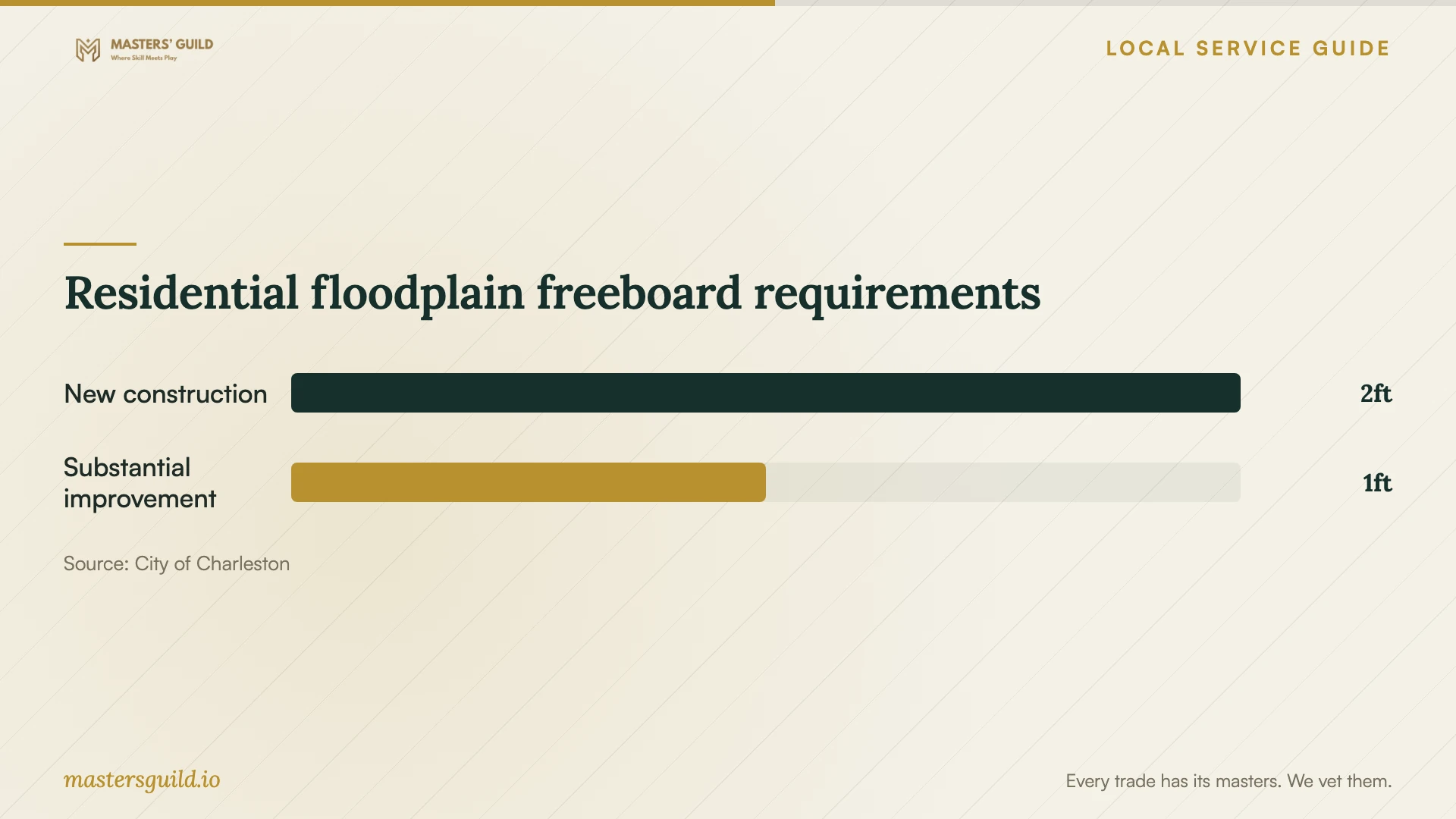
Local details that affect your job
Avoid a supplemental-document delay
For a City of Charleston application, assign someone to notify permits staff after uploading supplemental PDFs through CSS. The city says staff receive no notification of those uploads. Ask your contractor to keep a record of the notification and any requested revisions. [1]
Account for other floodplain renovation work
For a building in the City of Charleston’s Special Flood Hazard Area, discuss improvements during the past year with city floodplain staff before approving the bathroom scope. The city requires current floodplain compliance when cumulative improvement costs over that year equal or exceed 50 percent of the building’s assessed or appraised value. Ask staff to confirm the cost records, valuation, and Substantial Improvement Package needed for your application. [2]
Allow time for a historic-review account
If preservation staff direct your project to board review, submit through CSS and account for registration time. The BAR page says a new CSS account can take up to three business days to activate. Confirm the applicable deadline before tying demolition or material orders to a meeting date. [4]
Match the proposed work to your next step
| Proposed situation | Next step | Reason |
|---|---|---|
| Painting or interior finishes in the City of Charleston’s Special Flood Hazard Area | Confirm and obtain the applicable permit before work. | The city requires permits for all work in that area. |
| Bathroom work alongside other improvements during the past year to a building in the City of Charleston’s Special Flood Hazard Area | Ask city floodplain staff to assess cumulative improvement costs, building valuation, and required documentation. | For buildings in that area, cumulative improvement costs over the past year equaling or exceeding 50 percent of the building’s assessed or appraised value trigger current floodplain compliance requirements. |
| Exterior window or vent change visible from the public right-of-way in a historic district | Ask preservation staff about BAR review before finalizing the design. | BAR reviews visible alterations and renovations within historic districts. |
| Residential alteration or plumbing work within city limits | Confirm the required applications and assign CSS submission responsibility. | The city lists residential alteration and plumbing permits for online submission. |
Your hiring checklist
- Prepare one written scope with photos and fixture locations for each bidder.
- Confirm the address’s permitting jurisdiction and ask staff about the proposed work.
- Ask the appropriate officials about floodplain status and historic-review applicability.
- Check the credentials provided for the contractor and each relevant trade.
- Compare waterproofing specifications, fixture allowances, exclusions, and permit responsibility.
- Agree on written approval for concealed-damage costs and other changes.
- Plan bathroom access, water shutoffs, cleanup, and completion records.
Frequently Asked Questions
Does a cosmetic bathroom refresh need a permit?
Within the City of Charleston’s Special Flood Hazard Area, yes: the city includes painting and interior finishes in its permit requirement. For an address outside that area, give the permitting authority your exact scope and ask which permits apply. [3]
Does an interior bathroom remodel require BAR review?
Ask preservation staff about your address and scope, especially if you propose exterior window or ventilation changes. BAR reviews alterations visible from the public right-of-way within historic districts and has jurisdiction over Landmark Overlay properties. Confirm applicability before setting the construction schedule. [4]
Which contractor credentials should I check?
Ask for credentials covering the actual work and check them through the Residential Builders Commission’s lookup resources. The Commission lists residential builder, plumber, electrician, specialty-contractor, and business authorization categories. Ask who holds the credential covering each part of your project. [5]
How should I compare bathroom remodel prices?
Give bidders the same scope and compare specified materials, allowances, exclusions, permit responsibility, and change procedures. Request clarification wherever an offer leaves work undefined. Use written offers for your agreed scope to set your budget.
Sources and scope
This guide combines the sources below with practical planning guidance. Figures apply to the stated geography and period; request a written quote for your property.