
Local service guide
Chandler gardening: hiring and planning guide
Start by defining the gardening work you need: routine upkeep, planting, vegetable-bed preparation, or a grass-to-xeriscape conversion. Ask for a written scope covering materials, debris removal, irrigation adjustments, and follow-up care. If you want Chandler’s grass-conversion rebate, secure its Notice to Proceed before your gardener removes grass. [1]
Define the job before comparing quotes
Give each gardener the same description and photographs. Mark the areas for hand weeding, planting, hedge trimming, or cleanup. Identify plants you want to keep and ask the gardener to flag uncertain plants before removing them. Specify whether the visit includes hauling debris, supplying materials, and checking irrigation.
Request separate prices for the first visit and ongoing care. For planting, ask for plant names, container sizes, quantities, soil preparation, and replacement terms. For hourly work, agree on a spending limit and require approval before extra work. Compare the complete scope rather than the headline amount.
Use written, property-specific quotes to set your budget. Ask each provider to distinguish labor, plants, amendments, irrigation parts, and disposal so you can see what you are buying.
Plan grass conversion around city approval
Chandler’s residential program offers $1.50 per square foot of qualifying grass conversion, up to $2,000, subject to eligibility and available funds. Published requirements include removing at least 500 square feet of established living grass and providing at least 50% ground coverage with qualifying low-water-use plants at maturity. Ask your gardener to document the removal area and mature plant coverage before quoting the conversion. [1]
Submit the preapproval application with at least two photographs of the live grass. City staff review the application and conduct a pre-inspection before issuing a Notice to Proceed. Complete the project within 90 days, then submit the final application with the planted-species list, at least two finished photographs, and W-9. Schedule removal after approval and leave time for the final inspection. [1]
The city excludes artificial turf and hardscaped areas from the rebate and prohibits non-pervious materials such as black plastic sheeting in the conversion area. It also requires compliance with applicable HOA covenants, codes, and restrictions. Ask for HOA approval where required and keep rebate eligibility separate from your preferred yard design. [1]
Include an irrigation handover
The Chandler watering guide recommends separate watering for turf, planters, trees, and shrubs because their needs differ. It advises watering the full root zone and keeping sprinkler spray off buildings, fences, and pavement. Ask the gardener to inspect each zone with you and identify misplaced spray, disconnected emitters, or plants sharing an unsuitable schedule. [2]
The guide’s established-plant schedules apply after one year for shrubs and three years for trees. New plantings need additional water; hot, dry, cool, or rainy conditions also call for adjustments. Ask for a written establishment schedule, a date to review it, and a demonstration of how to change the controller. Do not use the chart below as a new-plant schedule. [2]
For a controller upgrade, Chandler reimburses 50% of the purchase price, excluding tax and installation, up to $250 for qualifying WaterSense-approved smart controllers. Eligibility includes purchase after October 1, 2023, and no smart-controller rebate in the preceding five years. Ask the installer to retain the receipt and provide the installed-controller photograph and programmed mobile-app schedule screenshot required for the application. [1]
Schedule vegetable planting for the right season
University of Arizona Cooperative Extension lists Chandler at 1,213 feet, placing it in the publication’s 1,000-to-2,000-foot planting band. Its suggested windows include September 1 through December 1 for broccoli and September 1 through March 1 for carrots and leaf lettuce. Use these regional windows to discuss crop choice and planting dates with your gardener, allowing for your yard’s conditions. [4]
Before buying plants, ask the gardener to assess sunlight, drainage, nearby tree roots, and water access. Extension recommends morning sunlight with some afternoon shade and identifies raised beds or containers as options where suitable soil is unavailable. Request separate quotes for bed preparation and planting so you can decide whether to improve the existing bed or start with containers. [4]
Clarify weed treatment and credentials
Arizona allows a limited herbicide exemption for people performing lawn, garden, shrub, or tree maintenance. The statute requires licensure and registration in specified circumstances, including preemergent or sterilant use, products labeled restricted use or danger, and advertising weed-management services. Other triggers concern application quantities, crew size, location, and whether maintenance occurs that day. Do not assume a maintenance gardener qualifies for the exemption. [5]
Ask whether the gardener plans hand removal or chemical treatment, which product they will use, and what authorization applies. Even an exempt gardener must give you an herbicide treatment record showing the application address, date, product name, amount, and applicator’s name. Extension advises against chemical herbicides for weed control in home vegetable gardens as a general practice; discuss hand weeding and mulch for those beds. [4] [5]
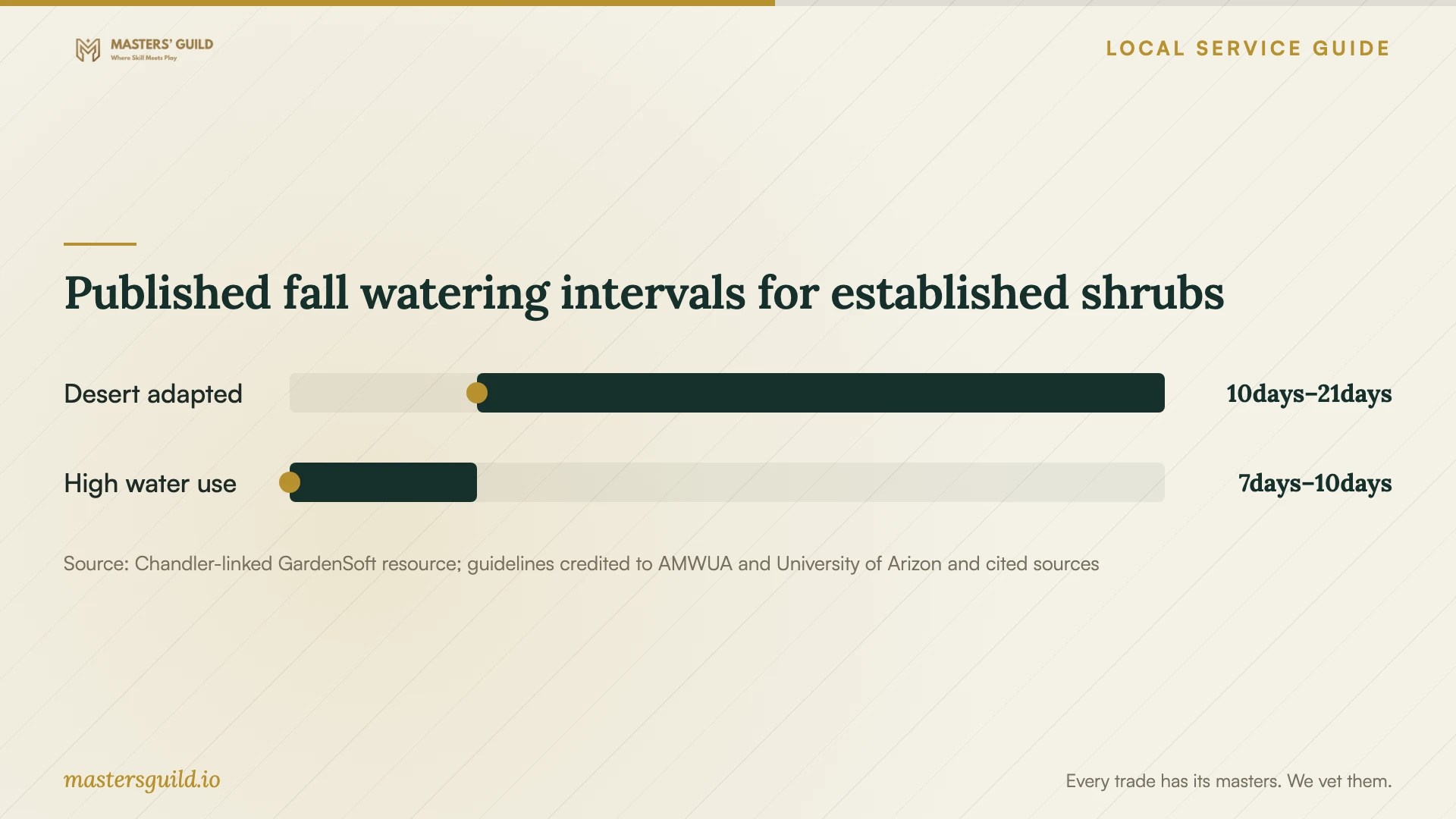
Published fall watering intervals for established shrubs
Local details that affect your job
Grass removal must wait for the Notice to Proceed
Make city approval a condition of your gardener’s start date if you intend to claim the grass-conversion rebate. Chandler rejects grass removed before its Notice to Proceed and requires project completion within 90 days. Confirm funding and eligibility before committing to the work. [1]
October watering differs by shrub type
For established shrubs, the Chandler guide’s October-to-December fall intervals are 10 to 21 days for desert-adapted species and 7 to 10 days for high-water-use species. Ask the gardener to identify your shrubs and review their zones rather than setting one interval for the whole yard. [2]
Use city plant resources to review a planting proposal
Chandler’s Water Conservation Office provides free conservation literature to utility customers and describes its Water Wise Landscaping resource as a place to review plant specifications, landscape examples, irrigation, and maintenance. Use those resources to review proposed plants before approving purchases; allow up to 10 business days for mailed literature. [3]
Match the service to your next step
| Your goal | Scope to request | Before work starts |
|---|---|---|
| Tidy existing beds | Weeding, agreed trimming, and debris removal | Mark plants to keep and agree on disposal |
| Convert living grass | Measured removal area, planting plan, and irrigation changes | Obtain the city’s Notice to Proceed for rebate eligibility |
| Plant vegetables | Site assessment, bed preparation, and crop plan | Review Extension’s 1,000-to-2,000-foot planting windows |
| Upgrade irrigation | Zone review, controller setup, and written schedule | Check smart-controller rebate eligibility before purchase |
| Add preemergent treatment | Named product, application scope, and treatment documentation | Confirm licensure and registration required under Arizona law |
Your hiring checklist
- Photograph the work areas and mark plants to keep.
- List the tasks, access arrangements, and debris-removal expectations.
- Request itemized prices for initial work, materials, and repeat visits.
- Ask for proof of liability insurance and clarify responsibility for damage.
- Agree on approval for extra work and plant substitutions.
- Request written watering instructions and a follow-up date.
- Ask whether weed control includes chemicals and request product and credential details.
Frequently Asked Questions
Can I remove the grass and apply for the rebate afterward?
No. Chandler requires preapproval and a Notice to Proceed before removal. Completed conversions do not qualify. Submit at least two photographs of the existing live grass with the preapproval application. [1]
Should my gardener put new shrubs on the established-plant schedule?
Ask for an establishment plan. The local guide defines established shrubs as one year old and established trees as three years old. It says new plantings need additional water and calls for adjustments during unusual weather. [2]
Is October suitable for starting a vegetable garden?
Extension’s suggested planting windows for Chandler’s elevation band include October for broccoli, carrots, and leaf lettuce. Ask the gardener to match crop selection to your sunlight, soil, and irrigation before ordering seeds or transplants. These are regional recommendations from a February 2015 publication, rather than a forecast for this year. [4]
Does a gardener need authorization to spray weeds?
It depends on the service, product, equipment, and application circumstances. Arizona provides a limited maintenance exemption but requires licensure and registration for preemergents and several other situations. An exempt applicator must still provide the specified customer treatment record. [5]
Sources and scope
This guide combines the sources below with practical planning guidance. Figures apply to the stated geography and period; request a written quote for your property.