
Local service guide
Chandler duct cleaning: Hiring and Planning
Arrange duct cleaning in Chandler after an inspection identifies substantial visible mold inside hard-surface ducts or on HVAC components, an infestation inside ducts, or excessive debris clogging ducts or particles escaping supply registers. Ask providers to show the findings, correct underlying causes before cleaning, and compare written estimates covering the same components. EPA recommends cleaning as needed; a dusty return grille alone does not establish a need for whole-system cleaning. [1]
Match the inspection to your complaint
Describe where you see particles, which rooms feel uncomfortable and whether you have noticed moisture or pest activity. Ask the inspector to distinguish a dusty grille from excessive debris inside ducts. EPA says homeowners can vacuum or remove and clean dusty return registers; dust on those grilles does not demonstrate heavy contamination inside the system. [1]
Request photographs or a view of the affected components before accepting a mold diagnosis. EPA says an expert must identify whether a substance is mold and may need laboratory analysis. Correct the moisture source before cleaning. For wet or moldy insulation inside ducts, EPA recommends removal and replacement because cleaning cannot resolve that condition. [1]
If an inspection confirms an infestation inside the ducts, arrange correction of the underlying cause before cleaning. Ask who will address pest entry and who will handle the cleaning, then put that sequence in the work agreement. A pest elsewhere in the home does not establish the duct-infestation finding EPA describes. [1]
Compare the same work in each estimate
Ask bidders to list supply and return ducts, registers, grilles, air-handler housing, blower, coils and drain pans. Have them mark included work and exclusions. EPA warns that leaving a contaminated component uncleaned can recontaminate the system. Require the provider to explain how its scope addresses the inspection findings. [1]
Get written estimates for your home's system count, access conditions and cleaning scope. Request a total price, with separate prices for optional treatments and repairs. Ask whether the price covers each system and how the provider will handle any additional work found during the appointment. Agree on an approval process before the crew starts.
Discuss collection equipment and duct materials. EPA recommends outdoor vacuum exhaust or HEPA vacuum equipment when crews exhaust indoors. It also calls for furnishing protection, material-appropriate brushing, and sealing and reinsulating access holes. Ask about experience with systems like yours, check references and agree on the scope before work starts. [1]
Investigate cooling performance before choosing work
For weak airflow or high cooling bills, request filter and HVAC checks before approving duct cleaning as the solution. EPA finds little evidence that cleaning ducts alone improves efficiency, although cleaning dirty coils, fans and heat exchangers may help. SRP's regional cooling advice includes filter maintenance and sealing gaps around ductwork. [1] [2]
Record whether discomfort affects one sunny room or the whole home. For homeowners with an SRP account, the assessment and shade options below offer separate paths to investigate energy loss or address sunlight. Ask the technician to explain which findings support cleaning, component maintenance, leak repair or another improvement. [2]
Approve treatments and prepare access
Require separate approval for a sanitizer, biocide or interior coating. EPA advises homeowners to understand chemical-treatment benefits and risks and review the product label. Have the provider identify your duct material and explain the proposed use. EPA distinguishes interior encapsulating coatings from sealing duct air leaks; request separate descriptions and prices for those jobs. [1]
Before the appointment, send equipment-label photographs and identify accessible filter locations. Agree on the rooms the crew needs to enter, expected cooling interruption and arrangements for occupants and pets. Clear access to equipment and move fragile belongings from the work area. Request a written explanation of proposed changes before authorizing them.
Agree on completion evidence before work begins. EPA recommends a visual inspection and having the provider show the cleaned components. Review supply and return areas, reattached registers and repaired access openings. Have the crew demonstrate system operation and correct visible remaining debris or damage before you accept the work. [1]
Choose a compatible filter
EPA describes MERV as a filter's ability to capture specified particle sizes. For an upgrade, it recommends at least MERV 13, or the highest rating your system fan and filter slot can accommodate. Consult an HVAC technician if you lack compatibility information, and follow manufacturer maintenance and replacement instructions. [3]
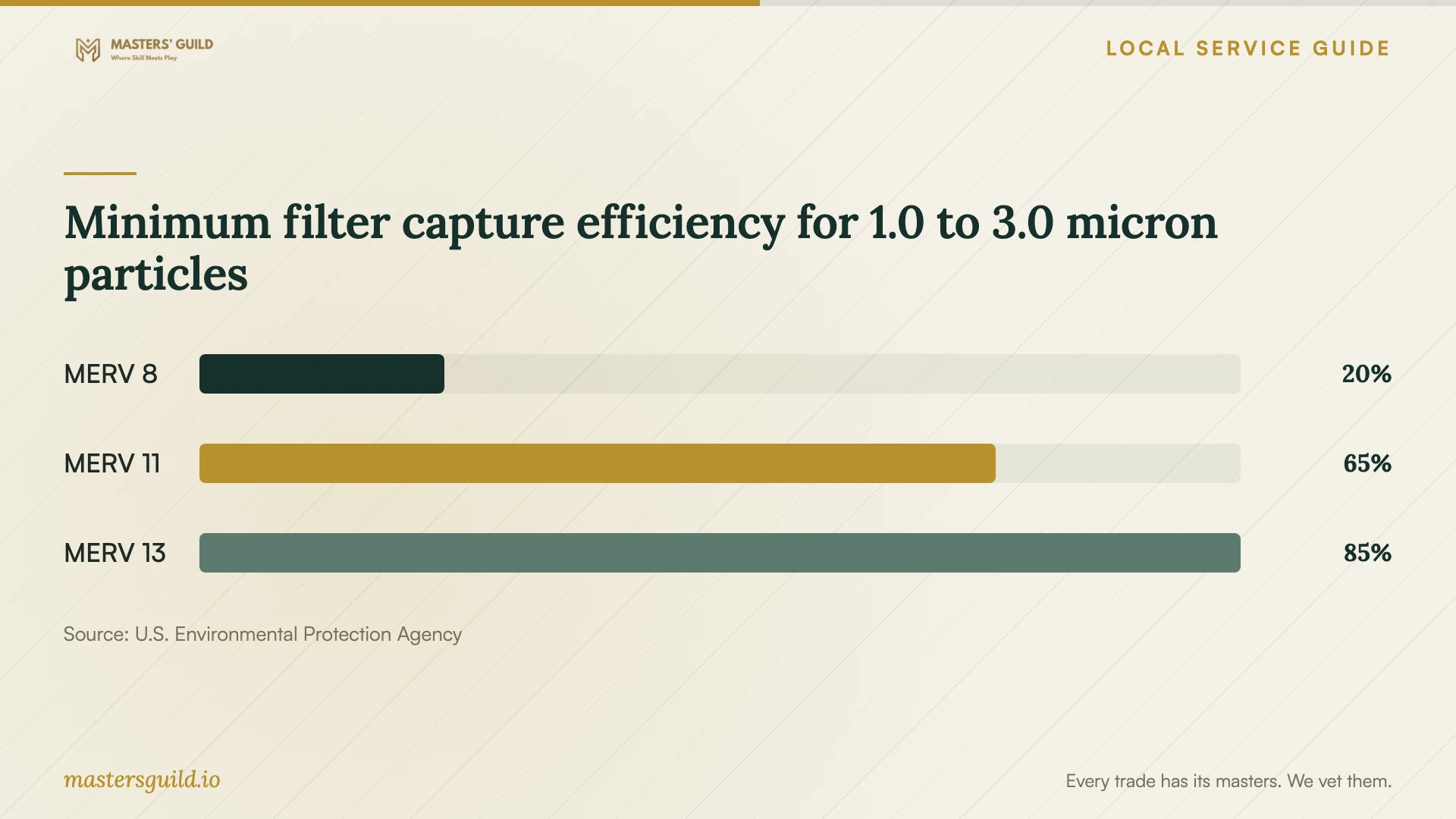
The chart compares published minimum average capture efficiencies within one particle-size band. Use it to compare filter ratings after checking system compatibility. These reference thresholds do not measure conditions in your home or establish that you need duct cleaning. [3]
Minimum filter capture efficiency for 1.0 to 3.0 micron particles
Local details that affect your job
SRP assessment before an energy-focused job
Check your electricity account before planning around SRP programs. For a Chandler homeowner with an SRP account, the regional utility's March 12, 2026 announcement lists a free online Home Energy Assessment for all SRP customers and a $45 in-person assessment, free for income-qualified customers. Consider an assessment before buying cleaning to address energy loss. Confirm current eligibility and terms with SRP before booking, including whether you qualify for the in-person fee waiver. [2]
SRP shade rebate for sun-exposed rooms
If your complaint concerns a room receiving direct sunlight, ask about shading alongside the HVAC inspection. SRP's March 12, 2026 announcement lists a $1-per-square-foot rebate for professionally installed shade screens or window film for SRP customers. The utility identifies west- and south-facing windows as candidates for blocking sunlight. If you have an SRP account, compare this option with proposed HVAC work and confirm qualifying installation and application terms before hiring. Treat shading as a separate improvement; it does not establish a need for duct cleaning. [2]
Choose the next step from the findings
| Finding or concern | Next step | What to request |
|---|---|---|
| Dust on the return grille alone | Clean the accessible grille; inspect before purchasing whole-system cleaning. | Evidence of contamination inside the system. |
| Excessive debris clogging ducts or particles escaping supply registers | Correct underlying causes before considering cleaning. | Inspection photographs and a scope covering contaminated components. |
| Substantial visible mold on hard duct surfaces or HVAC components | Confirm suspected mold and correct the moisture source before cleaning. | Expert identification and a plan for moisture correction. |
| Confirmed infestation inside ducts | Correct pest entry and other underlying causes before cleaning. | A written sequence for corrective work and cleaning. |
| Cooling-cost concern without documented duct contamination | Arrange filter and HVAC checks; eligible SRP customers can consider an assessment. | Separate findings and prices for proposed improvements. |
| Wet or moldy duct insulation | Arrange removal and replacement with moisture correction. | A replacement scope addressing the affected insulation. |
Your hiring checklist
- Record affected rooms, visible particles, odors and moisture before requesting estimates.
- Check your utility account and confirm program terms before relying on an SRP customer offer.
- Request inspection evidence and a plan to correct underlying causes before cleaning.
- Compare matching written scopes, exclusions and total prices.
- Discuss duct materials, debris collection and protection of furnishings.
- Require separate approval for chemicals, coatings and repairs.
- Agree on access, cooling interruption and completion evidence.
- Inspect the finished work and have the crew demonstrate system operation.
Frequently Asked Questions
How often should I schedule duct cleaning?
EPA recommends cleaning as needed rather than on a routine schedule. Ask for evidence of substantial visible mold on hard duct surfaces or HVAC components, duct infestation, or excessive debris clogging ducts or particles escaping supply registers. EPA's guidance originated in an October 1997 publication; its February 2026 page-update date does not identify a new research study. [1]
Will duct cleaning reduce my cooling bill?
EPA finds little evidence that cleaning ducts alone improves efficiency. Request filter, coil, fan and leakage checks when cooling performance is your concern. Homeowners with SRP accounts can consider the utility's energy assessment before choosing an improvement. [1] [2]
Can I install a MERV 13 filter?
EPA recommends at least MERV 13 for an upgrade, or the highest rating your system fan and filter slot can accommodate. Have an HVAC technician confirm compatibility if you lack equipment guidance. Follow the manufacturer's replacement instructions. [3]
How do I evaluate a cleaner's credentials and claims?
Ask about relevant credentials, experience with your duct materials and references. EPA does not certify, endorse or approve duct-cleaning companies. Require inspection evidence, a written scope and total price, and agreed visual checks for completed work. [1]
Sources and scope
This guide combines the sources below with practical planning guidance. Figures apply to the stated geography and period; request a written quote for your property.