
Local service guide
Commercial Building Cleaning in Chandler, AZ
Arrange Commercial Building Cleaning in Chandler, AZ with a walkthrough and a written room-by-room scope. Compare quotes for the same tasks, visit schedule, supplies and access arrangements. Before a cleanout, confirm a city-permitted waste hauler and an eligible disposal destination. Chandler excludes business material from its residential collection center. [1] [2]
Define routine cleaning and deposit removal
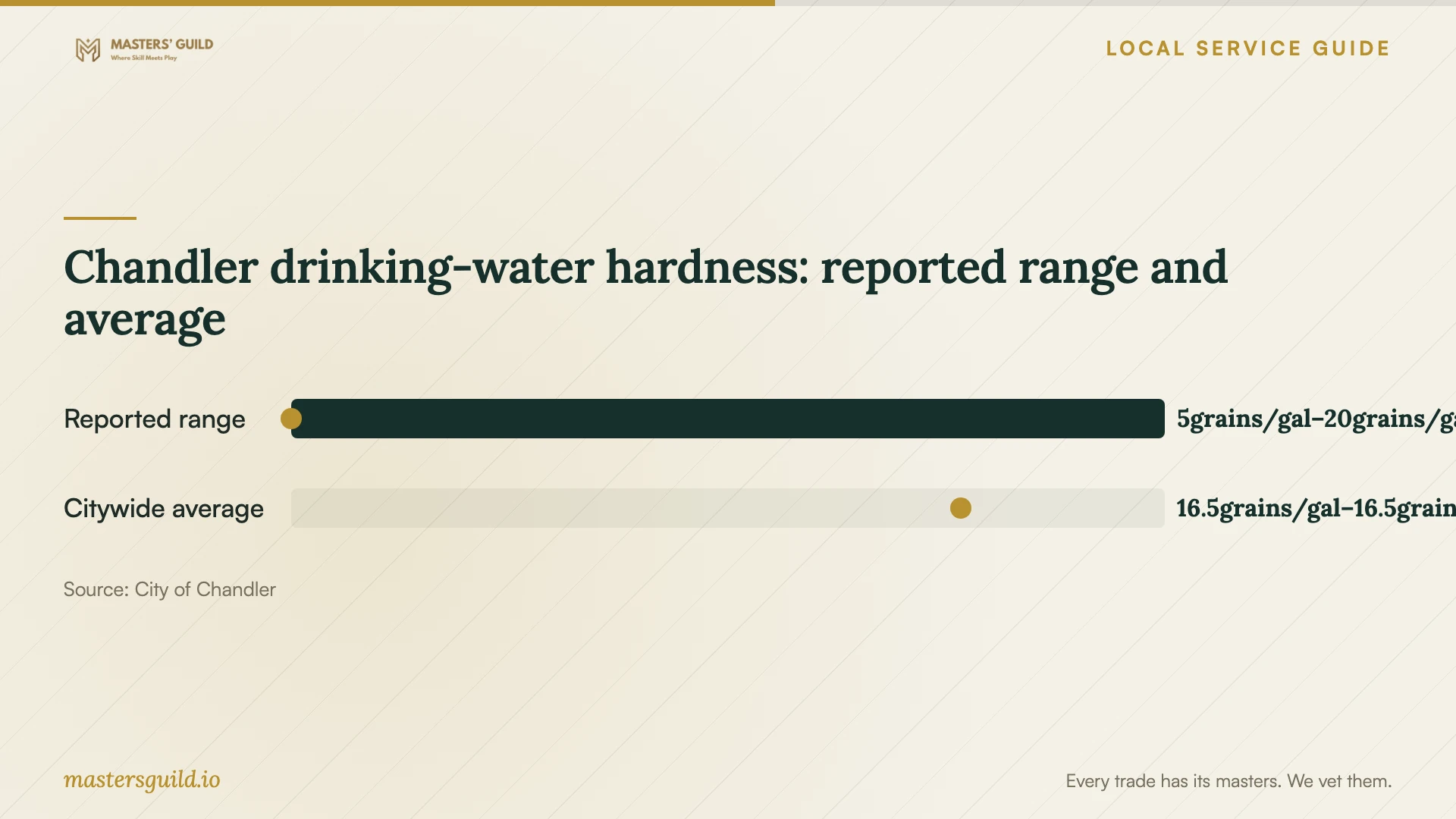
Start the walkthrough with the surfaces that need attention. Chandler’s Water Quality FAQs report drinking-water hardness ranging from 5 to 20 grains per gallon, with a citywide average of 16.5. Use that local context to ask about deposits you can see on taps, sink surrounds or glass. The city’s figures describe its drinking-water system, not a test of your premises. [4]
Ask the bidder to distinguish routine wiping from deposit treatment. Identify the surface material, show any damaged finish and request a test on an inconspicuous area before approving treatment. Have the provider explain the intended result and whether the quoted price includes that work.
List entrances, workspaces, restrooms, break rooms and storage areas. Mark restricted rooms and assign a frequency to each task. Describe the result you expect, such as clean sink surrounds and no visible debris beneath accessible furniture. Agree on who moves chairs and small furnishings and who returns them.
Compare quotes with a commercial waste plan
Chandler does not provide trash and recycling collection or hauling to commercial properties. The city directs property owners and managers to city-permitted waste haulers for weekly containers and project roll-offs. Before comparing cleaning bids, ask your property manager whether the crew can use the existing dumpster and whether you need additional collection. [1]
Request separate prices for recurring cleaning, the initial deep clean, carpet work, floor treatments, windows and off-site hauling. Ask each bidder to identify chemicals, equipment, liners and restroom consumables included in the price. Specify who approves extra work and how the provider records that approval.
For a monthly contract, agree on the visit calendar and holiday arrangements. Ask how the provider charges for extra visits or failed access. Request evidence of insurance covering the proposed work, references from comparable premises and a named contact for missed tasks. Compare the complete scope and contract terms alongside the total price.
Confirm the destination before a business cleanout
Chandler’s Recycling-Solid Waste Collection Center does not accept material from businesses or nonprofit organizations. It also lists commercial waste and recyclables among prohibited materials. A bidder who proposes taking your business debris there needs to revise the disposal plan before you accept the hauling portion of the quote. [2]
Ask the bidder to name the receiving facility and confirm that it accepts your material. Describe cardboard, discarded furnishings and other debris during the walkthrough. Request itemized hauling and disposal charges, including responsibility for extra loads. Keep ordinary bin emptying and a one-time cleanout as separate tasks in the agreement.
Set food-service wash-water and spill methods
Chandler’s food-service guidance explains that cleaning wastewater, grease and food waste can pollute waterways through storm drains. The city does not treat stormwater before it reaches washes, lakes and other waterways. It tells operators to avoid cleaning mats, equipment or containers outdoors where wash water can flow to a storm drain. [3]
The city also advises absorbents or spill kits for grease and oil spills, dry spill cleanup and sweeping dumpster areas rather than hosing pavement. For a restaurant cleaning contract, ask the bidder to explain where the crew will clean equipment, how it will contain wash water and how it will handle outdoor spills. [3]
Show the bidder the indoor cleaning area and access route before agreeing on a schedule. Identify responsibility for grease containers and spill supplies. For medical or dental premises, supply your facility’s cleaning procedures and define responsibility for sharps, bodily-fluid cleanup and restricted rooms before signing.
Arrange access, reopening and inspections
Choose a service window around staff, customers and deliveries. Name the person who issues access credentials and receives completion updates. Record alarm procedures, approved entrances, loading arrangements and rooms the crew must leave locked. Issue a separate cleaning credential if your access system allows it.
Before carpet extraction or floor treatment, ask the provider to specify drying or curing time and when staff can use each area. Confirm who moves furniture and places warning signs. Set an inspection process and a deadline for correcting missed tasks. Agree on a backup contact for access problems or an absent crew.
Chandler drinking-water hardness: reported range and average
Local details that affect your job
Use a permitted commercial hauler
Chandler requires commercial property owners and managers to use city-permitted waste haulers. Check the city’s published list when arranging a dumpster or roll-off, and confirm with your property manager who will arrange and pay for additional collection. [1]
Reject residential drop-off plans for business debris
The city’s collection center excludes material from businesses and nonprofit organizations. Ask a cleaner proposing off-site removal to identify an eligible destination before accepting the quote. Do not use the center’s residential disposal fees as a business-cleanout budget. [2]
Inspect deposits before approving treatment
The city reports drinking-water hardness from 5 to 20 grains per gallon and an average of 16.5. Show the bidder existing deposits and request a surface-compatible treatment with a test area. These system-wide figures do not measure your building’s water or establish a cleaning frequency. [4]
Match the cleaning scope to your premises
| Your situation | Request in the quote | Confirm before work |
|---|---|---|
| Occupied office or shop | Room-by-room cleaning and a visit calendar | Access window, consumables and inspection contact |
| Visible deposits on fixtures or glass | A defined deposit-treatment scope | Surface compatibility and a test area; city hardness figures do not measure your building |
| Restaurant or food-service premises | Indoor equipment cleaning and dry outdoor spill cleanup | Methods consistent with city stormwater guidance |
| Cleanout with off-site removal | Itemized hauling and an eligible receiving facility | City-permitted hauler; business material cannot go to the residential collection center |
| Carpet extraction or floor treatment | Separate treatment price for identified surfaces | Furniture handling and reopening time |
Your hiring checklist
- Give each bidder the same room-by-room task list and visit schedule.
- Identify flooring materials, damaged finishes and visible deposits.
- Separate initial cleaning, recurring visits and optional treatments in the quote.
- Confirm responsibility for chemicals, liners, paper goods and soap.
- Record access credentials, alarm procedures and completion contacts.
- Agree on drying or curing time before reopening treated areas.
- Confirm the hauler, waste destination and responsibility for disposal charges.
- Set an inspection process and a correction deadline.
Frequently Asked Questions
How often should I schedule cleaning?
Choose a starting schedule based on opening hours, restroom use and the condition you want at reopening. Assign frequencies by task. Set a review date with the provider and adjust after inspecting the results.
Does trash removal include off-site hauling?
Ask the bidder to define it. Specify whether the crew will empty bins into your existing container or take waste away. Chandler requires commercial properties to use city-permitted waste haulers, so confirm that arrangement before accepting a hauling charge. [1]
Can the cleaner hose down our restaurant’s dumpster area?
Chandler’s food-service guidance tells operators to sweep dumpster areas rather than hose pavement and to use dry cleanup methods for spills. Ask the cleaner to describe how the crew will prevent cleaning wastewater from reaching streets, gutters or storm drains. [3]
Should deposit removal be included in routine restroom cleaning?
Point out the deposits and ask the bidder to define the treatment and price. Request a test before approving work on sensitive finishes. Chandler’s published water-hardness figures describe the city system; they do not establish which treatment your fixtures need. [4]
Sources and scope
This guide combines the sources below with practical planning guidance. Figures apply to the stated geography and period; request a written quote for your property.