
Local service guide
Carpet cleaning in Chandler, AZ: Hiring Guide
Carpet cleaning in Chandler starts with a written scope: identify the rooms, stairs, stains and furniture involved, then ask the cleaner to explain the total charge, water needs, wastewater handling and drying plan. Before booking, disclose leaks, soaked padding or suspected mold so you can arrange an assessment suited to the problem. EPA guidance treats drying water-damaged carpet, backing and padding as part of moisture remediation. [3]
Get a quote you can compare
Send each cleaner the same description: room dimensions, carpeted stairs, visible spots, pet accidents and the furniture you want moved. Include photos and describe any cleaning products you have tried. Ask the cleaner to confirm how they measure the work and whether they exclude areas beneath furniture.
Request the total charge and an itemized scope before agreeing to the visit. Ask about a minimum visit charge, access charges, spot treatment, odor treatment, furniture moving and optional protectant. Require approval before anyone adds work. For a stain or odor concern, ask what result the cleaner expects and what happens if the problem remains after drying.
Use the appointment to resolve uncertainty before cleaning begins. Ask the technician to inspect questionable areas, confirm the proposed method against your carpet's care instructions and record pre-existing damage. Request proof of liability insurance and ask who handles a complaint or return visit.
Confirm equipment, water access and recovery
Ask whether the cleaner brings water or connects to your supply, and whether they need electrical outlets. Describe the distance from parking to the carpet, stairs and any access restrictions. Agree on a hose route and a way to manage doors while children or pets remain at home.
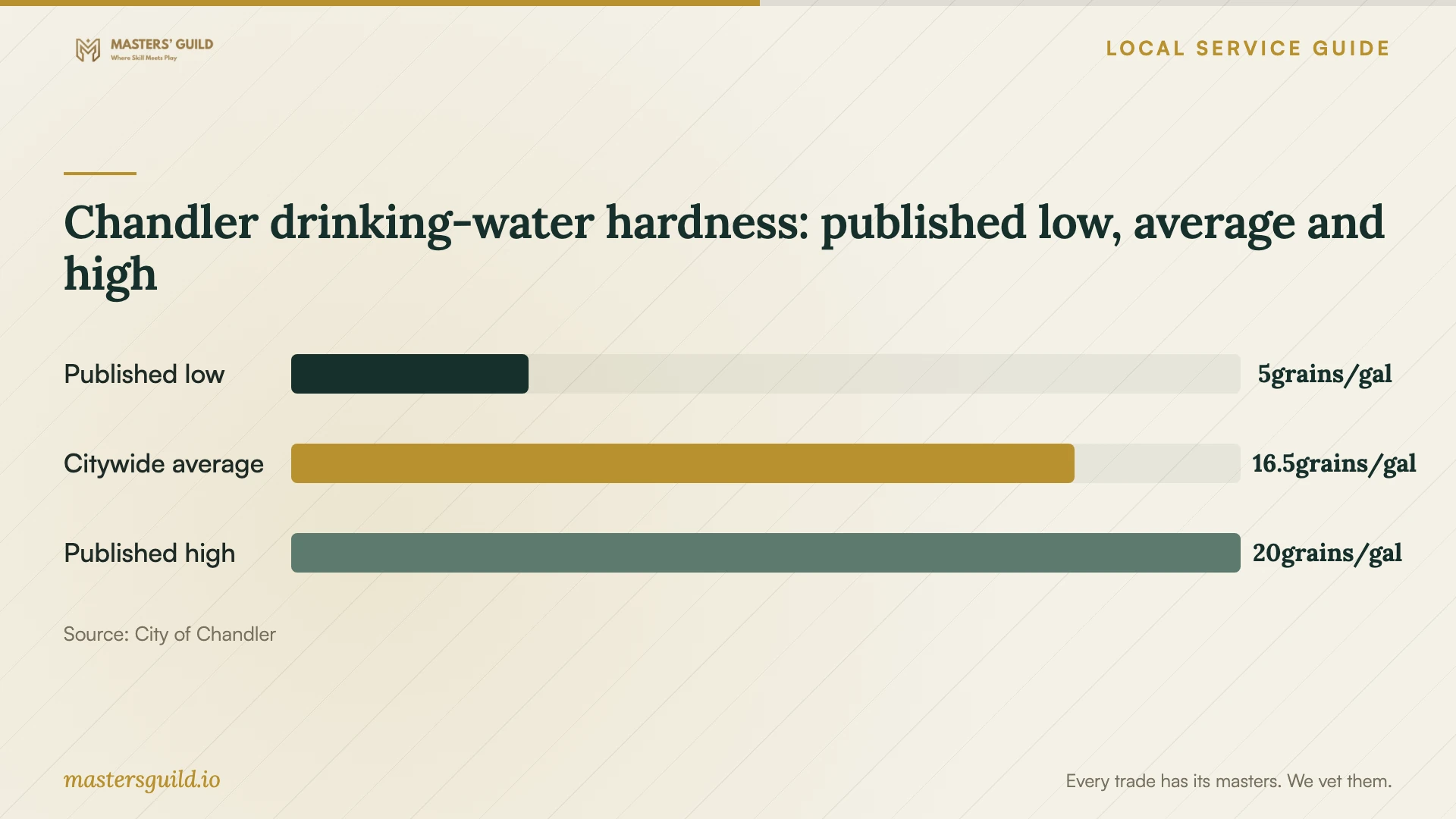
Chandler reports drinking-water hardness from 5 to 20 grains per gallon, with a citywide average of 16.5. If the cleaner uses household water, ask whether they condition it and how they choose their cleaning and rinsing process. These utility figures describe the city supply; they do not establish the hardness at your tap or the performance of a particular cleaning system. [2]
Ask the cleaner to explain how they contain, recover and dispose of wastewater. Chandler distinguishes its untreated stormwater system from the sanitary sewer system, which carries wastewater to a treatment plant. Request a disposal plan appropriate to the job rather than suggesting a drain yourself. [1]
Arrange drying before the visit
Ask for an estimated drying window based on the proposed method and your rooms. Tell the cleaner when you need to use the space again. Agree on ventilation, any drying equipment, walking restrictions and when you can replace furniture. Get a contact and follow-up plan in case the carpet stays damp beyond the estimate.
For water-damaged materials, EPA says mold will not grow in most cases if wet or damp items dry within 24–48 hours. Its guidance addresses drying the carpet and backing and also requires attention to the padding. Do not use that interval as a promised drying time for routine cleaning. [3]
Identify a restoration problem before booking
Report the source of any soaking, how long the carpet has stayed wet and whether you suspect contaminated water. Ask for a restoration assessment if the job involves wet padding, an unresolved leak or suspected mold. EPA advises assessing ongoing moisture problems and whether materials have remained wet for more than 48 hours when planning mold remediation. [3]
EPA advises consulting an experienced professional for contaminated-water situations when the people doing the work lack that expertise. It also says not to use fans until you have determined that the water is clean or sanitary. Tell the provider about possible sewage or other contamination before they select equipment or begin work. [3]
Chandler drinking-water hardness: published low, average and high
Local details that affect your job
Check the disposal plan before equipment arrives
Chandler says stormwater travels through the community without treatment at a water treatment plant. Ask the cleaner where recovered extraction water will go and how they will prevent runoff into street drains. If you need clarification about a proposed discharge, the city's Stormwater Program lists Environmental Management at 480-782-3503. [1]
Discuss timing if equipment uses household water
The city identifies peak water-demand periods of 5–8 a.m. and 6–8:30 p.m. and says pressure is lower during morning and evening demand. If your cleaner needs a hose connection and you have pressure concerns, discuss an appointment outside those periods. Ask them to confirm their supply requirements before you change your schedule. [2]
Match the appointment to the problem
| Your situation | Ask for | Resolve before booking |
|---|---|---|
| Routine cleaning of occupied rooms | A written scope for the areas you want cleaned | Furniture moving, total charge and access arrangements |
| A stain or pet-odor concern | An inspection and a separate treatment proposal | Expected result, added charge and follow-up terms |
| Equipment needs your household water | Supply and pressure requirements | Whether timing outside city peak-demand periods would help |
| Soaked carpet, wet padding or suspected mold | A restoration assessment | Moisture source, contamination concerns and drying of underlying materials |
Your hiring checklist
- Send room measurements, photos, stain history and details of any pet accidents.
- Confirm the total charge, included tasks and approval process for extra work.
- Share carpet care instructions and flag repairs or existing damage.
- Agree on parking, hose routing, water access and electrical needs.
- Ask how the cleaner will recover and dispose of wastewater.
- Remove small belongings and arrange a separate space for children and pets.
- Get drying instructions, a return-to-use estimate and a follow-up contact.
Frequently Asked Questions
How much should I budget for the job?
Get a written quote for your measured areas and requested treatments. The sources here do not establish a Chandler carpet-cleaning price range. Compare the final charge and included work, and ask the cleaner to identify any minimum charge or optional treatment before the visit.
Does Chandler's hard water require a particular cleaning method?
The city reports hardness of 5–20 grains per gallon, averaging 16.5 across its supply. Those figures do not prescribe a carpet-cleaning method. Ask whether the cleaner uses your water, conditions it and checks your carpet's care instructions before selecting the process. [2]
How soon can I use the carpet again?
Ask your cleaner for job-specific walking and furniture instructions. EPA's 24–48-hour guidance addresses drying wet or damp materials to help prevent mold. It does not predict when carpet will dry after a routine cleaning appointment. [3]
Can the cleaner empty recovered water into a street drain?
Ask for a disposal plan that keeps cleaning wastewater out of storm drains. Chandler says its stormwater receives no treatment at a water treatment plant and emphasizes keeping pollutants out of that system. Its general stormwater page does not authorize a particular disposal route for your job. [1]
Sources and scope
This guide combines the sources below with practical planning guidance. Figures apply to the stated geography and period; request a written quote for your property.