
Local service guide
Tile Setting in Cedar Rapids, IA: Plan and Hire
Arrange Tile Setting in Cedar Rapids, IA by having installers inspect the existing surface and quote removal, preparation, installation and cleanup as separate tasks. For a shower, request a written waterproofing plan. Check Iowa contractor registration, resolve concerns about older flooring before demolition, and ask bidders to explain tax treatment so you can compare offers for matching scopes. [1] [2] [3]
Define the work and verify who will perform it
Send each installer the same measurements, photographs and tile selection. Identify the room and whether you want a backsplash, floor, shower or outdoor surface. Photograph doorways, drains, outlets and adjoining flooring. Ask the installer to discuss layout, exposed edges and transitions during the site visit.
Request a written description of removal, surface repairs, flattening, backing materials and installation. For a shower, have the installer name the waterproofing products and describe the work around the drain, corners and penetrations. Identify who will handle plumbing changes and who will coordinate the trades.
Iowa DIAL requires construction contractors earning at least $2,000 annually from construction to register. Subcontractors need their own registration; the general contractor’s registration does not cover them. A business providing plumbing services must obtain a Plumbing and Mechanical Systems Board license. Ask for the relevant business names and credentials before accepting the bid. [1]
Treat registration verification as one hiring step. Request proof of liability insurance, examples of comparable work and written warranty terms. Ask who will answer questions during the project and who will return to address unfinished items.
Compare complete quotes and Iowa tax treatment
Request site-specific bids for matching scopes. Have each bidder separate tile supply, removal, preparation, setting materials, installation and disposal. Include the tile model, size, layout and grout color. Compare the total alongside exclusions and allowances, and ask bidders to explain differences in preparation work.
An allowance is an amount the bidder includes for a selection or task you have not finalized. Ask what each allowance covers and how the contractor will calculate changes. Agree on who purchases materials, handles shortages and keeps leftover tile. Require your written approval before the contractor proceeds with extra work.
Iowa’s Department of Revenue lists tiling as a service not subject to sales tax when separately itemized. Its guide distinguishes qualifying construction and remodeling from other repairs and installations. For qualifying remodeling, contractors pay tax when purchasing building materials and do not collect customer tax on those materials or labor. Ask the bidder to explain your project’s classification and the treatment of other services. [2]
Keep the tax explanation with the quote. If you combine tile installation with plumbing, demolition or other work, request separate line items and have the contractor identify which charges receive tax. Compare the amount you will pay after the contractor explains the classification. [2]
Resolve suspect flooring before demolition
Tell the installer about existing vinyl flooring, glue and previous floor layers. Iowa DIAL identifies vinyl floor tiles and glue as possible asbestos-containing materials and cautions that materials installed before 1981 may contain asbestos. Age alone does not establish whether your floor contains asbestos. [3]
DIAL advises against sanding, sawing, drilling or chipping materials that may contain asbestos. Pause removal if you have that concern and consult a qualified asbestos professional. Iowa requires licenses for asbestos inspectors and contractors, and a DIAL asbestos permit for businesses that remove or cover asbestos. [3]
Before booking demolition, agree on who will arrange assessment and how you will approve specialist work. Ask the assessor which requirements apply to your property and proposed work. Have the installer revise the scope and schedule after you resolve the material concern. Keep assessment and specialist charges separate from ordinary surface preparation.
Agree on room access and weather decisions
Request dates for demolition, preparation, installation and return to use. Have the installer provide the selected products’ waiting periods in writing. For your only bathroom, agree on toilet and shower access. In a kitchen, discuss appliance movement, sink access and protection for counters and cabinets.
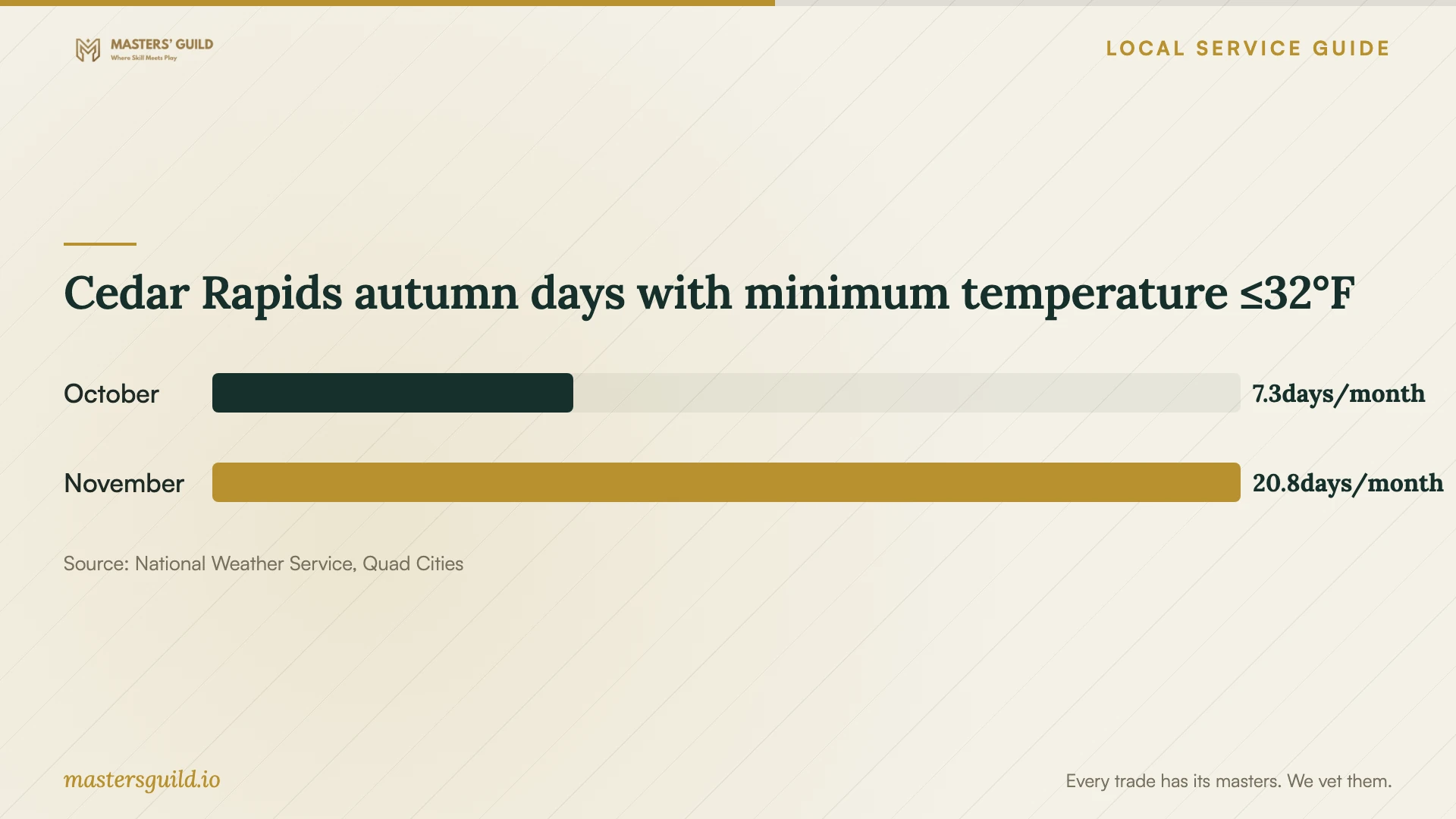
For outdoor tile or an unheated porch, ask how the installer will check site temperatures and decide whether to proceed. National Weather Service normals for Cedar Rapids Municipal Airport report 7.3 October days and 20.8 November days per month with a daily minimum temperature at or below 32°F during 1991–2020. Use those figures to discuss weather delays, then ask the installer to check the forecast and product instructions for your scheduled work. [4]
Arrange a walkthrough before final payment. Review the agreed layout, edges, transitions and cleanup with the installer, and record unresolved items. Collect care instructions, warranty terms and product details. Request photographs of preparation and shower waterproofing before the installer covers those stages.
Cedar Rapids autumn days with minimum temperature ≤32°F
Local details that affect your job
Iowa invoice rules change bid comparison
For your Cedar Rapids project, request a separate tiling-labor charge. Iowa exempts separately itemized tiling from sales tax, while the contractor must determine materials tax and other service charges using the project classification. For qualifying remodeling, the contractor pays materials tax at purchase and does not collect customer tax on materials or labor. Get the classification and tax explanation before comparing totals. [2]
Iowa requires a specialist pathway for asbestos work
If removal involves suspect vinyl floor tiles or glue, resolve the material concern before the tile crew begins. Iowa DIAL identifies these materials as potential asbestos sources, licenses asbestos inspectors and contractors, and requires a permit for businesses removing or covering asbestos. Ask the assessor who will perform any specialist work and which requirements apply before approving demolition or covering. [3]
Check subcontractors as well as the remodel company
Iowa’s construction-registration threshold is at least $2,000 a year in construction earnings. DIAL provides a contractor-checking pathway on its registration page and requires subcontractors to register independently. Ask the remodel company to identify the business performing the tile work, then check that business’s registration rather than relying on the project manager’s credentials. [1]
Choose the next step for your tile project
| Project situation | Next step | Question for the bidder |
|---|---|---|
| Dry-area backsplash | Request a layout and edge-detail proposal. | Who handles wall preparation, outlet surrounds and cleanup? |
| Floor replacement | Arrange an inspection and itemized preparation quote. | How will you handle adjoining floor heights, doors and appliance movement? |
| Shower with plumbing changes | Identify the waterproofing scope and the licensed Iowa plumbing business. | Who coordinates the plumbing and tile work? |
| Suspect older vinyl or glue | Pause disturbance and consult an asbestos professional about assessment and applicable Iowa requirements. | Who arranges assessment and any licensed, permitted specialist work? |
| Outdoor autumn project | Discuss forecast checks, site temperatures and product installation limits. | How will you decide whether to proceed or reschedule? |
Your hiring checklist
- Send matching measurements, photographs and tile specifications to each bidder.
- Arrange a surface inspection and request itemized preparation work.
- Check the installer’s Iowa registration and identify subcontractors.
- Resolve concerns about older vinyl flooring and glue before disturbance.
- Request the shower waterproofing scope and photographs before covering.
- Confirm allowances, tax treatment and written approval for extra work.
- Agree on room access, weather decisions and return-to-use dates.
- Review unfinished items and collect care instructions and warranty terms.
Frequently Asked Questions
How much should I budget for tile installation?
Request site-specific written bids for matching scopes. Give bidders your selected tile, layout, measurements and photographs, then arrange an inspection. Ask them to separate materials, removal, preparation, installation and disposal. Compare totals with the same exclusions, allowances and tax assumptions.
How do I check a tile contractor’s Iowa registration?
Ask for the business name and registration number, then use the checking pathway on DIAL’s contractor registration page. Iowa requires registration for construction contractors earning at least $2,000 annually from construction. Check subcontractors too, because the general contractor’s registration does not cover them. [1]
Should a contractor charge sales tax on tiling labor?
Iowa lists tiling as exempt from sales tax when separately itemized. Materials and other services can receive different treatment depending on the project classification. Request an itemized invoice and ask the contractor to explain the tax treatment of each part of your job. [2]
Can I remove old vinyl tile before the installer arrives?
Resolve any asbestos concern before disturbing the floor. Iowa DIAL identifies vinyl floor tiles and glue as potential asbestos-containing materials and advises against sanding, sawing, drilling or chipping suspect materials. Consult a qualified asbestos professional about assessment and the next step. [3]
Sources and scope
This guide combines the sources below with practical planning guidance. Figures apply to the stated geography and period; request a written quote for your property.