
Local service guide
Duct cleaning in Cedar Rapids, IA: Hiring Guide
Arrange duct cleaning in Cedar Rapids after a contractor shows you substantial contamination and gives you a written price for the full agreed scope. EPA recommends cleaning as needed, rather than on a routine schedule. Compare written estimates, ask how the crew will protect your home and collect debris, and confirm how long you will lose heating or cooling before booking. [1]
Start with evidence that cleaning will address your problem
Ask the contractor to show you the contamination before approving work. EPA recommends considering cleaning when ducts contain substantial visible mold growth, vermin or excessive dust and debris, including particles coming out of supply registers. You can vacuum or remove and clean dusty return grilles without treating that surface dust as proof of contamination deeper in the system. [1]
Describe what prompted your call: debris blowing from a register, a suspected pest problem, water damage or dust-producing renovation work. Ask the contractor to inspect the affected areas and explain the cause. EPA advises correcting underlying causes before cleaning or replacing ducts because contamination can recur. [1]
Do not accept a promise that cleaning will prevent illness or cure allergies. EPA says duct cleaning has not been shown to prevent health problems and finds little evidence that cleaning ducts alone improves system efficiency. Discuss unexplained symptoms with your doctor and ask your HVAC service provider to investigate equipment or airflow complaints. [1]
Compare scope before comparing prices
EPA recommends obtaining written estimates from at least three providers. Give each contractor the same description of your concern and ask for a component-by-component scope. Include supply and return ducts, registers, grilles, the air handler, blower, coils and drain pans where applicable. Ask the contractor to identify exclusions and explain how they will handle contaminated components outside the quoted scope. [1]
Request a total price, the number of systems covered, access arrangements and an estimated work duration. Ask whether the crew will need to create access openings and who will seal and re-insulate them afterward. EPA advises a written agreement covering cost and scope before work begins, and airtight restoration of access holes. [1]
If you also want a dryer exhaust vent cleaned, ask for a separate description and price so you can see which ductwork the contractor intends to service. Require your approval before the crew adds treatments, repairs or additional equipment cleaning. Keep the estimate available during the visit.
Do not use EPA's historical national cost discussion as a current local quote. Its guidance identifies scope, system size, access and contamination as pricing factors. Ask bidders to explain those factors for your home and compare totals for matching work. [1]
Check the cleaning method and proposed treatments
Ask where the vacuum exhaust will go. EPA recommends equipment that exhausts particles outdoors or HEPA vacuum equipment when the exhaust stays indoors. Ask how the crew will protect floors and furnishings, inspect the system and dislodge debris without damaging the duct material. [1]
Ask the contractor to identify sheet metal, flexible duct and fiberglass-lined sections before choosing a method. EPA calls for soft-bristled brushes on fiberglass duct board and fiberglass-lined metal ducts. It recommends replacing wet or moldy fiberglass duct material because cleaning cannot resolve that condition. [1]
For a proposed chemical treatment, request the product label, the reason for using it and confirmation that its approved use matches your duct material. EPA advises understanding the benefits and risks before permitting biocides or sealants. It states that no biocides are registered for fiberglass duct board or fiberglass-lined ducts. An EPA registration for a product does not mean EPA certifies the cleaning company. [1]
Prepare the house and review the finished work
Before the visit, clear a route to the equipment and move belongings away from registers. Confirm parking, hose access, pet arrangements and the areas the crew needs to enter. Ask for the expected time without heating or cooling and leave room in your schedule for a walkthrough before the crew departs.
Ask the contractor to show you the cleaned components and any areas they could not reach. EPA recommends a visual inspection to verify cleanliness and notes that providers may use photographs inside ducts. Review both supply and return areas, register attachment, access closures and system operation after cleaning. [1]
Afterward, follow the equipment manufacturer's filter recommendations and replacement schedule. EPA advises preventing filter bypass, repairing leaks and keeping condensate pans draining. Ask the crew to document damage, moisture or other defects they found so you can arrange the appropriate follow-up. [1]
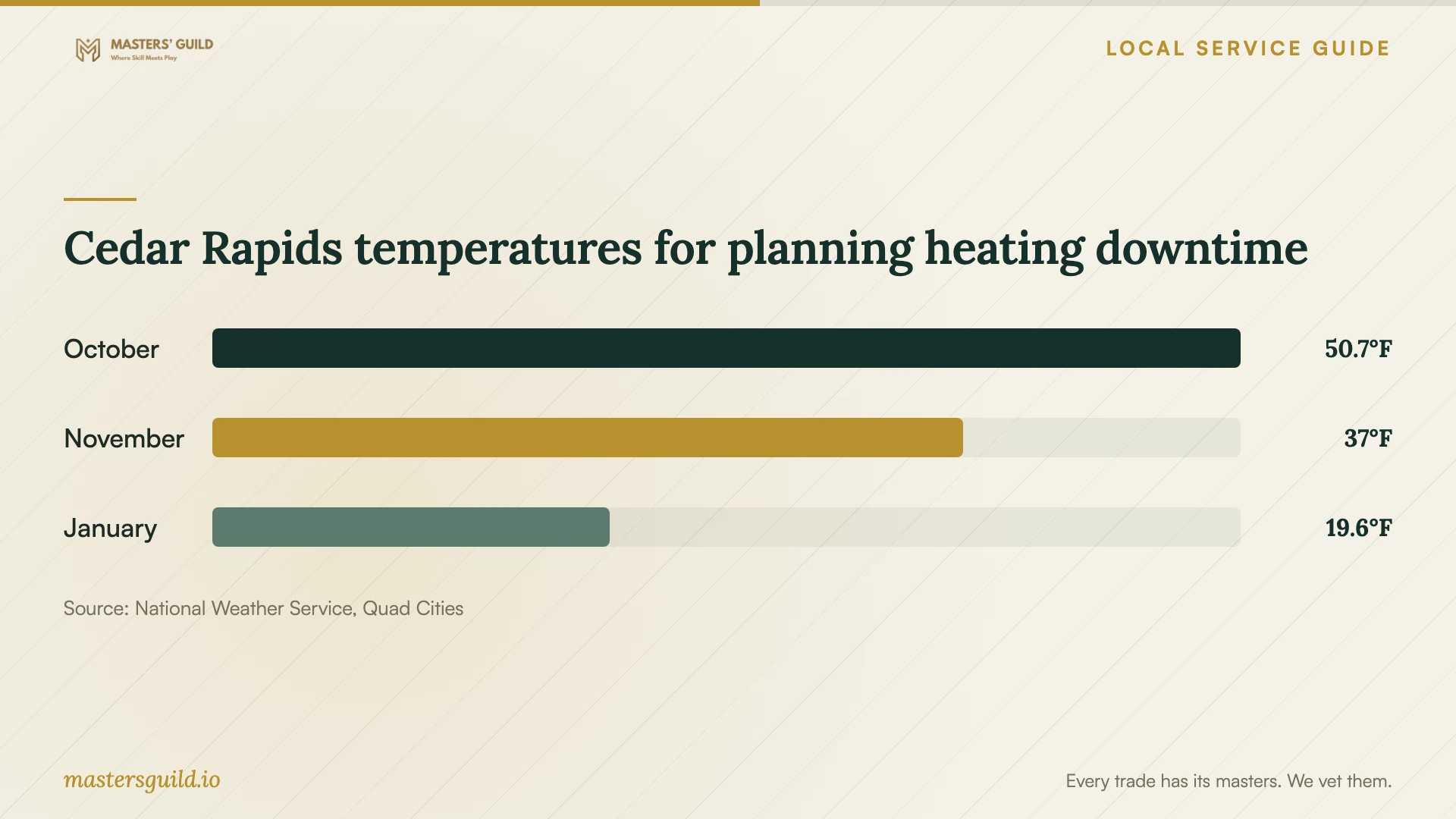
Cedar Rapids temperatures for planning heating downtime
Local details that affect your job
Iowa residential cleaning exemption: identify who pays
Iowa's tax guide exempts cleaning services performed in a private residence, including apartments, when the person paying is an occupant. Tell the contractor whether you occupy the home and will pay the invoice, then ask whether this exemption applies to the quoted duct-cleaning scope. If a landlord or another non-occupant pays, do not assume the same exemption applies. Ask the contractor to itemize cleaning and any repair work and explain the tax treatment before you accept the total. [2]
Use airport normals to plan heating downtime
National Weather Service 1991–2020 normals for Cedar Rapids Municipal Airport show average temperatures of 50.7°F in October, 37.0°F in November and 19.6°F in January. For a visit that requires shutting down your heating system, ask the contractor for the shutdown duration and restoration plan. Consider a milder forecast day if your household cannot tolerate a prolonged interruption. These airport averages describe seasonal conditions; they do not predict appointment-day weather or establish that autumn cleaning is necessary. EPA also recommends servicing fuel-burning heating equipment before each heating season, so confirm whether you need a separate furnace service appointment. [3] [1]
Choose the next step from what you find
| Finding | Next step | Question to ask |
|---|---|---|
| Dust on a return grille | Clean the grille and assess deeper contamination before booking. | Can you show contamination beyond this grille? |
| Excessive debris or particles from supply registers | Arrange an inspection and consider cleaning the affected system. | Which components need cleaning, and what caused the buildup? |
| Suspected mold or wet insulation | Confirm the condition and correct moisture; wet or moldy fiberglass needs replacement. | What material is affected, and how will you correct the moisture source? |
| Rodents or insects in ducts | Address the infestation and underlying cause before cleaning. | How will you prevent the problem from recurring? |
| A chemical-treatment recommendation | Review the need, label and duct-material suitability before agreeing. | Is this product approved for this specific use? |
Your hiring checklist
- Describe the problem and ask the contractor to show the affected areas.
- Give bidders the same system information and requested scope.
- Obtain a written total with exclusions and approval terms for added work.
- Ask how the crew will collect debris and protect each duct material.
- Identify the occupant and invoice payer when discussing Iowa tax treatment.
- Confirm access, pet arrangements and expected heating or cooling downtime.
- Review cleaned components, access closures and system operation before the crew leaves.
Frequently Asked Questions
How often should I clean my air ducts?
EPA recommends cleaning as needed. Ask for evidence of substantial contamination before accepting a recurring cleaning schedule. Keep up with filter changes, equipment inspections and moisture control whether you arrange cleaning or not. [1]
What should a written estimate include?
Request the total cost, systems and components covered, exclusions, access work and expected duration. Ask for separate approval of added work. EPA recommends a written cost-and-scope agreement before the contractor starts. [1]
Will I pay sales tax on residential duct cleaning?
Iowa provides an exemption for qualifying cleaning services in a private residence when the occupant pays. Ask the contractor how that rule applies to your scope and payer arrangement, particularly if the quote includes repairs or a landlord will pay. [2]
Does duct cleaning replace a furnace inspection?
Arrange the services according to their written scopes. EPA recommends inspection and service of fuel-burning furnaces, stoves or fireplaces before each heating season. Confirm whether your cleaning contractor includes that equipment service or whether you need a separate appointment. [1]
Sources and scope
This guide combines the sources below with practical planning guidance. Figures apply to the stated geography and period; request a written quote for your property.