
Local service guide
Commercial Building Cleaning in Cedar Rapids, IA
Arrange Commercial Building Cleaning in Cedar Rapids by walking the premises with prospective cleaners, writing down tasks and visit frequency, and comparing complete quotes for the same work. Separate recurring cleaning from floor restoration and chemical cleanouts. Ask each bidder to identify taxes, supplies, access arrangements, exclusions, and who will correct missed work.
Define the work before requesting quotes
Prepare a room-by-room scope for offices, customer areas, restrooms, break rooms, storage, and entrances. Specify which surfaces the cleaner should touch and which belongings staff should move. For desks, distinguish clearing clutter from wiping an accessible surface. For trash, identify the bins and the agreed collection point.
Assign a frequency to each task instead of asking for a general weekly clean. You might request restroom cleaning on each visit, entrance glass on selected visits, and high dusting as a separate scheduled task. Ask the cleaner to recommend a starting schedule after the walkthrough, then review it against the condition you observe between visits.
Request separate descriptions and prices for carpet extraction, floor stripping or recoating, interior glass, and the initial deep clean. For medical, dental, food preparation, or industrial areas, ask the bidder to explain its relevant training, methods, and exclusions before including those spaces in the agreement.
Compare the full invoice and contract
Ask each bidder for the recurring charge, number of visits included, initial cleaning charge, supplies, equipment, and optional work. Clarify who purchases restroom paper, soap, liners, and replacement entrance mats. Compare the total for the same service period and scope; ask how holidays, extra visits, and cancellations affect that total.
The Iowa Department of Revenue lists nonresidential janitorial and building maintenance or cleaning, along with carpet, rug, and upholstery cleaning, as taxable services. Its guidance also describes exceptions for qualifying construction-related services and certain exempt entities. For a renovation cleanup or an exemption claim, ask the provider to document the treatment it applies to your invoice. [3]
Request evidence of insurance and ask how the provider handles damage, lost keys, and subcontractors. Put the contract term, cancellation notice, price-change process, and complaint contact in writing. Agree on a correction process, including whom you contact and when you expect a response.
Plan access and inspect the first visits
Choose an access window that leaves enough time for cleaning and any agreed drying period before staff or customers return. Explain alarm procedures, restricted rooms, key storage, parking, and equipment access. Name a business contact for lockouts or unexpected conditions, and agree on a lockup checklist.
Inspect the first visits against the written scope. Check restroom fixtures, floor edges, entrance glass, and the agreed waste collection points. Record specific omissions and ask for a correction. Review the schedule if you find that certain areas need attention between visits.
Include an entrance-floor plan
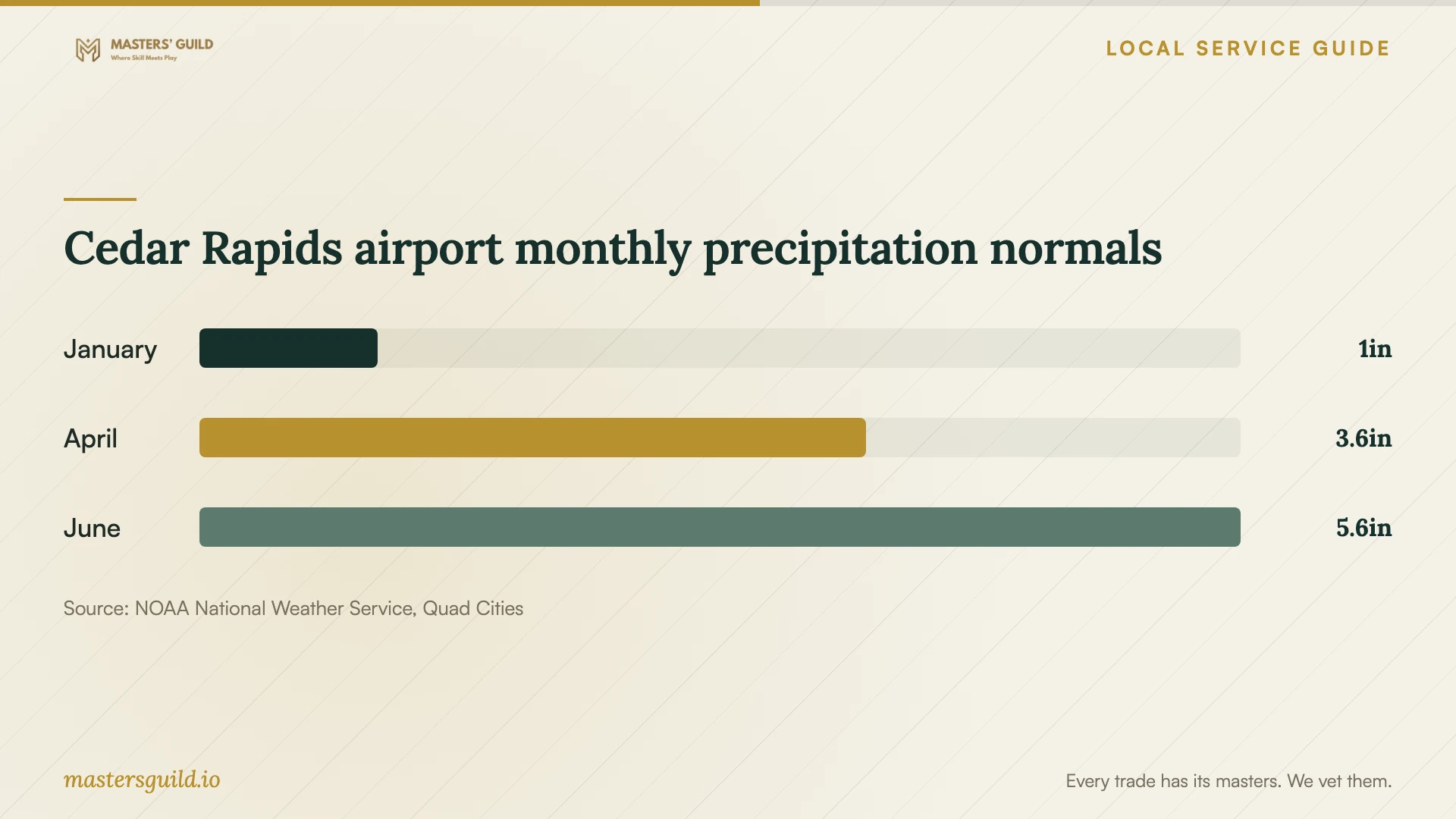
NOAA's 1991–2020 normals for Cedar Rapids Municipal Airport report a January average temperature of 19.6°F and June precipitation of 5.56 inches. Use that seasonal context to discuss wet-weather entrance care, mat handling, and extra cleanup arrangements with bidders. [4]
Specify who checks wet entrances during opening hours and who replaces or dries saturated mats. Ask the cleaner to identify suitable methods for your floor finish and to quote extra entrance work apart from the base agreement. Use actual traffic and observed floor conditions when deciding whether to add visits.
Cedar Rapids airport monthly precipitation normals
Local details that affect your job
Business chemical disposal requires advance arrangements
The Cedar Rapids Linn County Solid Waste Agency offers a Very Small Quantity Generator program for eligible businesses. Its published criteria include generating less than 220 pounds of hazardous materials per month and storing less than 2,200 pounds at one time. Participants must complete a VSQG Business Packet and arrange a delivery appointment at 1954 County Home Road in Marion. Customers must unload their materials. Before hiring for a chemical cupboard cleanout, confirm eligibility with the Agency and assign paperwork, transport, unloading, and disposal charges in the quote. [1]
Special-waste disposal and hazardous liquids follow separate routes
The same regional Agency lists nonhazardous spill-cleanup debris as an example of special waste. For that disposal route, it requires a completed waste profile and prior written approval. It accepts special waste only at 1954 County Home Road in Marion, Monday through Friday before 3 p.m., with no Saturday deliveries. Its landfill/special-waste guidance excludes nonhazardous liquid waste. The separate VSQG program lists hazardous-material examples including automotive fluids, flammable liquids, and solvents. Ask the Agency to confirm whether your liquids qualify for that program, and require the bidder to establish an accepted disposal route before scheduling removal. [1] [2]
Match the agreement to the work
| Your situation | Request from the bidder | Resolve before booking |
|---|---|---|
| Recurring office or shop cleaning | A room-by-room task schedule and complete recurring price | Visit frequency, supplies, access, and correction process |
| Carpet or hard-floor project | A separate scope describing preparation and treatment | Furniture movement, drying time, and reopening arrangements |
| Renovation cleanup | A defined handover scope and documented tax treatment | Which construction-related exemption, if any, the provider applies |
| Hazardous chemical cleanout | A disposal plan checked with the Agency's VSQG program | Eligibility, business packet, appointment, transport, and unloading; confirm acceptance of any hazardous liquids |
| Spill debris or special waste | Waste identification and an accepted disposal route | Waste profile, prior written approval, and delivery timing; the landfill/special-waste route excludes nonhazardous liquid waste |
Your hiring checklist
- List rooms, floor materials, approximate cleanable area, and restricted spaces.
- Assign tasks and frequencies, including any separate initial deep clean.
- Identify who supplies consumables, equipment, and entrance mats.
- Request a complete quote showing tax, optional work, and disposal charges.
- Check insurance evidence and agree on damage and key-loss procedures.
- Document access, alarms, lockup, and an emergency contact.
- Assign unusual-waste identification, paperwork, transport, and unloading responsibilities.
- Agree on inspections, corrections, cancellation notice, and price changes.
Frequently Asked Questions
How much should I budget for cleaning?
Get a premises-specific quote before setting your budget. Arrange a walkthrough and provide a written scope. Ask for the recurring total plus initial cleaning, supplies, tax, and optional floor work. Compare bids over the same service period.
Does Iowa tax commercial cleaning?
Iowa lists nonresidential janitorial and building cleaning as taxable services. The Department of Revenue describes exceptions, including qualifying construction-related services and certain exempt entities. Ask the provider to show tax and document any exemption it applies. [3]
Can the cleaner remove old business cleaning chemicals?
Make removal a separate agreed task. Eligible businesses can use the regional Agency's VSQG program after completing its business packet and arranging a delivery appointment. Its examples include some hazardous liquids, but ask the Agency to confirm acceptance of your materials. Assign transport, unloading, and fees before removal. [1]
How often should the cleaner visit?
Ask bidders to propose a schedule based on occupied rooms, customer traffic, restroom use, and opening hours. Consider different frequencies for different tasks. Review the arrangement after the first visits and adjust it using observed conditions.
Sources and scope
This guide combines the sources below with practical planning guidance. Figures apply to the stated geography and period; request a written quote for your property.