
Local service guide
Bricklaying and Masonry in Cedar Rapids, IA
For Bricklaying and Masonry in Cedar Rapids, arrange a site assessment, check the contractor's Iowa registration, and compare written bids that name the repair areas, mortar, access equipment and weather protection. Iowa requires registration for construction contractors earning at least $2,000 a year from construction. For historic masonry, request an assessment of the existing mortar before accepting a replacement mix. [2] [3]
Define the work before comparing bids
Start with photographs and a description of what you want repaired or built. Identify the wall, chimney, steps or other feature; note its height and access from your property. Tell the contractor whether you want a limited repair, replacement of damaged units or new masonry. Have each bidder inspect the same areas so you can compare their proposed work.
Have the mason explain the proposed treatment for each area. For historic repointing, GSA's technical guidance calls for an assessment of problem surfaces, testing and mockups before full-scale work. Use that approach to frame your questions: which joints need attention, how will the contractor prepare them, and what will you review before authorizing the remaining work? [3]
If you see leaning masonry, loose units above a walkway or a crack that has changed, keep people away from the affected area and request an assessment before approving cosmetic work. Discuss whether you need a structural professional. Describe any interior dampness and have the assessor include it in the investigation.
Check registration and project responsibilities
Iowa DIAL requires construction contractors earning at least $2,000 annually from construction to register. DIAL also requires annual renewal. Obtain the business name and registration number, then use the contractor-checking route on DIAL's registration page. Request insurance documentation as a separate hiring step. [2]
Establish who will perform the work and who will supervise it. DIAL states that subcontractors do not fall under a general contractor's registration. If your bidder plans to subcontract the masonry, check that business too and put responsibility for workmanship, cleanup and warranty questions in writing. [2]
DIAL directs contractors to contact the city or county government for each project's local requirements. Before accepting a bid, have the contractor confirm Cedar Rapids requirements for your property address and proposed work. Identify who will handle any required application and include any required inspections in the schedule. [2]
Choose a contractor who can explain historic mortar
For historic brick or stone, discuss how the contractor will determine mortar compatibility. GSA's historic-masonry guidance calls for replacement mortar that matches the original's color, grain size and texture, with compressive strength no greater than the original mortar or surrounding masonry. Have the contractor explain both the appearance and strength of the proposed mix. [3]
Request photographs of comparable work and an explanation of the mortar-removal method. GSA calls for damage-free preparation and demonstration before approved power-tool use. Agree on a sample area that lets you review the joint finish and dry appearance before the crew continues. [3]
GSA provides this procedure as a federal technical reference for historic properties and calls for project-specific professional judgment about its applicability. Use it to frame questions for a contractor or preservation professional. Confirm the specification appropriate for your building before including technical requirements in the contract. [3]
Agree on weather protection and completion
Before agreeing to a start date, have the contractor name the selected mortar product and explain its placement and curing instructions. Include a plan for checking the forecast, protecting unfinished areas and handling a weather delay. For autumn work, discuss overnight temperatures as well as conditions during the crew's working hours.
GSA's historic-repointing procedure includes cold-weather measures below 40°F and calls for keeping mortar damp for at least 72 consecutive hours during curing. These requirements apply to that reference procedure. Have your contractor explain the requirements for your project and assign responsibility for protection after the crew leaves. [3]
Separate active work from curing and final review in the agreement. Establish who will maintain coverings, whether the crew needs access to water, and when you can use nearby steps or paths. Request completion photographs, care instructions and written warranty terms. GSA's historic-work procedure also calls for a final report with photographs and ongoing care requirements. [3]
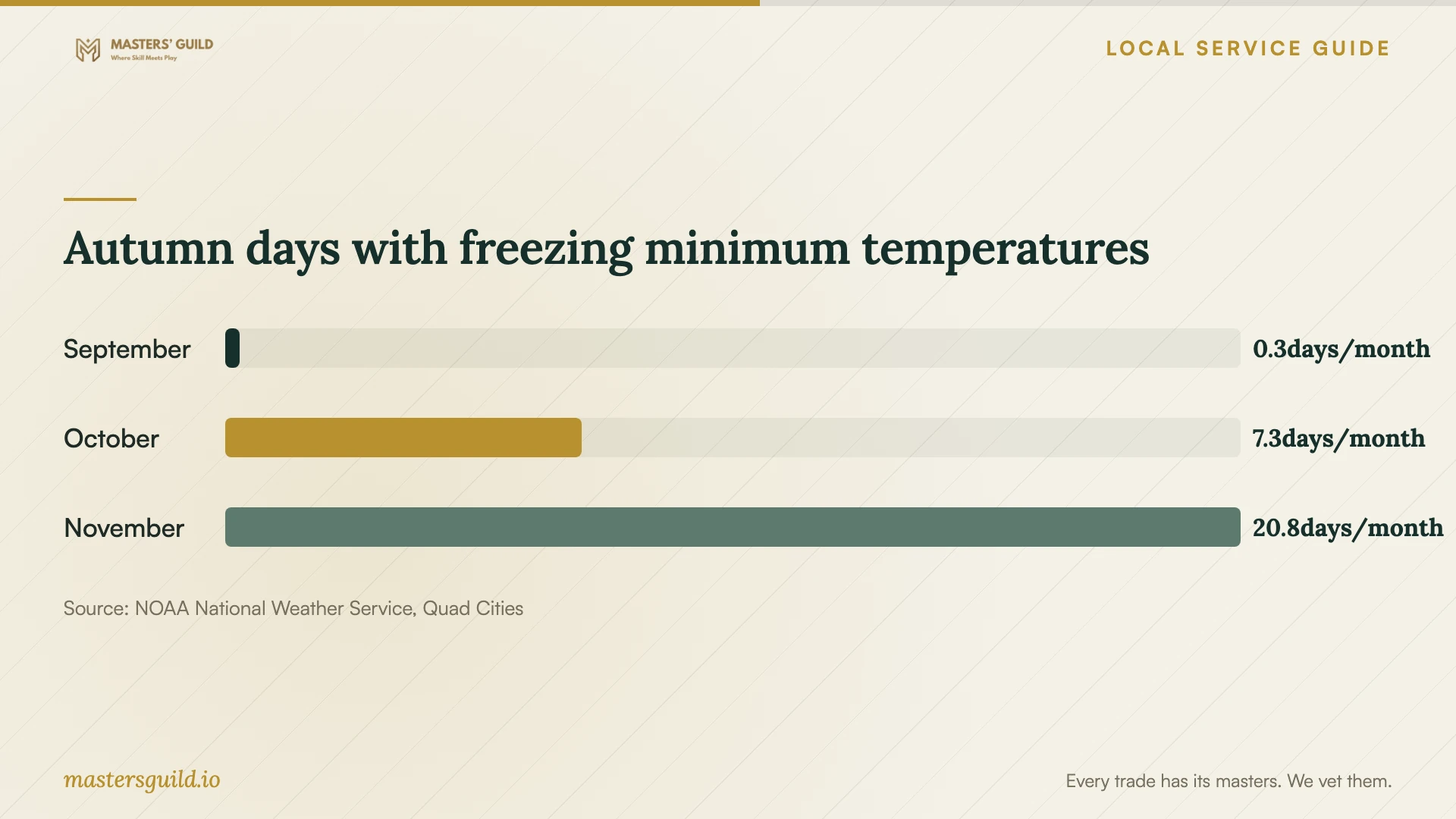
Autumn days with freezing minimum temperatures
Local details that affect your job
Check the actual masonry business under Iowa rules
For your Cedar Rapids project, check the Iowa registration of the business doing the construction work. DIAL sets the registration threshold at $2,000 in annual construction earnings and requires subcontractors to register separately. Have a general contractor identify the masonry subcontractor before you sign, so you can check both businesses. These are statewide requirements that apply to hiring here. [2]
Use airport freezing normals to question an autumn start
At Cedar Rapids Municipal Airport, NOAA's 1991–2020 normals show 0.3 September days, 7.3 October days and 20.8 November days per month with minimum temperatures at or below 32°F. For an October or November proposal, have the mason explain overnight protection, curing conditions and the point at which the crew would postpone work. Use the airport figures as planning context; check the forecast and conditions at your property before starting. [1]
Understand an out-of-state bidder's Iowa bond
DIAL says that, with few exceptions, contractors whose principal place of business lies outside Iowa must file a $25,000 bond to register. An Iowa branch office does not remove that requirement. Only Iowa and its agencies may collect on this bond. Request separate insurance documentation and put payment stages and responsibilities for your project in writing. [2]
Questions to resolve before accepting a bid
| Your situation | Next step | What to request |
|---|---|---|
| Limited repair | Define the repair boundary | Marked photographs and a written scope |
| Historic brick or stone | Discuss compatibility and preparation | Mortar assessment and a cured sample area |
| Subcontracted masonry | Check the performing business | Subcontractor name and Iowa registration number |
| Out-of-state bidder | Clarify the Iowa bond and project protection | Registration, applicable bond and separate insurance documentation |
| Autumn repointing | Review placement and curing conditions | Product instructions and a weather-protection plan |
Your hiring checklist
- Send photographs, the property address, approximate repair dimensions and access information.
- Have each bidder inspect the same areas and explain the proposed repair.
- Check the named contractor and any masonry subcontractor through Iowa DIAL.
- Request insurance documentation and comparable project references.
- For historic work, request the mortar assessment, removal method and sample-area plan.
- Confirm Cedar Rapids requirements for the address and proposed work, including responsibility for applications and inspections.
- Compare access equipment, protection, cleanup, exclusions and payment stages in writing.
- Assign responsibility for curing protection and obtain care and warranty instructions.
Frequently Asked Questions
Does Iowa registration prove masonry skill?
DIAL describes registration as a way to support compliance with unemployment insurance and workers' compensation laws and provide public contractor information. Assess workmanship separately: request comparable references, photographs and an explanation of the proposed methods. [2]
Can I assume a small masonry repair needs no permit?
Have the contractor confirm Cedar Rapids requirements for your property address and proposed work before starting. DIAL directs contractors to contact the city or county for each project's local requirements. Put responsibility for any required application and inspections in the agreement. [2]
How should I compare masonry prices?
Compare bids for the same repair areas and preparation. Have each contractor separate access equipment, materials, weather protection and cleanup, and identify exclusions. Require your written approval of additional work before the crew proceeds.
Can a mason repoint during cold weather?
Discuss the selected mortar and protection method before choosing a start date. GSA's historic-repointing guidance includes heating and material-protection requirements below 40°F and restrictions on frozen surfaces. Have the contractor explain the applicable product instructions and how the crew will maintain curing conditions. [3]
Sources and scope
This guide combines the sources below with practical planning guidance. Figures apply to the stated geography and period; request a written quote for your property.