
Local service guide
Calgary tile setting: Hiring and Project Planning
Arrange tile setting in Calgary with a written scope covering removal, surface preparation, installation, cleanup and when you can use the room again. Confirm the contractor’s business licence and who will handle plumbing or electrical changes. Calgary requires permits for plumbing-system alterations and new or altered circuit wiring; hired contractors must apply for their permits. Settle those responsibilities before demolition. [1] [2]
Define the installation before comparing offers
Give each installer room dimensions, photographs, your tile selection and the proposed layout. Identify whether you want a backsplash, floor, shower or isolated repair. Include niches, thresholds and exposed edges. Agree on who supplies the tile, trim, grout and installation materials.
Have the installer explain how they will assess the existing floor or wall and price preparation. For a shower, include the proposed waterproofing work and responsibility for the drain and valve. For a repair, have them assess the surrounding area before you approve replacement of individual tiles.
Approve cut locations, edge finishes and transitions to adjoining floors before installation. If you supply the tile, agree on who checks the order, handles damaged pieces and obtains additional material. Keep the approved layout with the written scope.
Confirm licences, permits and inspection stages
Obtain the business’s legal name and Calgary contractor licence details. The City lists general contractors, handyman services and specialty trade contractors among businesses requiring a licence. Businesses pulling trade permits need City Qualified Trade registration and a contractor business licence, subject to the City’s conditional master-electrician licensing exemption. [1]
Separate tile installation from pipe and wiring changes. Calgary requires a plumbing permit when someone constructs, extends or alters a plumbing system, including replacement of water or sewer lines. The City exempts replacement of existing faucets and fixtures from plumbing permits. [2]
For an electric heated floor, have the electrical contractor identify the wiring and permit scope. Calgary requires an electrical permit for new wiring and changes to existing branch-circuit wiring. You cannot obtain a homeowner permit on behalf of a hired contractor; the contractor must apply. [2]
Name the person who will book inspections and coordinate when crews can close surfaces. Calgary requires visible wiring for electrical rough-in inspection. Before plumbing rough-in inspection, the contractor must install drainage, venting, connected water lines and the bathtub or shower valve. Agree on that sequence before setting the installation date. [2]
Compare the complete price and room downtime
Get separate amounts or clear inclusions for demolition, preparation, installation materials, setting, edge finishing and waste removal. Have the contractor identify exclusions, taxes, permit charges and subcontractor work. Compare totals for the agreed scope, and clarify any allowance before accepting an offer.
Agree on a written change process. If the crew finds damage after removal, have the contractor photograph it, explain the proposed repair and obtain your approval for the added price and time. Use the same process if you change the tile or layout.
Confirm the start date, completion target and instructions for walking on the floor or using the shower. Have the installer base room-use instructions on the selected products. Discuss dust control, protection of adjoining rooms, water and power access, and your arrangements for another bathroom during the work.
Plan debris removal and disposal
Decide who will carry, transport and dispose of removed material. Calgary allows small quantities of tile and used flooring in the black cart as garbage, subject to its 60 kg limit and a closed lid. Take large quantities of tile to a City Eco Centre, where charges apply. [3]
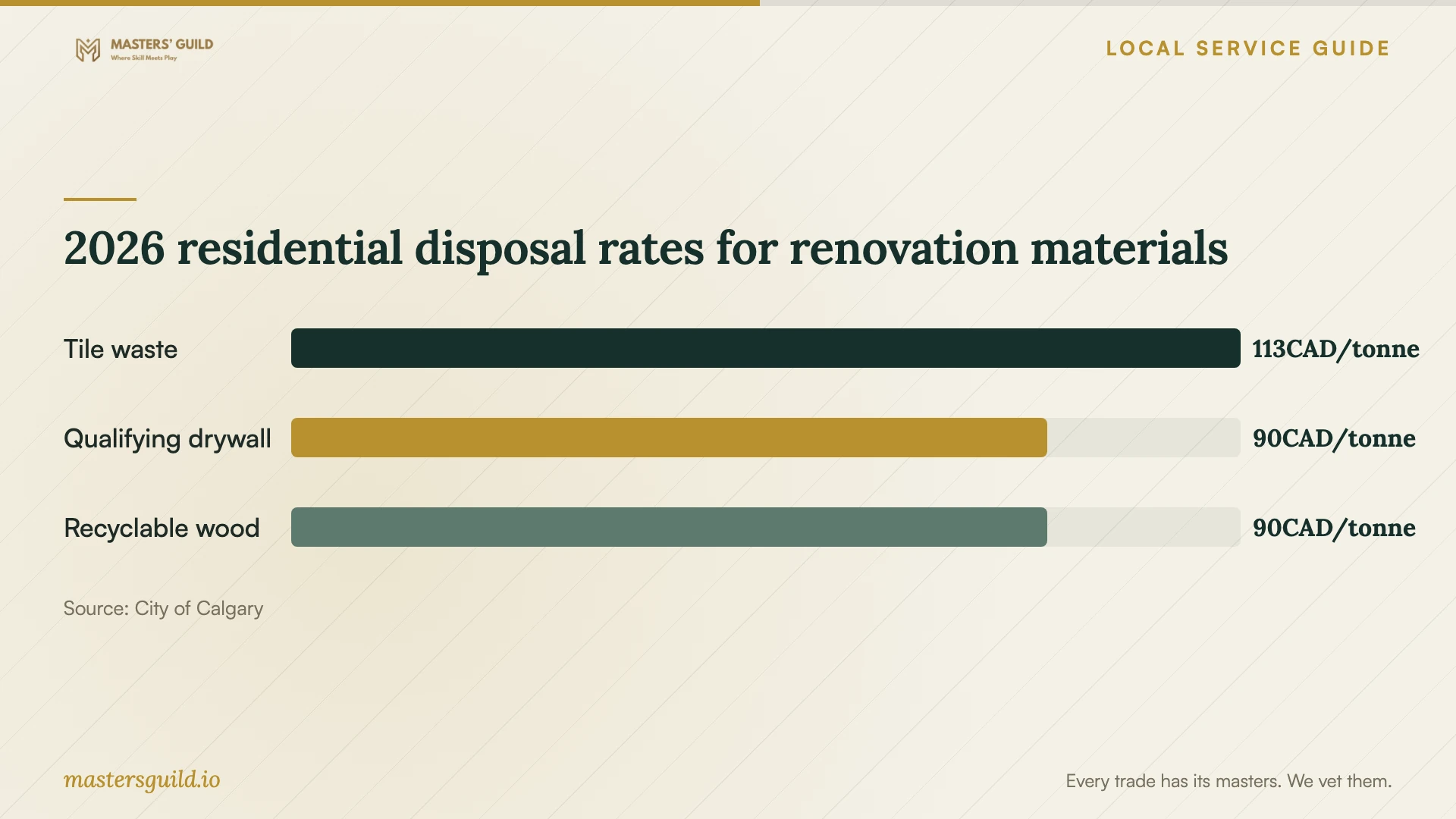
For residential charge items or mixed loads, Calgary’s 2026 schedule charges $25 per load below 250 kg. At 250 kg and above, the City charges by total load weight. Ceramic tile falls among basic sanitary waste examples, with a published rate of $113 per tonne. [4] [5]
Separate material types before loading. Calgary lets customers weigh in and out for each material to pay separate rates, but you must rejoin any queue. If you weigh in once for materials with different rates, the City applies the highest rate to the entire load. City staff determine acceptance and applicable charges. [4] [5]
Obtain a contractor’s hauling price rather than applying residential disposal fees to their vehicle. Calgary treats commercial vehicles as hauling business waste and applies commercial rates and site rules. For your own trip, cover and secure the load and arrange to unload it yourself; staff and equipment do not assist with unloading. [4]
2026 residential disposal rates for renovation materials
Local details that affect your job
Condo eligibility changes the trade-work plan
For electrical or plumbing work in an apartment-style condo, Calgary requires a licensed contractor and does not allow homeowner permits. Individually owned condominium townhouse owners can obtain eligible homeowner permits with condo-board authorization. Check your board’s renovation requirements before scheduling tile removal. [2]
Resolve permit questions before closing surfaces
Call Calgary’s Planning Services Centre at 403-268-5311 if you cannot determine the permit scope. The City says inspectors may require drywall removal to inspect concealed electrical or plumbing work completed without proper permits. Include inspection stages in the schedule before the installer covers affected areas. [2]
Choose how to handle mixed renovation debris
For a residential disposal trip with different material rates, consider separate weighing for each material. Calgary permits that option but requires customers to rejoin any queue. Compare the extra trips through the scalehouse with a single weighing at the highest applicable rate. Confirm contractor hauling as a separate service because commercial vehicle rules differ. [4]
Match the project to its next planning step
| Project | Question to resolve | Next step |
|---|---|---|
| Dry-area backsplash | Will the crew change wiring? | Approve layout and edges; confirm an electrical permit for new or altered circuit wiring. |
| Shower renovation | Will the work alter plumbing or replace existing fixtures? | Have the plumbing contractor identify permit requirements and coordinate inspection stages. |
| Electric heated floor | Who will install the wiring? | Confirm the electrical contractor’s permit responsibility before tile installation. |
| Apartment-style condo | Does the scope include electrical or plumbing work? | Hire a licensed contractor for those trades; homeowner permits are unavailable. |
| Tile removal | Who will transport the debris? | Include contractor hauling or plan residential disposal within cart and Eco Centre rules. |
Your hiring checklist
- Provide room photographs, dimensions, tile details and your intended layout.
- Obtain the legal business name, licence details and proof of liability insurance.
- Name the plumbing or electrical contractor and confirm permit and inspection responsibilities.
- Approve preparation, proposed waterproofing, edge finishes and floor transitions.
- Agree on written approval for price and schedule changes after demolition.
- Confirm room protection, access, cleanup and debris hauling responsibilities.
- Get product-based room-use and care instructions before work starts.
Frequently Asked Questions
Do I need a permit to replace tile?
Calgary’s homeowner permit guidance covers electrical and plumbing work. It requires permits for plumbing-system alterations and new or altered circuit wiring, with exceptions for replacing existing fixtures. To determine the requirements for your complete renovation, describe the tile work and associated changes to the Planning Services Centre. [2]
Can I obtain a homeowner permit for my contractor?
No. Calgary requires the homeowner to perform work covered by a homeowner permit. A hired contractor must apply for the permit. Apartment-style condo owners cannot obtain homeowner electrical or plumbing permits. [2]
How should I compare installation prices?
Give each installer the same tile, layout and preparation scope. Include removal, proposed waterproofing, finishing, related trade work and cleanup. Clarify allowances, exclusions and change approvals. The disposal rates shown here cover municipal waste charges, not installation labour or contractor hauling. [4] [5]
Can I put old tile in the black cart?
Calgary allows small quantities of tile and used flooring in the black cart as garbage. Keep within the cart’s 60 kg limit and close the lid. Take large quantities to a City Eco Centre, where disposal charges apply. [3]
Sources and scope
This guide combines the sources below with practical planning guidance. Figures apply to the stated geography and period; request a written quote for your property.