
Local service guide
Mold Removal in Calgary: Hiring and Repair Planning
Arrange Mold Removal in Calgary by asking a contractor to assess the affected rooms and provide a written scope covering removal, moisture-source repairs, and rebuilding. Compare itemized estimates and check insurance before signing. For a sewage backup, follow the City’s sequence: protect people from exposure, call 311 for source triage, then contact your insurer. [1] [3]
Define the work before comparing contractors
Have the person assessing your home explain what they propose to remove, what they propose to retain, and which areas they need to investigate. Ask them to identify the suspected moisture source and name who will repair it. Request separate prices for the initial agreed scope and any investigation that could lead to additional work.
For the removal plan, discuss how the crew will protect adjacent rooms, handle affected materials, and clean the work area. Agree on the records you want before approving rebuilding, such as photographs and moisture measurements. If the contractor recommends testing, request its purpose, price, and an explanation of how the result would change the work.
Alberta advises homeowners to obtain written estimates from more than one business. Those estimates should describe the work and materials, include start and completion dates, itemize costs, state the total price, and explain guarantees and payment methods. Use that checklist to compare bidders on scope as well as price. [3]
Handle a sewage backup before arranging removal
If wastewater comes up through a sink, toilet, or drain, follow Calgary’s sewage-backup instructions. The City warns that contaminated water may contain harmful bacteria and pathogens and tells residents not to enter the affected area without protective gear. Call 311, then contact your insurance company. [1]
The 311 agent asks questions to distinguish internal plumbing problems from possible City infrastructure issues. If the agent says a City inspection is unnecessary, the City directs you to a local plumber for internal plumbing diagnosis. Tell your cleanup contractor which assessment you have arranged and agree on who will coordinate the next stage. [1]
City crews do not move furniture, pull back carpet, remove toilets, or cut drywall to identify the backup source. Discuss access when booking, including who will expose a covered cleanout. Keep the source diagnosis, contaminated-water cleanup, and proposed mould work distinct in your written instructions. [1]
Budget for the full repair scope
Request an itemized quote after the contractor assesses the job. Check whether the total includes material removal, disposal, cleaning, equipment, source repairs, and replacement finishes. Have the bidder identify exclusions and explain how they will price hidden damage before you authorize further work.
Agree on a schedule that separates investigation, removal, repairs, and rebuilding. Discuss room access, equipment use, and any proposed restrictions on staying in the home. Establish a handover point between the removal crew and the tradespeople replacing finishes.
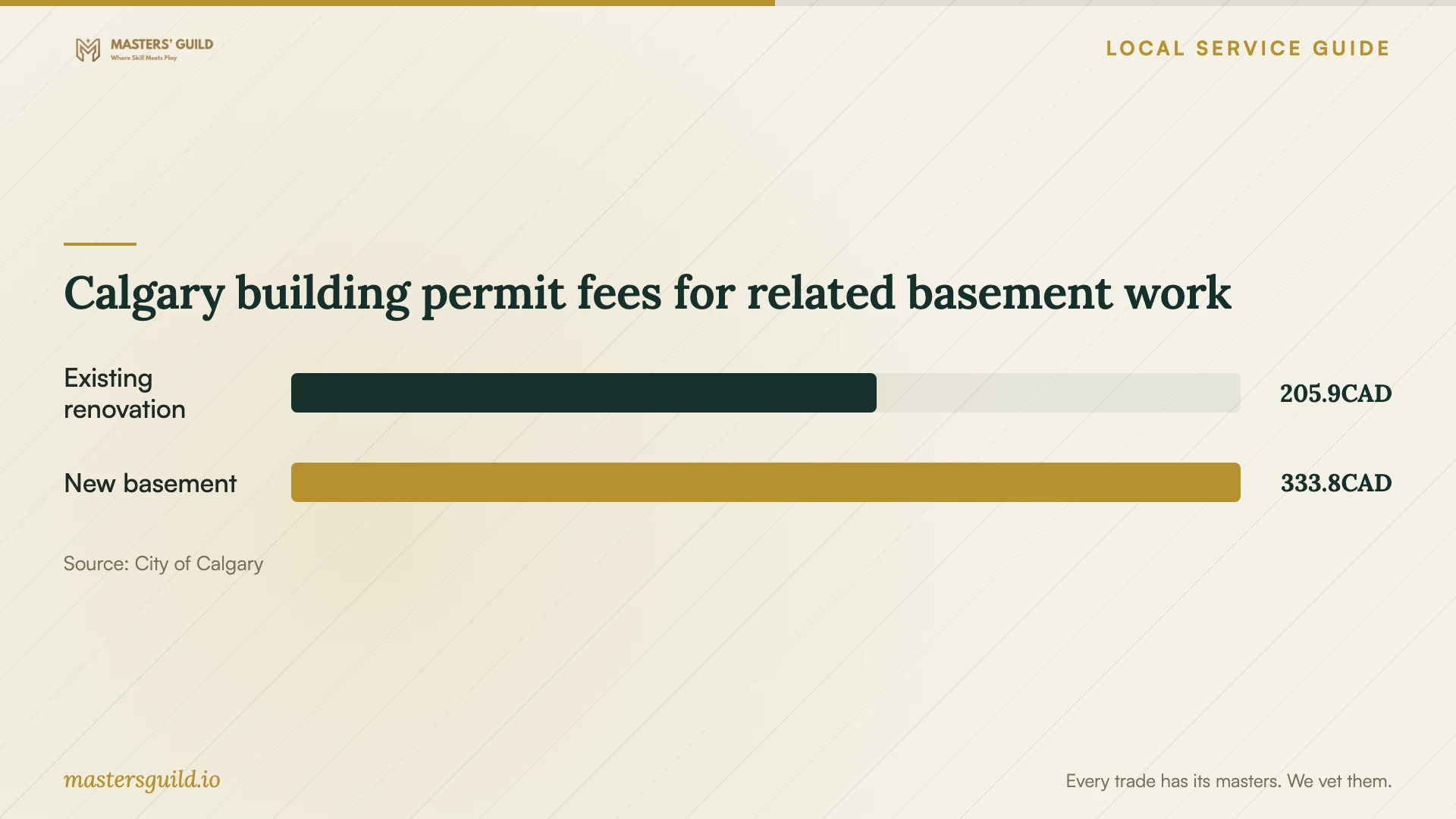
Calgary requires building permits for first-time basement development, structural changes such as moving or removing walls, and new wall openings. The City says minor cosmetic upgrades, including finishes and painting, typically do not require a building permit. Confirm how the proposed repairs fit these categories before authorizing construction. [2]
Check coverage, deposits, and written changes
Alberta advises you to ask for the contractor’s WCB number and an insurance certificate showing public liability and property damage coverage for workers on the job. Check the qualifications of tradespeople handling repairs. Establish who will perform each part of the work and which tasks the contractor plans to subcontract. [3]
Check prepaid-contractor licensing if the business accepts money before completion and discusses or finalizes the contract at your home or another location away from its normal business premises. Alberta says these contractors must hold a Service Alberta licence and post security. Ask how this rule applies to your proposed payment and contracting arrangement. [3]
Put deposit terms, refund conditions, payment stages, warranties, debris removal, and permit responsibilities in the contract. Alberta advises written approval for changes, supported by a signed statement from the contractor showing the cost increase or reduction. Agree on that process before anyone opens additional walls or expands the removal area. [3]
Calgary building permit fees for related basement work
Local details that affect your job
Prepare access for a Calgary sewer assessment
Calgary asks homeowners to locate the sewer cleanout and provide approximately two metres of clear access around it. The homeowner must expose a cleanout covered by carpet, a false floor, or drywall, or explain the access problem when booking. Tell the crew about known changes to the sanitary system. Arrange access help if you cannot prepare the area under the City’s exposure precautions. [1]
Separate leak repairs from plumbing alterations
Calgary does not require a plumbing permit to repair a leak in a water distribution or drainage system or remove a drainage blockage. It requires a separate plumbing permit for new systems and extensions or alterations to existing systems. Ask the repair contractor to identify which work they propose. For permit questions, the Planning Services Centre lists 403-268-5311. [2]
Check the application requirements before rebuilding
For home renovation and basement permit applications, Calgary lists an asbestos abatement form for houses built before 1990. If your removal project leads to a permit application, establish who will complete that requirement. The City also says homeowners cannot obtain homeowner electrical or plumbing permits for apartment-style condos, so confirm the contractor’s permit arrangements if those repairs form part of the project. [2]
Choose the next step for your situation
| Situation | Next step | Clarify before authorizing work |
|---|---|---|
| Wastewater rises through a drain | Follow exposure precautions, call 311, and contact your insurer. | Does the source need a plumber or City assessment? |
| A cleanout sits beneath finished flooring | Discuss access with the City when booking. | Who will expose it? City crews do not pull back carpet. |
| Repairs include structural changes or new wall openings | Confirm the building-permit scope. | Who will apply and arrange inspections? |
| A plumber proposes a leak repair | Ask whether the scope includes system alterations. | Calgary distinguishes permit-exempt leak repairs from permitted alterations. |
| A contractor requests advance payment under a contract discussed at home | Check Alberta prepaid-contractor licensing. | Confirm payment stages and deposit refund conditions in writing. |
Your hiring checklist
- Record affected rooms, visible damage, and the history of leaks for the assessment.
- For a sewage backup, follow the City’s exposure precautions and call 311.
- Ask bidders to separate removal, moisture-source repair, and reconstruction.
- Request itemized written estimates with dates, exclusions, and payment terms.
- Ask for the WCB number and liability and property damage insurance certificate.
- Confirm who will obtain any required permits and arrange inspections.
- Agree on written approval and pricing for additional work.
- Specify the completion records you want before approving rebuilding.
Frequently Asked Questions
How much should I budget for mould removal?
Request an assessed, itemized quote for your home. Compare the removal scope, source repairs, disposal, and rebuilding separately. Ask each bidder to state exclusions and explain the process for pricing additional work. Before signing, decide which repairs you want included in the agreement and which you will arrange with another contractor.
Does every mould removal job need a building permit?
Confirm the repair scope with Calgary. The City says minor cosmetic renovations typically do not need a building permit, while structural changes and new wall openings do. Electrical installations and renovations require a separate electrical permit; new plumbing installations and system alterations require a plumbing permit. [2]
Will City crews clean up after a sewage backup?
Plan separate cleanup arrangements. Calgary describes its crews assessing and clearing sewer blockages, and says they do not move furniture, pull back carpet, remove toilets, or cut drywall to locate the source. Call 311 to establish the appropriate assessment before coordinating the remaining work. [1]
Sources and scope
This guide combines the sources below with practical planning guidance. Figures apply to the stated geography and period; request a written quote for your property.