
Local service guide
Planning gardening in Burnaby
For gardening in Burnaby, hire against a written task list that separates cleanup, ongoing care, materials and removal. Settle watering responsibilities before planting. Before a gardener hauls rooted plants away, check your address against the CFIA regulated-area map: moving plants with soil, soil-related matter or growing media attached outside that area requires a movement certificate year-round. [2]
Define the work and the finished result
For a cleanup, identify the beds to weed, shrubs to trim and plants to remove. Send photographs and mark plants you want kept. Describe the finish you expect: roots removed where specified, cuttings collected and paths swept. Leave room for the gardener to flag uncertain plant identification before cutting.
For ongoing care, write down the tasks you want at each visit, such as mowing, edging, weeding or container care. Set a schedule and an approval limit for extra work. Price major planting changes separately so you can review plant choices and aftercare before committing.
Describe narrow gates, steps, slopes, parking and the route to the garden. Identify the taps the gardener may use and the loading area. If you live in a strata property, settle permission and access with the property manager before booking work in shared areas.
Compare quotes with a clear spending limit
Give each gardener the same task list. For hourly work, establish whether the rate covers one worker or a crew, any minimum charge and the amount they can spend before seeking approval. For a fixed quote, have the gardener list the included work and explain how they price changes.
Request separate amounts for labour, plants, mulch, delivery and disposal, followed by the total payable. Specify plant sizes and quantities. For mulch, describe the area and intended depth. Decide who buys materials and how you will approve substitutions.
Review proof of liability insurance and examples of similar work. Discuss protection for retained plants, responsibility for accidental damage and how the gardener will report problems. Include weather rescheduling and a way to review the completed work before the visit ends.
Settle watering and aftercare before planting
Burnaby states that regional watering restrictions run from May 1 to October 15. Its September 1, 2026 update returned the region to Stage 1. Under the published residential rules, residents may water lawns one morning per week, automatically from 5 am to 7 am or manually from 6 am to 9 am. Check your permitted day and the current stage before the visit. [1]
During Stage 1, residents may use sprinklers on trees, shrubs and flowers from 5 am to 9 am on any day, or hand water or use drip irrigation at any time. Hoses must have an automatic shut-off nozzle. Residents may water vegetable gardens at any time. Match the gardener's aftercare instructions to your available watering method. [1]
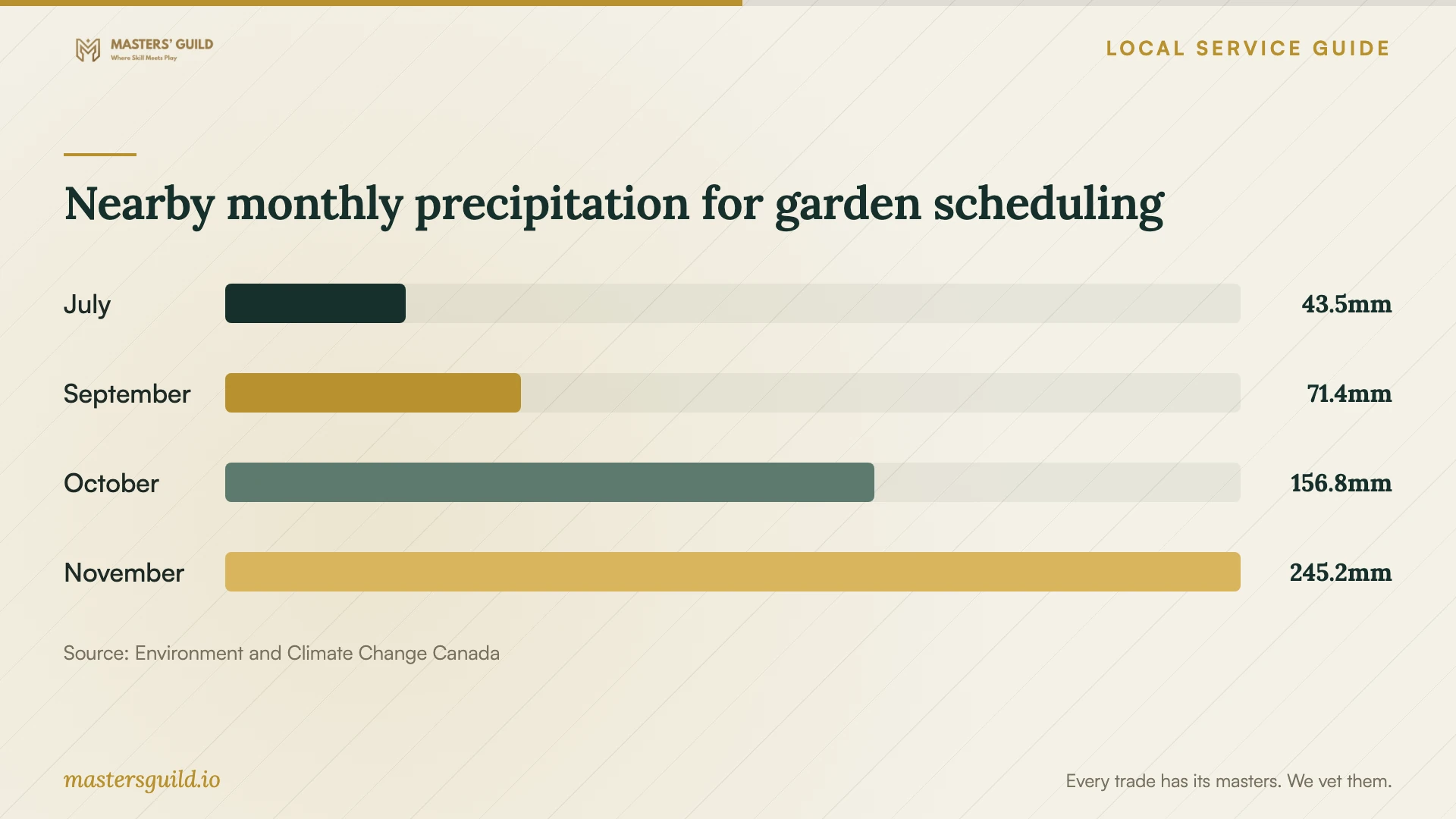
Name the person who will water between visits and request written aftercare instructions. For autumn work, discuss access after rain and a rescheduling plan. Nearby Vancouver Harbour's 1991–2020 precipitation normals show wetter October and November averages than July. Use those regional figures as planning context, then inspect your own soil and access before work begins. [5]
Plan plant removal before loading
Use CFIA's regulated-area map to check the property before arranging removal. Its guidance, effective June 1, 2026, requires a movement certificate year-round when plants with soil, soil-related matter or growing media attached leave a Japanese beetle regulated area. The attached material is part of this requirement; do not assume that loose soil or detached growing media falls under the same rule. [2]
Burnaby's substantive guidance states that soil alone and above-ground plant parts are no longer regulated. For yard waste within the regulated area, the City advises keeping it on-site or using the municipal green bin. Have the gardener identify what they will remove and distinguish rooted plants with attached material from other cuttings. [3]
For plants with attached regulated material taken outside the boundary to the Eco-Centre, include certificate responsibility, covered transport and the destination in the quote. Use CFIA's guidance for the year-round movement requirement and the City's instructions for local disposal arrangements. [2] [3]
Assess lawn damage before choosing treatment
Have the gardener assess torn or yellowing turf before proposing replacement or treatment. Burnaby explains that chafer grubs feed on grass roots, while birds and other animals can worsen damage by pulling back turf to eat the grubs. [4]
Request a proposal that names the suspected pest, treatment, applicator and follow-up care. The City describes lawn-care changes and alternative groundcovers as management options, and warns that hot conditions reduce nematode effectiveness. Discuss those options before approving another lawn installation. [4]
Nearby monthly precipitation for garden scheduling
Local details that affect your job
New-lawn watering exemption
Plan the application before installing seed or sod that needs extra watering. Burnaby requires you to show the current date on the purchase receipt for lawn seed, sod or turf. The new-lawn permit costs $65 including taxes and lasts 21 consecutive days from issue. The City says it processes, issues and starts permits within three business days of application. It issues no new exemptions during Stages 2, 3 or 4. Credit-card payment adds a 1.8% fee. [1]
Eco-Centre disposal arrangements
Burnaby identifies its Eco-Centre at 4855 Still Creek Drive as the only approved receiving facility in the city for materials from the regulated area. For plants with soil or soil-related matter attached taken outside the area to that facility, the City requires a valid CFIA movement certificate at tipping, a tarped or covered load and direct travel there. Include these arrangements in the removal scope. The City also advises cleaning soil from gardening equipment before using it at another property. [3]
Chafer product choice affects aftercare
Obtain the treatment name before approving a chafer-control job. Burnaby offers free watering exemptions for nematode treatment under its exemption rules; BTG products do not qualify. The City states that commercial BeetleGONE! and GrubGONE! products require a commercial applicator, while homeowners can purchase domestic Grub B Gone. Discuss the proposed product and who will provide the required aftercare. [1] [4]
Choose the scope for your garden
| Your situation | Request | Settle before work |
|---|---|---|
| Overgrown beds | A defined cleanup | Plants to keep, root removal and debris destination |
| Routine upkeep | A recurring task list | Visit schedule and approval limit for extra work |
| New seed or sod | Installation with aftercare | Watering arrangements and City exemption eligibility |
| Plants with attached soil leaving a regulated area | Removal with a transport plan | CFIA movement certificate and disposal arrangements |
| Suspected chafer damage | Assessment and treatment proposal | Product, applicator and watering requirements |
Your hiring checklist
- Photograph work areas and mark plants you want kept.
- Separate cleanup tasks from recurring maintenance.
- Describe access, parking, taps and any strata arrangements.
- Request an itemized total and an approval limit for extra work.
- Settle watering responsibilities and weather rescheduling.
- Check the CFIA map before arranging removal of rooted plants.
- Review insurance and assign responsibility for certificates and disposal.
Frequently Asked Questions
Should I book a cleanup or recurring care?
Choose a defined cleanup to bring named areas to an agreed condition. For continued care, request a schedule with specific tasks. Have the gardener quote the first cleanup separately so you can review the ongoing commitment.
Can my gardener take away plants with soil attached?
Check the property against CFIA's regulated-area map. Moving plants with soil, soil-related matter or growing media attached outside a Japanese beetle regulated area requires a movement certificate year-round. Burnaby specifies certificate presentation, covered transport and direct travel for those plants taken to its Eco-Centre. [2] [3]
Can I get extra watering for new turf?
Burnaby offers eligible new-lawn permits for $65 including taxes, valid for 21 consecutive days from issue. You must show the current date on the purchase receipt for seed, sod or turf. The City issues no new exemptions during Stages 2, 3 or 4. Check the stage and application timing before installation. [1]
Should I request nematodes for lawn damage?
Start with a pest assessment. Burnaby warns that hot conditions reduce nematode effectiveness and describes lawn-care changes, alternative groundcovers and BTG options. If you choose nematodes, settle moisture requirements and watering-exemption eligibility before application. [1] [4]
Sources and scope
This guide combines the sources below with practical planning guidance. Figures apply to the stated geography and period; request a written quote for your property.