
Local service guide
Duct and Vent Cleaning in Burnaby, BC
Arrange Duct and Vent Cleaning in Burnaby by first identifying the system and the reason for cleaning, then requesting written quotes with the same scope. Consider forced-air duct cleaning for substantial contamination, pests or excessive debris. For a strata home, confirm responsibility and access with the manager before booking; flag any work that could disturb suspect asbestos-containing materials. [1] [2] [3] [4]
Decide whether the ducts need cleaning
Ask for an inspection before agreeing to a whole-home package. The U.S. Environmental Protection Agency recommends cleaning air ducts as needed, rather than on a routine schedule. Its reasons to consider cleaning include substantial visible mould on hard surfaces, pest infestation, and excessive dust or debris that clogs ducts or escapes through supply registers. This is technical guidance from the United States, not a B.C. service requirement. [4]
You can vacuum or remove and clean a dusty return grille without treating it as evidence of contamination deeper in the system. If a contractor identifies mould, ask to see the affected area and discuss confirmation: an expert may need laboratory analysis to identify it. Correct the moisture source or pest problem as part of the plan so contamination does not recur. [4]
Avoid choosing a cleaner on promises of allergy relief or lower energy bills. The EPA says duct cleaning has not been shown to prevent health problems and finds little evidence that cleaning ducts alone improves system efficiency. Discuss unexplained symptoms with your doctor and arrange heating equipment servicing as a separate task. [4]
Name the system before requesting a quote
Tell each bidder whether you want forced-air supply and return ducts, a dryer exhaust route, or bathroom exhaust work assessed. Ask them to identify the route and termination they propose to clean. Request separate scope and prices for each service rather than assuming a whole-home duct package includes the dryer or other exhaust vents.
For forced-air cleaning, ask which components the contractor includes: supply and return ducts, registers, grilles, the air-handling housing, blower, coils and drain pans where present. The EPA advises cleaning all components of a contaminated system because an omitted component can contaminate the system again. Ask the bidder to list exclusions and explain who will handle components outside their competence. [4]
Provide photos of the equipment, accessible ducts and exterior vent outlets. Describe renovation dust, water damage or pest activity you have noticed. Ask how the contractor will reach concealed sections and whether they propose new access openings. For a dryer or bathroom exhaust job, request a written description of the sections they can reach and how they will check the result.
Compare scope before comparing price
Request at least three written estimates, following the EPA's consumer guidance. Ask each contractor for the total cost, included components, expected working time and any interruptions. Its published cost discussion concerns U.S. heating and cooling systems; it does not establish a current Burnaby price. Use quotes for your property to set your budget. [4]
Ask the contractor to explain their vacuum collection method. The EPA recommends equipment that exhausts collected particles outdoors, or HEPA vacuum equipment when the exhaust remains indoors. It also advises protecting furnishings, matching brushing methods to duct materials, and sealing and reinsulating access holes after cleaning. [4]
Before accepting a sanitizing or coating add-on, ask for the product name, purpose, proposed surfaces and instructions. The EPA describes unresolved questions about chemical treatments and does not recommend routine sealant use to cover contaminants. Treat its discussion as technical caution; it does not establish Canadian product authorization. [4]
Prepare access and agree on completion checks
Agree on parking, equipment placement and the route through your home. Clear space around the furnace or air handler and the vents named in the quote. Ask whether the crew needs access to a balcony, roof, crawlspace or another suite, then identify who will arrange it. Confirm shutdown time and make a plan for pets before the appointment.
Ask for before-and-after views of representative supply and return sections and the other components included in the agreement. The EPA recommends a visual inspection to verify cleanliness, along with checks that the contractor has reattached registers, secured access doors and left the system functioning. Record inaccessible sections and unresolved defects in the completion report. [4]
Address moisture alongside contamination
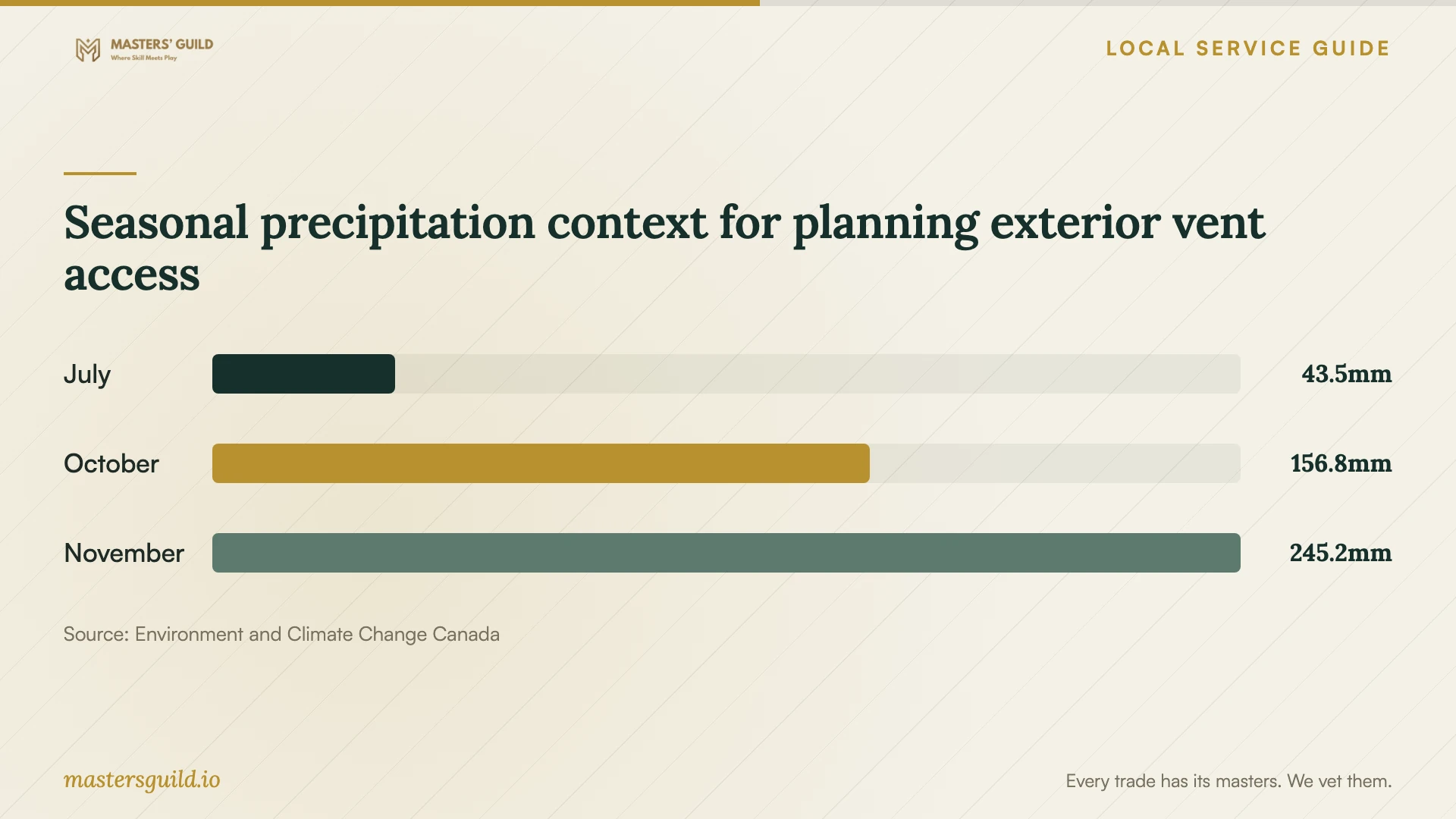
Nearby Vancouver Harbour's 1991–2020 climate normals record more precipitation in November than July. That seasonal context can help you plan exterior access, but it cannot diagnose damp ducts in your home. Ask the contractor to identify actual leaks, wet insulation or drainage problems rather than attributing contamination to regional weather. [5]
The EPA identifies moisture control as the most effective way to prevent biological growth in ducts. Have the responsible contractor correct leaks and drain-pan problems. Wet or mouldy internal insulation may require replacement rather than cleaning. Keep filters fitted and change them according to the system manufacturer's recommendations. [4]
Seasonal precipitation context for planning exterior vent access
Local details that affect your job
B.C. strata boundaries determine whom to involve
For a Burnaby condo or townhouse in a strata, ask the manager to check the strata plan before you authorize duct work. Provincial guidance says ducts may be common property and that the strata corporation controls common property. Review the bylaws if the cleaner proposes access alterations: under the Standard Bylaws, which a strata may amend, owners need written approval for alterations to common property, including limited common property. [1]
Coordinate shared maintenance and resident access
B.C. guidance assigns common-property maintenance and repair to the strata corporation. Ask whether the manager has already scheduled shared ventilation work and who must arrange access. Where bylaws require residents to provide entry for maintenance, the guidance calls for reasonable notice. Confirm the appointment and affected suites before committing to a contractor's arrival time. [2]
Check asbestos before disturbing building materials
WorkSafeBC says homes built before 1990 likely contain some asbestos, and newer homes can contain it too. If cleaning involves disturbing suspect insulation, register surrounds or materials around a new opening, pause that part of the job. For maintenance or repairs, WorkSafeBC directs owners to hire a qualified person to inventory asbestos and advise workers of hazards. Anyone hired to deal with asbestos must hold the required B.C. licence; this does not establish a licence requirement for ordinary duct cleaning. [3] [4]
Choose the next step before booking
| What you find | Next step | Booking implication |
|---|---|---|
| Dust on a return grille | Clean the accessible grille and check for deeper contamination. | Grille dust alone does not justify whole-system cleaning. |
| Excessive debris or particles escaping supply registers | Ask for an inspection and a written cleaning scope. | Consider cleaning and correcting the underlying cause. |
| Suspected mould or wet internal insulation | Ask for identification and a moisture assessment. | Wet or mouldy insulation may need replacement. |
| Ducts that may be strata common property | Check the plan and maintenance responsibilities with the manager. | Coordinate authorization and access before booking. |
| Work that could disturb asbestos | Arrange the assessment appropriate to the proposed work. | Resolve the asbestos plan before disturbance. |
Your hiring checklist
- Identify the forced-air ducts and each exhaust route you want assessed.
- Ask the contractor to show the contamination that supports cleaning.
- For a strata home, confirm boundaries, responsibility, approvals and access with the manager.
- Flag suspect materials before anyone brushes, cuts or disturbs them.
- Compare written totals, included components, exclusions and proposed add-ons.
- Agree on equipment placement, shutdown time and preparation.
- Review completion photos, access repairs and any unresolved problems.
Frequently Asked Questions
How often should I clean my air ducts?
Choose cleaning based on observed conditions. The EPA recommends an as-needed approach and does not treat duct cleaning as necessary yearly maintenance. Keep filter changes and heating equipment inspections on their own maintenance schedule. [4]
Can I book cleaning for my condo myself?
First ask the strata manager who controls and maintains the duct route. B.C. guidance says ducts may be common property. The strata plan and applicable bylaws matter, especially if the contractor needs shared access or proposes an alteration. [1] [2]
Does a duct-cleaning quote include the dryer vent?
Ask the bidder to state that in writing. Request a separate description of the dryer exhaust route, access arrangements and completion checks. Do the same for bathroom exhaust work so you can compare the services you intend to buy.
Should I accept a mould treatment during cleaning?
Ask the contractor to show the suspected growth, explain how they identified it and identify the moisture source. Review any proposed chemical treatment before authorizing it. EPA guidance describes uncertainty about these treatments; its U.S. product rules do not establish Canadian authorization. [4]
Sources and scope
This guide combines the sources below with practical planning guidance. Figures apply to the stated geography and period; request a written quote for your property.