
Local service guide
Wall Painting in Burlington, VT: Hiring and Prep
Arrange Wall Painting in Burlington by asking painters to inspect the walls and quote preparation, paint, protection and cleanup together. Burlington exempts painting from its building-permit requirement. Before agreeing to scraping or sanding in a pre-1978 home, discuss lead-safe requirements, any approved lead exemptions and the contractor’s Vermont credentials. List added repairs or alterations in the proposal so you can check their permit needs. [1] [3] [4]
Define the walls and preparation before comparing prices
Walk through each room with the painter. Point out peeling areas, cracks, stains, wallpaper remnants and previous patches. Ask them to describe the preparation for each surface and identify any problem you should resolve before painting. Photograph those areas and attach the agreed repair list to the proposal.
Specify whether you want walls alone or also ceilings, baseboards, doors and window trim. Record the paint manufacturer, product, color and sheen, plus the proposed primer and coat plan. Ask how the painter will handle areas that need further coverage and whether the quoted price includes materials, furniture moving and cleanup.
Obtain written, property-specific quotes for your budget. Ask each painter to inspect the same surfaces and price the same preparation. Request separate prices for optional rooms or trim so you can reduce scope while keeping the preparation you agreed on.
Check the approval needs of added work
The City of Burlington exempts painting from its building-permit requirement. Its other listed exceptions include in-kind repairs costing $1,000 or less, while it requires a permit for demolition. If your painter proposes removing wall material or making repairs beyond a repaint, describe that work to the Building & Trades Division before authorizing it. [1]
For zoning, the city lists painting among projects that might not need a permit and asks property owners to obtain confirmation. Submit your scope through its online application portal for staff review, or call the zoning office at 802-865-7188. Describe any design or material changes alongside the painting. [2]
Choose credentials for the preparation your home needs
Vermont’s Department of Health explains that disturbing lead-based paint can create hazardous dust. Its guidance requires a Lead-Safe RRPM licensed person for renovation, repair or painting work that disturbs more than one square foot of lead-based paint per interior room. For a pre-1978 home, discuss existing coatings, proposed disturbance and any Health Department-approved lead exemptions before anyone starts scraping or sanding. [3]
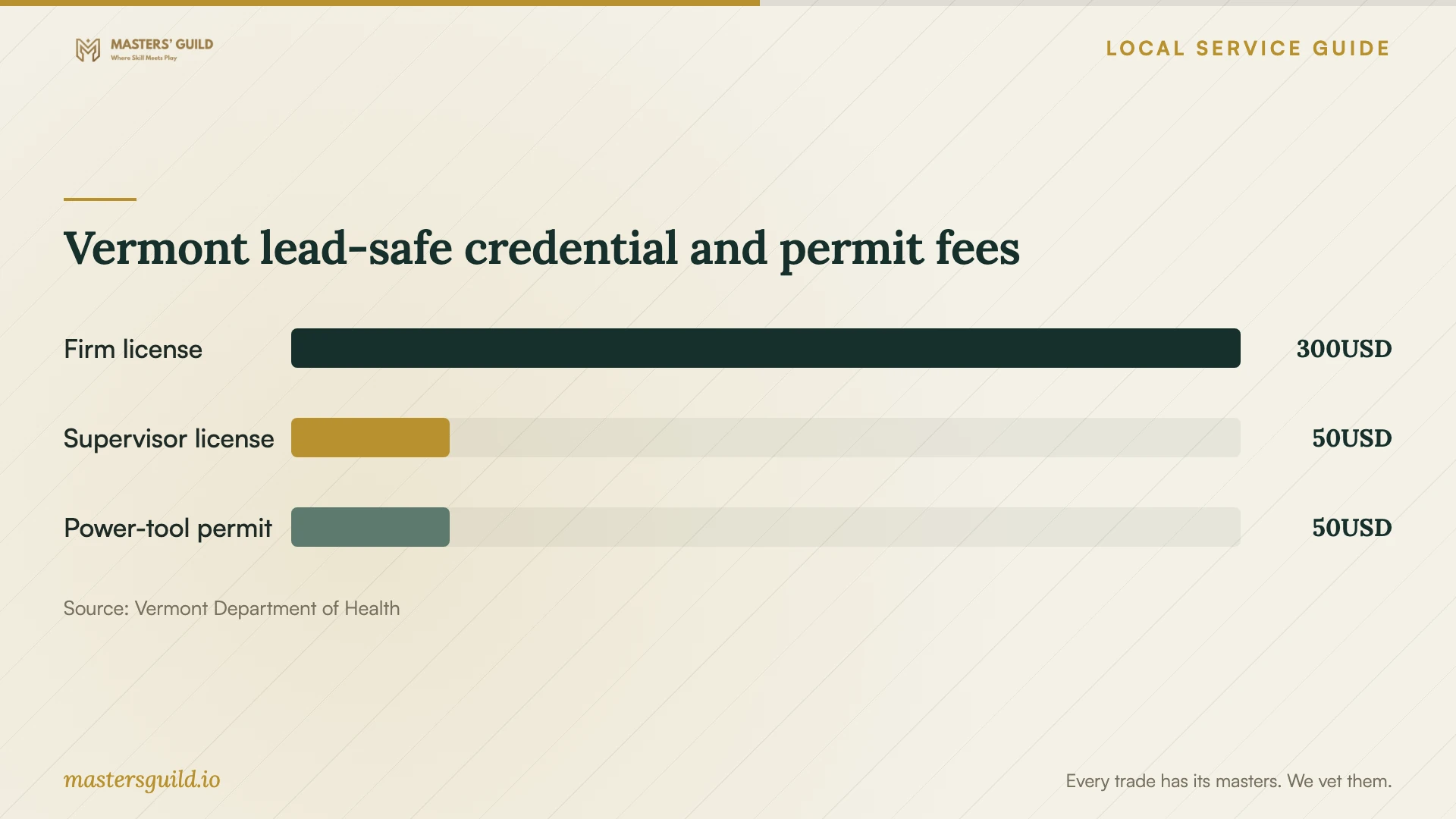
Ask a contractor performing covered work for both the Vermont Lead-Safe RRPM Firm license and the supervisor’s license. The Health Department requires the licensed supervisor to remain on the jobsite while RRPM work proceeds. Ask who will supervise your job, then agree on work-area containment, occupant access and cleanup in writing. [3] [4]
If the contractor proposes power tools for RRPM work, ask about the job-specific permit and its effect on the start date. Vermont allows licensed applicants to seek a power-tool permit and instructs them to submit the application at least 10 days before work starts. Resolve the permit requirement before agreeing to that preparation method. [4]
Set the contract and room-access plan
For covered residential work worth $10,000 or more in labor and materials, check the contractor’s OPR registration and applicable exemptions. Vermont defines residential contracting to include painting in a dwelling unit or a building or premises with four or fewer dwelling units. Check OPR registration and lead-safe credentials against their separate requirements. [5] [4]
OPR’s contract guidance calls for a price or billing arrangement, estimated start and completion dates, a description of services and materials, and a process for approving changes. The parties must document amendments in a signed writing. Use those details to settle how the painter will handle concealed damage or extra preparation before work begins. [5]
Agree on the room sequence, working hours and furniture responsibilities. Tell the painter which rooms you need to use during the job. Ask when you can return furniture, hang pictures and clean the finish under the selected product’s instructions. Keep children and pets outside the agreed work area, and arrange a final walkthrough before accepting completion.
Vermont lead-safe credential and permit fees
Local details that affect your job
Burlington separates painting from broader wall work
The city exempts painting from building permits. Added demolition requires a permit, and the city limits its in-kind repair exception to work costing $1,000 or less. Ask the Building & Trades Division to assess a combined painting-and-repair scope before treating the whole project as painting. [1]
Vermont rental rules affect repair timing and scope
For a Burlington rental built before 1978, Vermont requires annual Inspection, Repair and Cleaning practices and a compliance statement unless an applicable Health Department-approved lead exemption removes those obligations. A full-building exemption can remove the requirements; a component exemption leaves them in place for nonexempt components. For covered deteriorated paint, owners must block access at once and arrange Lead-Safe RRPM licensed repairs within the standard 30-day deadline after discovery. If you need more time, request an extension through the Health Department’s process; do not assume approval. Coordinate the painting schedule with these obligations and share exemption records with the contractor. [3]
Confirm zoning when the scope changes
Burlington’s zoning office lists painting as a possible exemption but asks owners to seek confirmation. Use the city’s online application portal for staff review or call 802-865-7188, particularly if your proposal also changes materials or design features. [2]
Match the next step to your wall-painting scope
| Your situation | Next step | Reason |
|---|---|---|
| Painting alone | Use a written painting scope and seek zoning confirmation. | Burlington exempts painting from building permits and lists it as a possible zoning exemption. |
| Painting with demolition or added repairs | Check the combined scope with Building & Trades before work. | Demolition requires a permit; the in-kind repair exception has a $1,000 limit. |
| Disturbing lead-based paint over one square foot per room | Check applicable approved lead exemptions and the hired contractor’s Vermont RRPM firm and supervisor licenses. | Vermont requires licensed lead-safe workers for covered disturbance; approved component exemptions leave requirements on nonexempt components. |
| Pre-1978 rental with deteriorated paint | Check approved lead exemptions, coordinate covered repairs with IRC compliance, and request an extension if needed. | Absent an applicable approved exemption, annual IRC obligations apply. The standard repair deadline is 30 days after discovery; an extension requires a request. Nonexempt components remain subject to requirements. |
| Covered residential work valued at $10,000 or more | Verify OPR registration or the applicable exemption. | The threshold includes labor and materials, and painting falls within residential contracting. |
Your hiring checklist
- List each room and mark whether ceilings, trim and doors belong in the scope.
- Photograph damaged areas and request a written preparation plan.
- Share the home’s construction date, lead inspection records and approved exemption documents.
- Ask the painter to identify the credentials required for the proposed work.
- Record paint products, colors, sheens, primer and the coat plan.
- Agree on furniture moving, room access, protection and cleanup.
- Set start and completion estimates and a written change-approval process.
- Walk through the finished rooms and record any agreed corrections.
Frequently Asked Questions
Do I need a permit to repaint interior walls?
Burlington exempts painting from building permits. Check added repairs or demolition separately. The zoning office lists painting as a possible exemption and invites owners to submit the scope through its portal or call for confirmation. [1] [2]
Does an IRC certificate qualify someone to do lead-safe painting repairs?
An IRC certificate qualifies a person to perform Inspection, Repair and Cleaning practices. For hired contractors performing covered lead-disturbing repairs, Vermont requires RRPM firm and supervisor licenses. Ask for the credentials that match the proposed preparation. [3] [4]
Can a lead exemption remove rental-property painting obligations?
A Health Department-approved full-building lead exemption can remove IRC and RRPM requirements. A component exemption applies to the exempt components; you must follow the lead regulations on the remaining parts. Share the approval documents with your painter before setting the preparation scope. [3]
How should I compare two painting quotes?
Ask both painters to price the same surfaces and repair list. Compare the paint products, primer, coat plan, protection, cleanup and exclusions. Resolve whether they offer a fixed price or another billing arrangement, and how you will approve extra work.
Sources and scope
This guide combines the sources below with practical planning guidance. Figures apply to the stated geography and period; request a written quote for your property.