
Local service guide
TV mounting in Burlington, VT: Plan the Job
Arrange TV mounting in Burlington, VT by defining the wall attachment, cable route and power work before accepting a quote. Send the installer your TV model, mount details and wall photos. Ask Burlington’s Building & Trades Division which permits apply, and verify the electrician’s Vermont license if you want a new outlet. In a pre-1978 home, have the contractor assess painted-surface disturbance and whether proposed wall openings constitute demolition under Vermont’s lead-work rules. [1] [2] [3]
Define the installation before requesting offers
Send photos of the whole wall, the proposed screen position and the nearest outlet. Include the TV’s model number and the mount model if you have bought one. Ask the installer to confirm compatibility using the manufacturers’ instructions, including the TV weight and attachment pattern. Have the installer identify the wall construction and proposed fastening method before agreeing to the work.
Choose the screen position from your usual seat. Mark its outline with removable tape and check your view before the visit. For an adjustable mount, ask the installer to demonstrate the planned movement and check clearance around furniture, shelves and cable connections. For a fireplace location, request a review of the TV and fireplace manufacturers’ placement instructions before committing.
Resolve Burlington permit questions before booking
Burlington requires a building permit for non-mechanical, electrical or plumbing work except for its listed exemptions. Those include painting, carpeting and only in-kind repairs costing $1,000 or less, among other specified work. The city’s page does not name TV mounting as an exemption. Describe the bracket attachment, any wall opening and any repairs to the Building & Trades Division and ask which approvals apply. [1]
The city provides separate building and mechanical, electrical or plumbing permit applications. Ask who will submit any required application and arrange inspection. For a city inspection at a rental property, tenants must receive 48 hours’ advance notice. The city requires the owner or local property manager to meet the inspector, with the contractor for trades permits. [1]
If you rent, obtain the owner’s written permission for the attachment and cable route before booking. Include the agreed wall repair when discussing permission, and coordinate any inspection visit with the owner or property manager.
Separate cable routing from electrical work
Ask the installer to describe what they mean by concealed cables. Specify whether you want a surface channel, an opening for signal cables or a new receptacle behind the screen. Request the proposed products and installation instructions, plus a written description of any wall cuts. Include patching and paint touch-up in the quote if you expect a finished wall.
Vermont’s Division of Fire Safety administers electrical licensing and provides a list of licensed electricians. If your project includes a new outlet or other electrical installation, ask for the electrician’s name and license information, verify their current status and confirm permit arrangements with Burlington. [1] [3]
Assess painted-wall disturbance before cutting
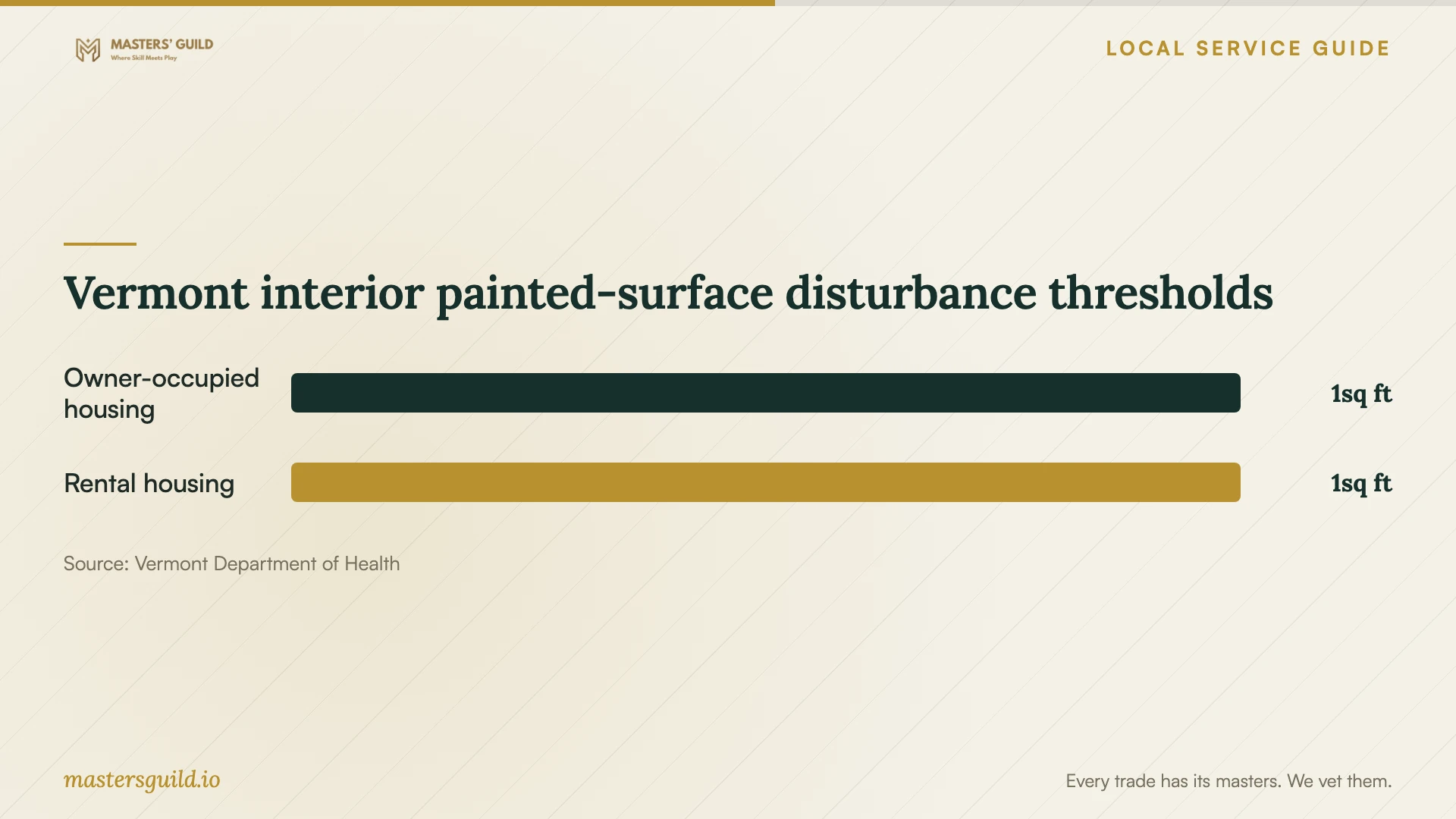
Vermont assumes lead-based paint is present in housing built before 1978 unless the owner follows the Health Department’s exemption process. The department does not accept hardware-store lead test kits to verify its absence. For contractors and landlords, the department publishes an interior Lead-Safe RRPM licensing threshold of more than 1 square foot of painted-surface disturbance per room. It separately states that demolition of painted surface areas is RRPM work. [2]
Have the contractor or Vermont Health Department determine whether planned cable openings, wall cuts or removal of painted material constitute demolition. Do not use an area below 1 square foot to settle whether RRPM requirements apply. Ask the contractor to assess the full scope, including drilling, cutting and preparation for repairs, before choosing the cable route. [2]
For work requiring RRPM licensing, request both the contractor’s Supervisor and Firm licenses and verify that they are current. The Health Department also advises homeowners that they may choose lead-safe practices for work below the numerical threshold. Discuss containment and cleanup in the quote, including how the contractor will keep dust away from furniture and occupied areas. [2]
Compare quotes and agree on the handover
Compare written offers with the same TV, mount, wall and cable plan. Ask each installer to list supplied hardware, equipment setup, wall repair, cleanup and any separate electrician visit. Request evidence of insurance and ask who handles damage or a return visit. Agree on how the installer will obtain your approval if they discover a different wall construction or need to change the scope.
Before the installer leaves, review the screen position and ask them to demonstrate any mount adjustment. Check the connections you use, including streaming equipment and a soundbar if included in the job. Obtain the mount instructions, invoice and any applicable permit or inspection records. Photograph the completed installation and keep the installer’s contact details with those documents.
Vermont interior painted-surface disturbance thresholds
Local details that affect your job
Burlington’s repair exception has a limited scope
The city’s low-cost building-permit exception covers only in-kind repair work costing $1,000 or less. Treat a new bracket installation or cable opening as a question for the Building & Trades Division, rather than assuming the price alone qualifies the job for an exemption. [1]
Rental inspections require coordination
For inspections at rental properties, Burlington requires 48 hours’ advance notice to tenants. The owner or local property manager must meet the inspector, with the contractor for mechanical, electrical or plumbing permits. Settle those arrangements before accepting an installation date that depends on inspection. [1]
Vermont lead rules affect the cable-opening plan
In pre-1978 housing, Vermont publishes a more-than-1-square-foot interior painted-surface disturbance threshold per room and separately identifies painted-surface demolition as RRPM work. Have the contractor or Health Department assess whether proposed wall openings constitute demolition, even when the planned area falls below that threshold. [2]
Choose the next step for your installation
| Proposed work | Next step | Settle before booking |
|---|---|---|
| Bracket attachment only | Ask the installer for an attachment plan and ask Burlington which permits apply. | Wall construction, compatible hardware and final screen position. |
| New outlet behind the screen | Verify the electrician through Vermont’s licensing resources and ask Burlington about a trades permit. | Named electrician, application responsibility and inspection arrangements. |
| Paint disturbance or wall openings in pre-1978 housing | Have the contractor or Health Department assess both the more-than-1-square-foot interior threshold and whether openings constitute painted-surface demolition, which Vermont identifies as RRPM work. | Applicability below the numerical threshold; current Supervisor and Firm licenses when required; containment and cleanup. |
| Rental job requiring a city inspection | Coordinate with the owner or local property manager. | 48 hours’ tenant notice, owner or manager attendance, and contractor attendance for trades permits. |
Your hiring checklist
- Send the TV model, mount model, wall photos and outlet location.
- Mark the preferred screen position and review it from your usual seat.
- Obtain owner permission if you rent.
- Ask Burlington which permits and inspections apply to the proposed scope.
- Specify cable routing, power work, wall repair and cleanup in writing.
- Have the contractor assess painted-surface disturbance and possible demolition before making wall openings.
- Identify the electrician responsible for any new outlet.
- Agree on completion checks and approval of additional work.
Frequently Asked Questions
Does Burlington exempt small TV mounting jobs from permits?
The city’s published page does not identify TV mounting as an exemption. Its $1,000 exception covers only in-kind repairs. Describe your attachment, wall cuts and electrical work to the Building & Trades Division and ask which approvals apply. [1]
How should I check someone hired to add an outlet?
Ask for the electrician’s name and Vermont license information. Use the Division of Fire Safety’s licensed-electrician resources to verify current status, then confirm electrical permit arrangements with Burlington. [1] [3]
Do small mounting holes require a lead-safe licensed contractor?
Have the contractor assess the full scope. Vermont publishes a licensing threshold above 1 square foot of painted-surface disturbance per interior room in pre-1978 housing, but separately identifies painted-surface demolition as RRPM work. Ask the contractor or Health Department whether planned openings constitute demolition; an area below the threshold does not settle applicability. You may also choose lead-safe practices for smaller work. [2]
What should I include when asking for a price?
Provide the TV and mount models, wall photos, desired position and cable plan. Request separate items for hardware, mounting, electrical work, wall repair and equipment setup. Ask how the installer will price additional work and obtain your approval.
Sources and scope
This guide combines the sources below with practical planning guidance. Figures apply to the stated geography and period; request a written quote for your property.