
Local service guide
Plan tile setting in Burlington, VT
For tile setting in Burlington, choose an installer who inspects your existing surfaces and describes removal, preparation, installation materials, and completion conditions in writing. Resolve permits before setting a start date: the city limits its in-kind repair exception to work costing $1,000 or less. For a shower, request a waterproofing scope and identify who coordinates plumbing changes. [1]
Choose an installer for your project
Describe the room, approximate tiled area, existing finish, and visible cracks or water damage. Provide photographs, then arrange a site inspection before accepting a firm scope. For repairs, show any spare tiles you have and agree on an acceptable match before the installer removes anything.
Review examples of work with your chosen tile size and layout. For a backsplash, discuss outlet openings, exposed edges, and pattern endpoints. For a floor, review surface preparation, finished height, door clearance, and transitions. For a shower, request a written description of waterproofing, drain connections, corners, and penetrations.
Vermont requires residential contractor registration for qualifying residential construction valued at $10,000 or more, including labor and materials, subject to exemptions. The state exempts subcontractors contracted by another contractor under its subcontractor provision. Establish who will sign your homeowner agreement and verify that party’s registration when required. [4]
Compare complete quotes
Request descriptions of removal and disposal, surface repairs, installation materials, tile, grout, trim, and cleanup. Identify who buys materials and approves the layout. Have each installer distinguish included preparation from concealed repairs they would price after opening the floor or wall.
Use site-specific quotes to set your budget. If a quote omits removal or shower waterproofing, request a revised scope before comparing totals. Discuss how the installer will document hidden damage, propose a repair price, and obtain your approval before proceeding.
Vermont’s residential contractor FAQ requires contract provisions covering price or billing terms, estimated start and completion dates, services, materials, and change orders. The parties must document amendments in a signed writing. Review these provisions in a qualifying contractor’s agreement and keep a copy of each approved change. [4]
Resolve permits and removal
Burlington requires building permits for non-mechanical, electrical, or plumbing work except its listed exclusions, including only in-kind repairs costing $1,000 or less. The city requires permits for demolition work and says asbestos testing will be needed in most cases. Describe both removal and installation to the Building & Trades Division before agreeing to a start date. [1]
Vermont’s Health Department recommends an asbestos inspection before homeowner renovation and notes that newer buildings can contain asbestos. Owners of rental, public, or commercial buildings must arrange an inspection by a Vermont-certified asbestos inspector before renovation. Have the inspector identify materials you plan to disturb and explain applicable handling requirements and exceptions. [3]
Vermont treats paint, stains, and other coatings in pre-1978 buildings as lead-based unless a Vermont-licensed lead inspector has tested them and the Asbestos and Lead Regulatory Program has granted the property an exemption. For hired work in a pre-1978 home that disturbs painted surfaces over one square foot per interior room, the state requires Lead-Safe RRPM Firm and Supervisor licenses. Include affected walls and trim when discussing backsplash removal or bathroom preparation. [3]
Agree on layout and return to use
Approve the layout at doorways, corners, and visible edges before installation. Select grout color and trim, and review the installer’s planned movement joints. Request product names and care instructions, and agree on how much spare tile you want to retain for repairs.
Request separate dates for installation, inspections, and return to normal use. Have the installer base walking, cleaning, and shower-use instructions on the selected products. Arrange another bathroom if needed. Agree on access hours, material storage, dust control, and protection of adjoining rooms.
For an entryway, discuss wet footwear, traction, cleaning, and space for mats before selecting tile. Bring a sample into the room to review its appearance beside adjoining flooring. Have the installer explain how they will finish thresholds and avoid interference with doors.
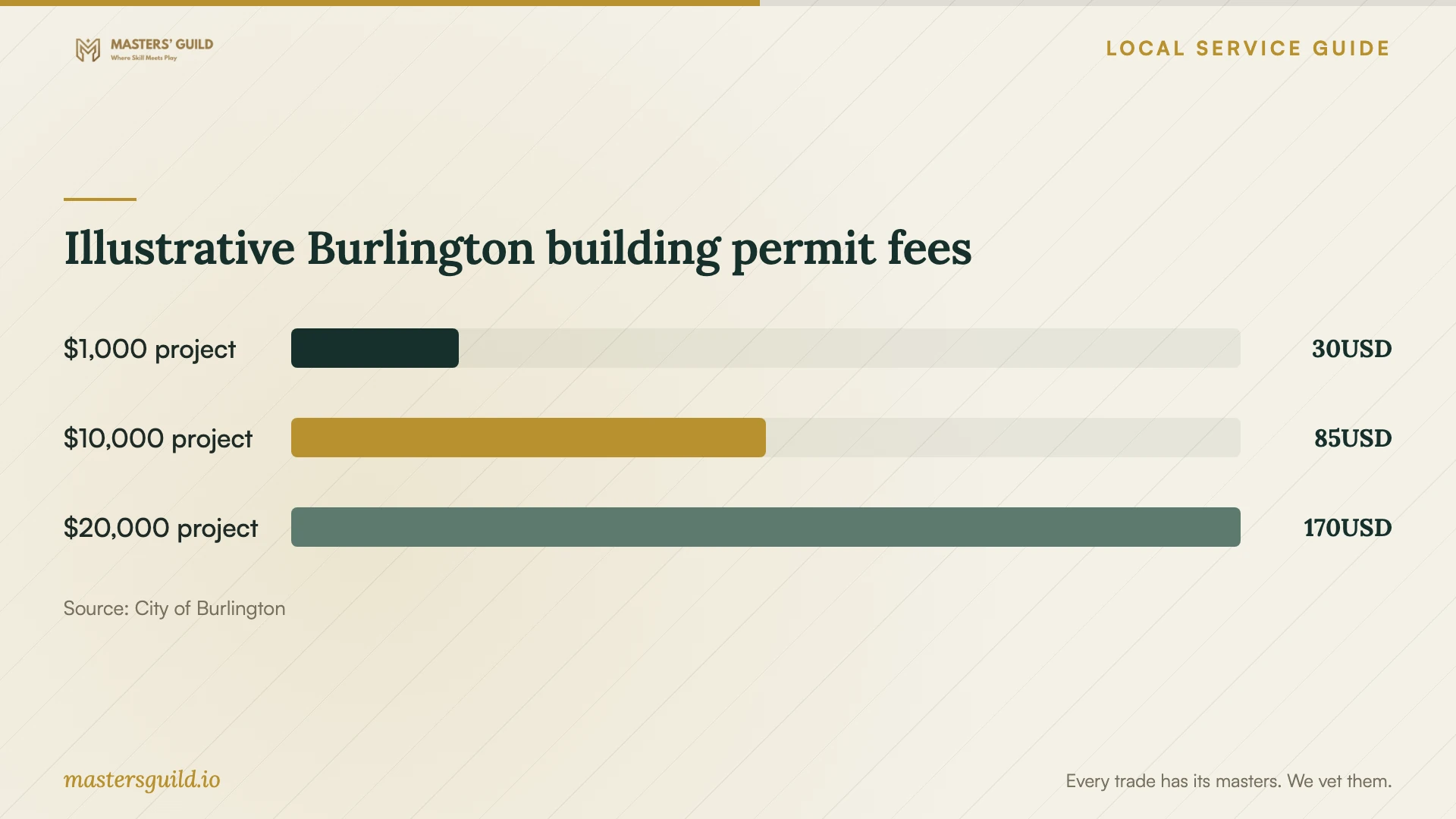
Illustrative Burlington building permit fees
Local details that affect your job
Assign responsibility for the city application
Burlington provides permit applications and forms through its online Permitting Portal. The city bases building permit fees on estimated construction cost, including design, labor, and materials, at $8.50 per $1,000 with a $30 minimum. An application alone does not authorize work: fees must be paid and the permit must bear a signature. Assign responsibility for obtaining an active issued permit, scheduling inspections, and securing final approval. [2]
Arrange inspection access at a rented home
For Burlington rental-property inspections, tenants must receive 48 hours of advance notice. The owner or local property manager must meet the inspector, with the contractor also attending for mechanical, electrical, or plumbing permits. If you rent out the home, coordinate notice and attendance before scheduling an inspection. [1]
Check Burlington lead assistance
The Vermont Health Department identifies the Burlington Lead Program as a resource for properties in Burlington or Winooski, offering assistance similar to the state program’s financial and technical help for income-eligible homeowners and landlords. For tile work involving lead-related painted surfaces, discuss eligibility before finalizing your removal budget. The department lists 802-865-5323 as the program number. [3]
Choose the next step for your project
| Project | Next step | Point to resolve |
|---|---|---|
| Small in-kind repair | Describe the full scope and cost to city permit staff. | The listed repair exception applies only to in-kind work costing $1,000 or less. |
| Floor replacement | Discuss material inspection before removal. | Vermont recommends asbestos inspection before homeowner renovation. |
| Tiled shower renovation | Request a waterproofing scope and identify trade coordination. | Discuss building and applicable MEP permits with the city. |
| Direct homeowner contract of $10,000 or more | Verify required contractor registration or an applicable exemption. | The state threshold includes labor and materials. |
| Tile work in a rented home | Coordinate inspection notice and attendance. | Burlington requires 48 hours of advance tenant notice for inspections. |
Your hiring checklist
- Photograph existing tile, adjoining surfaces, and visible damage.
- Discuss the complete removal and replacement scope with city permit staff.
- Resolve inspection and handling plans before disturbing existing materials.
- Obtain a written scope covering preparation, materials, waterproofing where applicable, and exclusions.
- Verify the contracting party, insurance, and any required registration.
- Approve layout, grout, trim, finished height, and transitions.
- Agree on signed change approvals, inspection access, cleanup, and return-to-use instructions.
Frequently Asked Questions
Do I need a permit to replace tile?
Describe your project to Burlington’s Building & Trades Division. The city requires building permits for non-MEP work unless a listed exception applies. Its in-kind repair exception covers only work costing $1,000 or less, and demolition work requires a permit. [1]
Does my tile installer need Vermont registration?
For a qualifying direct homeowner contract valued at $10,000 or more, including labor and materials, the state requires residential contractor registration, subject to exemptions. Establish who holds your contract and verify their registration or claimed exemption. [4]
Can I remove old flooring before installation?
Resolve inspection and removal responsibilities first. Vermont recommends asbestos inspection before homeowner renovation and requires certified inspection before rental, public, or commercial building renovation. Have the inspector explain which handling rules apply to the materials you plan to disturb. [3]
How long will I lose use of the room?
Request installation and return-to-use dates based on the chosen products, preparation scope, and inspection schedule. Obtain written instructions for walking on the floor or using the shower before arranging household access.
Sources and scope
This guide combines the sources below with practical planning guidance. Figures apply to the stated geography and period; request a written quote for your property.