
Local service guide
Senior Care in Burlington, VT: Plan and Compare Help
Arrange Senior Care in Burlington by listing the help your relative needs, agreeing on coverage hours, and asking providers to quote the same tasks. Before committing to ongoing private-pay care, explore Age Well’s caregiver support and Vermont’s Choices for Care programs. Confirm program eligibility and available support before counting those services toward your schedule. [1] [2] [3]
Define the care you want to arrange
Start with your relative’s preferences and a typical day. Write down meals, errands, bathing, dressing, toileting, mobility, supervision, and overnight help. For each task, describe what the person can do alone and what the caregiver must do. Include tasks a family member currently handles so you can see the coverage you need to replace.
Ask a prospective provider to review this list before quoting. Describe transfers, memory concerns, medication needs, and any equipment in the home. For clinical tasks, ask the treating team to specify the care required and ask the provider which professional will perform it. Avoid accepting a broad promise to handle everything without a task-by-task agreement.
Separate your preferred schedule from your essential coverage. Identify who can help if a worker misses a visit, who receives updates, and which changes should trigger a reassessment. Include your relative in these decisions wherever possible.
Explore Vermont funding before setting a private-pay budget
Vermont’s Moderate Needs services support people who do not meet nursing-home-level care criteria. The state lists limited funding for homemaker services, adult day services, case management, and flexible-fund services. Applicants do not need Medicaid eligibility. Ask about eligibility, available funding, and the services you could receive before reducing your private-pay budget. [2]
Choices for Care High/Highest serves Vermonters age 18 and older who need nursing-home-level care and meet clinical and financial eligibility for long-term care Medicaid. The state describes these needs as typically involving extensive or total daily assistance with personal care. Eligible participants can choose services in their own home, a family home, an Adult Family Care home, Enhanced Residential Care, or a nursing facility. [3]
Prepare a description of daily assistance needs for the eligibility conversation. Ask which documents you should gather, how the assessment works, and what care you should arrange while awaiting a decision. Keep a separate budget for any hours or duties the approved plan does not cover.
Build caregiver breaks into the schedule
Age Well offers small dementia respite grants to unpaid caregivers of people with irreversible dementia. Its trained Volunteer Respite Squad spends time with loved ones who need full-time supervision. Ask which option fits your relative’s needs, what help participants can provide, and whether a match or funding is available. [1]
Age Well also offers a free Caregiver Respite Network. Participants exchange time for help such as companionship, errands, appointment rides, and light housekeeping. Age Well vets participants and matches groups by needs and location. Treat this as a separate planning conversation from hiring someone for hands-on personal or clinical care. [1]
Define the break you need: time to sleep, attend an appointment, work, or leave the house. Tell the coordinator whether you intend to stay home during the visit. Agree on responsibilities and emergency contacts before the first session.
Compare written quotes and coverage plans
Request quotes for the same duties, days, and visit lengths. Ask each provider to state the hourly or visit charge, minimum booking, weekend and overnight charges, travel costs, cancellation terms, and any assessment fee. Have the provider calculate the total for your proposed weekly schedule so you can compare the amount you would pay.
Ask who selects and supervises workers, how the provider checks backgrounds and references, and what insurance covers the service. For memory-related care, ask about relevant training and how workers respond if your relative refuses help or tries to leave. Request a specific absence plan and a contact for concerns.
For a direct hire, clarify who handles payroll, scheduling, insurance questions, and replacement coverage. Put agreed duties and payment terms in writing. Before expanding the schedule, review whether the caregiver follows the plan and whether your relative feels comfortable with the arrangement.
Know the complaint route for regulated care
Vermont Survey and Certification assesses healthcare organizations including home health agencies, nursing homes, and residential care homes. The division accepts complaints about practices that have harmed or may harm patients or residents. This is an oversight route for healthcare organizations within its scope; do not assume it covers every independent companion-care arrangement. [4]
The division accepts complaints at 1-888-700-5330 and accepts anonymous reports. Prepare the provider’s name, a detailed account of your concerns, and dates or records that explain what happened. Staff return messages left outside normal business hours during regular business hours. [4]
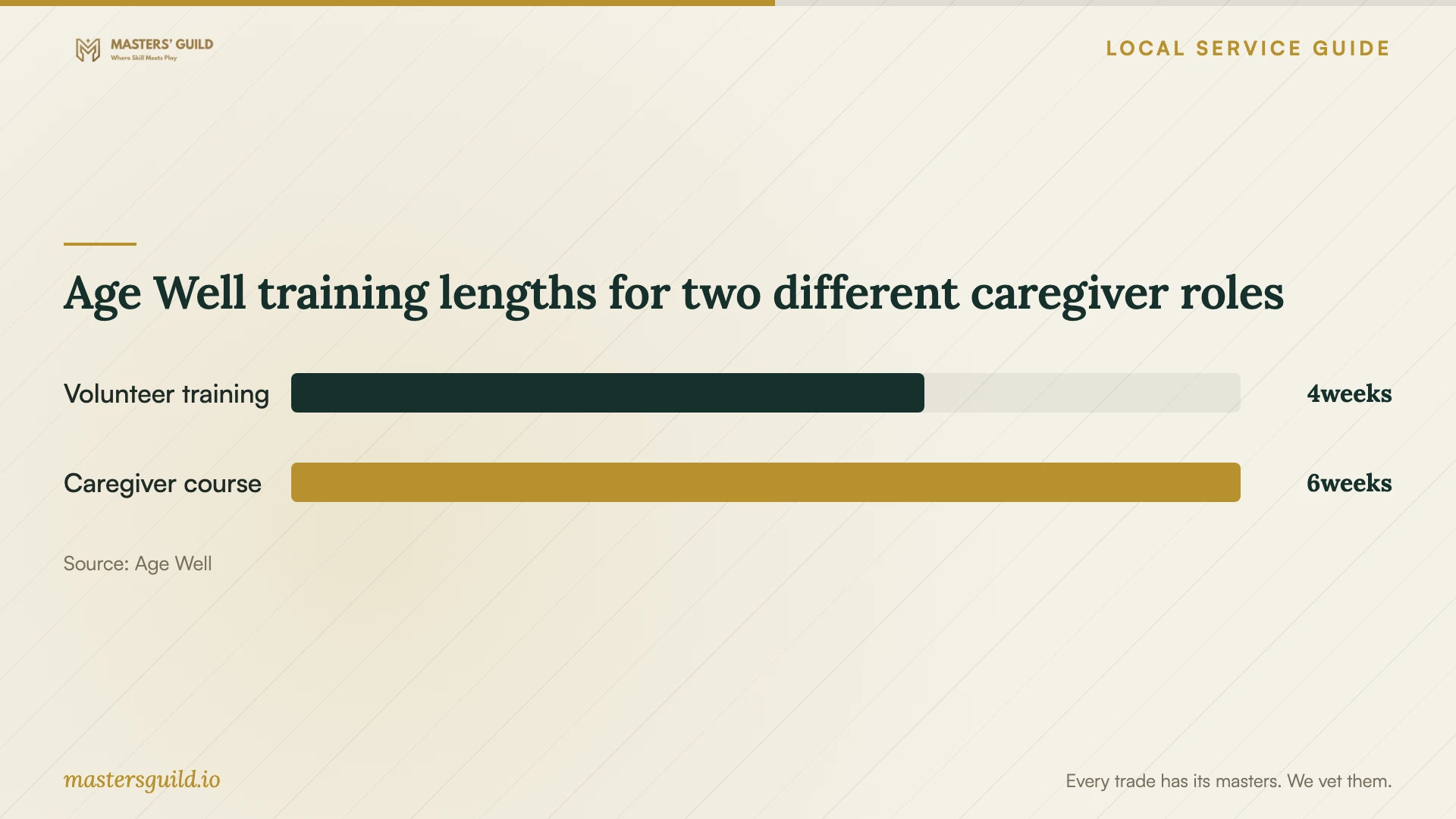
Age Well training lengths for two different caregiver roles
Local details that affect your job
Chittenden County caregiver coordination
Age Well serves Chittenden County, making its caregiver support a regional resource for Burlington families. Its helpline is 1-800-642-5119. Ask about dementia respite grants, volunteer respite, and caregiver training before choosing which hours to purchase from a paid provider. Confirm availability and suitability for your relative’s care needs. [1]
A Vermont option before nursing-home-level needs
Vermont’s Moderate Needs program does not require Medicaid eligibility and serves people below nursing-home-level care criteria. Limited funding can support homemaker, adult day, case management, and flexible-fund services. A family seeking household help should explore this route even if it has not pursued long-term care Medicaid. [2]
Nearby caregivers can exchange respite time
Age Well’s Caregiver Respite Network matches groups of three to six Vermont caregivers who live within 45 minutes of one another. Members exchange time rather than money. Consider whether you can offer help in return and whether the group’s tasks fit your needs before relying on this option in your weekly schedule. [1]
Choose the next planning conversation
| Your situation | Option to explore | What to confirm |
|---|---|---|
| You need errands or household assistance | Compare paid help and ask about Moderate Needs homemaker services | Eligibility, limited funding, accepted duties, and total quoted cost |
| Your relative needs extensive daily personal assistance | Explore Choices for Care High/Highest | Clinical and financial eligibility and the preferred care setting |
| You care for someone with irreversible dementia | Ask Age Well about dementia respite grants | Grant availability and how the proposed respite fits program requirements |
| You need supervision coverage for a break | Ask about Age Well’s Volunteer Respite Squad | A suitable match, available times, and the volunteer’s responsibilities |
| You can exchange help with nearby caregivers | Explore Age Well’s free Caregiver Respite Network | Matching, reciprocal time commitments, and suitable tasks |
Your hiring checklist
- Write a daily task list with your relative’s preferences and assistance needs.
- Identify essential coverage hours and a backup person for missed visits.
- Prepare questions about Vermont program eligibility and available support.
- Request comparable written quotes for the same duties and schedule.
- Confirm worker screening, supervision, relevant training, and insurance.
- Agree on medication responsibilities, emergency contacts, and visit updates.
- Set a review date to assess comfort, reliability, and changing care needs.
Frequently Asked Questions
Can someone receive Vermont-funded care at home?
Yes. Choices for Care High/Highest includes care at home among its setting options. Applicants must need nursing-home-level care and meet clinical and financial eligibility for Vermont long-term care Medicaid. Confirm the approved services before arranging your household schedule around them. [3]
Do Moderate Needs services require Medicaid eligibility?
No. Vermont states that people do not need Medicaid eligibility for Moderate Needs services. Funding is limited, and the program serves people who do not meet nursing-home-level care criteria. Ask about the eligibility process and available services. [2]
How should I compare senior care prices?
Ask providers to quote an identical task list and schedule, including minimum bookings and additional charges. Compare the total weekly payment and absence coverage. The supplied sources do not establish a Burlington private-pay price range, so use written provider quotes for your budget.
Does Age Well offer help for unpaid caregivers?
Age Well offers caregiver training, dementia respite grants, trained volunteer respite, and a free network that exchanges caregiver time. Ask which supports fit your circumstances and confirm availability before treating them as scheduled coverage. [1]
Sources and scope
This guide combines the sources below with practical planning guidance. Figures apply to the stated geography and period; request a written quote for your property.