
Local service guide
Plan pressure washing in Burlington, VT
Arrange pressure washing in Burlington, VT by getting a written plan for each surface, potential paint disturbance and wash-water disposal before choosing a contractor. For older painted siding, resolve Vermont lead-safe requirements first: the Department of Health prohibits high-pressure washing in regulated renovation, repair, painting and maintenance work. Burlington’s separate storm sewer system carries runoff to surface waters. Have bidders identify nearby drains and explain how they will handle rinse water before you approve the job. [1] [2]
Define the cleaning job before requesting prices
Send bidders photographs of the work area and close-ups of stains, peeling paint and damaged sections. List the driveway, patio, deck, siding or steps you want cleaned. Request an inspection of uncertain materials before accepting a final price. Keep repairs, paint removal and sealing as separate items so you can decide which work to authorize.
Have each contractor describe the cleaning solution, pressure and rinse method for each surface. Request a test area and agree on the result you expect, including how the crew will treat marks that remain. Write down when the crew should stop and contact you, such as discovering loose paint or damage during the test.
Resolve lead requirements for older painted siding
Vermont assumes lead-based paint is present in housing and child-occupied facilities built before 1978. The Department of Health does not accept hardware-store lead test kits to establish that lead is absent. Its guidance identifies filing an exemption with the department as the route for verifying a building as lead-free. Give bidders the building age and any exemption documentation before discussing work that could disturb paint. [2]
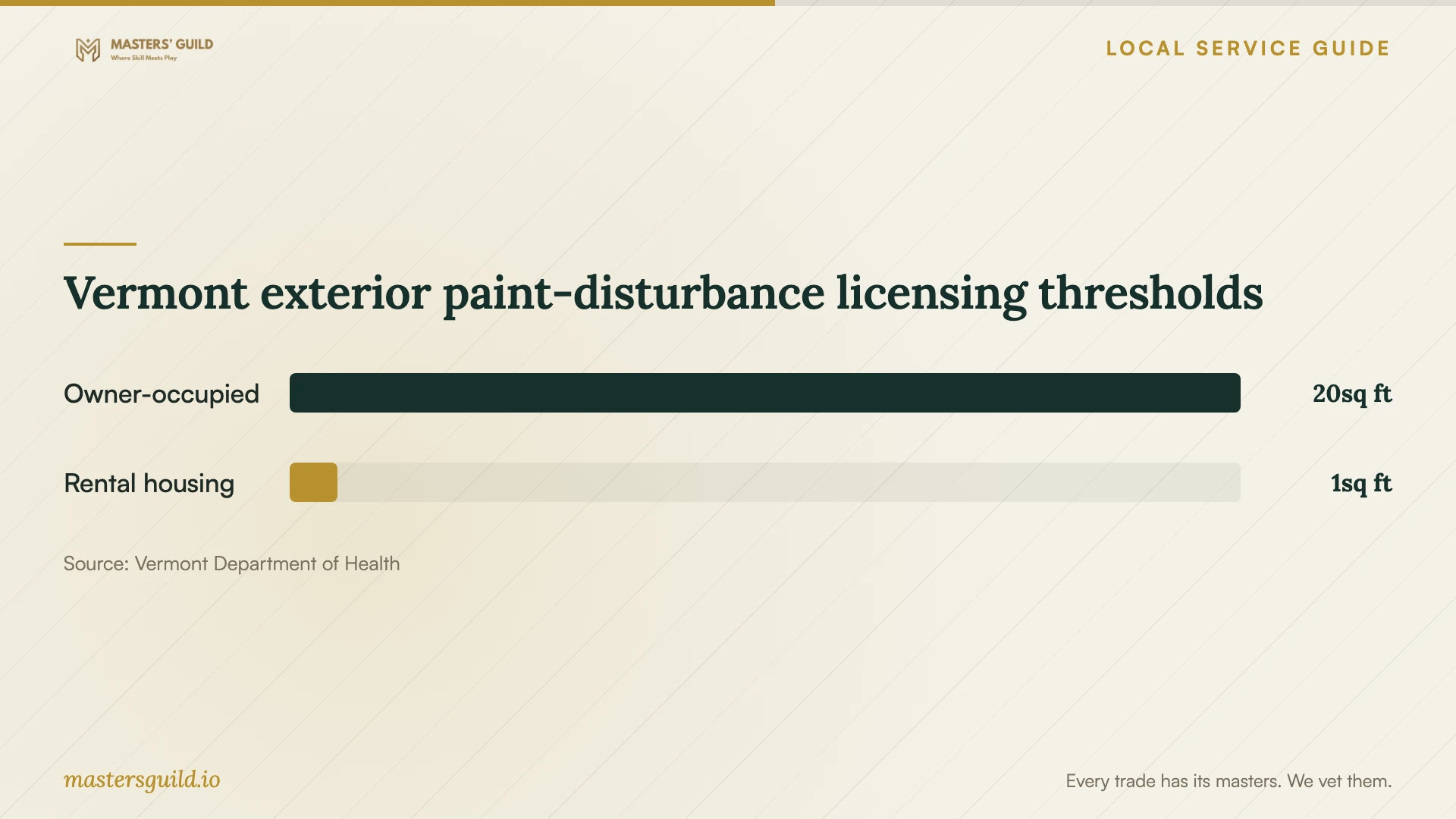
For contractors working on an owner-occupied pre-1978 home, Lead-Safe RRPM licensing applies when the work will disturb more than 20 square feet of painted surface per exterior side. For pre-1978 rental housing, the exterior threshold is more than 1 square foot per side. RRPM means renovation, repair, painting and maintenance. The department prohibits hydro-blasting and high-pressure washing in regulated RRPM work. [2]
For a regulated contractor job, request both the Lead-Safe RRPM Supervisor and Firm licenses and check that they are current. Include the applicable lead-safe practices in the contract. If a bidder cannot explain whether the proposed cleaning will disturb paint, pause the painted-siding portion and seek clarification from the Vermont Department of Health. Evaluate a soft-wash proposal by its actual steps and disturbance scope, rather than accepting the method name as proof of compliance. [2]
Trace wash water before approving the work
Burlington’s separate storm sewer system includes streets, ditches, catch basins, curbs, gutters, culverts and outfalls that convey stormwater to surface waters. Walk the property with the bidder and trace where rinse water would travel. Have the contractor explain drain protection, collection equipment and the proposed disposal destination. The city’s regulatory page describes its drainage system; it does not provide pressure-washing discharge permission. [1]
A historical case in neighboring South Burlington shows a specific wash-water problem. City staff traced soapy water from a trucking facility through a storm drain to a Potash Brook tributary. The facility changed its collection and treatment arrangements. The city dates the case to 2006 and its update to November 2009. This vehicle-washing example does not establish disposal permission for house washing in Burlington. [3]
Require the bidder to name the disposal destination instead of writing only that they will protect drains. If the proposal leaves you uncertain, contact Burlington Water Resources before booking. Request clarification for your property and proposed cleaning products; do not borrow the neighboring city’s vehicle-washing instructions for your house or driveway.
Compare complete quotes and prepare for arrival
Request a written total that identifies surfaces, stain treatment, access equipment, water supply and cleanup. Require separate descriptions of wash-water collection and disposal, including any additional charge. Have bidders list exclusions such as repairs, paint removal, sealing and return visits. Ask for proof of liability insurance and the names of the people responsible for the work.
Agree on who will protect plants, outdoor belongings and neighboring property. Move vehicles and furniture before arrival, keep pets away from the work area and confirm which water connection the crew may use. Photograph existing damage together. Arrange a final walk-through to review the agreed surfaces, remaining marks and cleanup before settling the bill.
Set a backup date and have the contractor explain the weather conditions needed for the chosen products and method. Agree on who decides to postpone and how they will notify you. If painting or sealing will follow, get preparation and drying requirements from that contractor before scheduling the handoff.
Vermont exterior paint-disturbance licensing thresholds
Local details that affect your job
Occupancy changes the exterior lead-licensing check
For contractor work on pre-1978 housing, Vermont sets the exterior paint-disturbance licensing threshold at more than 20 square feet per side for an owner-occupied home and more than 1 square foot per side for rental housing. Give bidders the occupancy status and require them to explain the disturbance area before pricing painted-siding work. For regulated work, verify both contractor RRPM licenses and reject high-pressure washing as the proposed practice. [2]
Burlington drainage requires a property-specific runoff plan
Burlington’s separate storm sewer system conveys stormwater through components including gutters, catch basins and outfalls to surface waters. Before approving exterior cleaning, have the bidder trace the runoff route and identify collection and disposal arrangements in writing. Take an uncertain discharge proposal to Burlington Water Resources; the city’s regulatory page does not authorize pressure-washing discharge. [1]
Resolve these questions before booking
| Situation | Next step | Require before approval |
|---|---|---|
| Unpainted driveway or patio | Request a surface inspection and test area. | Written method, stain-treatment scope and cleanup responsibilities. |
| Pre-1978 owner-occupied painted siding | Determine whether contractor work will disturb more than 20 square feet per exterior side. | Applicable RRPM licenses and lead-safe practices; no high-pressure washing in regulated RRPM work. |
| Pre-1978 rental painted siding | Determine whether contractor work will disturb more than 1 square foot per exterior side. | Applicable RRPM licenses and a documented lead-safe scope. |
| Rinse water could reach a gutter or catch basin | Trace the route and clarify the disposal destination. | A written collection and disposal proposal for the property. |
| Painting or sealing will follow | Coordinate preparation and drying requirements with the next contractor. | An agreed handoff and backup date. |
Your hiring checklist
- Send photographs and identify the surfaces, stains and existing damage.
- Provide the building age, occupancy status and any lead exemption documentation.
- Resolve potential paint disturbance and verify applicable RRPM credentials.
- Request a method description, test area and stop-work agreement.
- Get a written runoff collection and disposal proposal.
- Compare totals, exclusions, insurance and cleanup responsibilities.
- Confirm access, water supply, a backup date and the final walk-through.
Frequently Asked Questions
Can a contractor pressure wash my older painted house?
Resolve whether the planned work will disturb paint and trigger Vermont RRPM requirements before approving a method. Vermont assumes lead paint in pre-1978 housing and prohibits high-pressure washing in regulated RRPM work. Require the contractor to explain the disturbance scope and applicable credentials. [2]
Does a soft-wash proposal settle the lead question?
Evaluate the proposed steps and whether they will disturb painted surfaces. Vermont bases RRPM requirements on the covered building and disturbance scope. Have the contractor explain how the work meets those requirements, including applicable licensing and containment. [2]
Can the crew let wash water run into the street?
Require a disposal proposal before agreeing. Burlington’s separate storm sewer system conveys runoff to surface waters. The city’s regulatory page does not authorize pressure-washing discharge. Contact Burlington Water Resources to clarify an uncertain arrangement. [1]
How should I compare prices?
Give bidders the same photographs and surface list. Compare the total alongside the method, stain treatment, access equipment, water supply, runoff handling and cleanup. Have each bidder identify exclusions and charges for additional work before you choose.
Sources and scope
This guide combines the sources below with practical planning guidance. Figures apply to the stated geography and period; request a written quote for your property.