
Local service guide
Pest Control Services in Burlington, VT
Arrange Pest Control Services in Burlington by asking for pest identification, a written treatment and prevention plan, and clear follow-up terms. For pesticide work, check the individual applicator’s Vermont commercial certification and affiliation with a licensed pesticide company. Vermont requires those credentials for Class A, B or C pesticide applications on other people’s homes or land, including rentals. [1]
Start with an inspection and a defined scope
Describe what you found, where you found it, and when you first noticed it. Send photographs if you have them, and distinguish a sighting from recurring activity. Ask the contractor to identify the pest before you agree to treatment. Vermont’s Health Department says treatment depends on the pest type and the extent of the problem. [2]
Ask the inspector to separate the immediate treatment from prevention work. For rodents, request a list of entry points, a trapping plan, and a description of the openings the contractor proposes to seal. Vermont recommends sealing holes, trapping mice, securing food, and reducing nesting sites. Ask who will complete repairs and whether the quote includes them. [2]
For a shared building, identify who can authorize access to adjoining spaces and common areas. Agree on one contact for scheduling and preparation instructions. Record the rooms and exterior areas included in the inspection so you can compare another contractor’s proposal against the same scope.
Check Vermont pesticide credentials
Ask for the name and current credential of the person who will apply pesticides, plus the pesticide company’s license information. Vermont requires commercial applicator certification for Class A, B or C pesticide use on customers’ property and requires affiliation with a licensed pesticide applicator company. Ask which certification category covers your proposed work. [1]
The state lists Category 7A as General Structural Pest Control and Category 7B as Vector Pest Non Public Health. Do not assume an indoor pest credential covers a proposed outdoor vector-pest application. Have the contractor explain the applicable category. Vermont distinguishes annual licenses, which expire December 31, from certifications that can remain valid for five years subject to renewal conditions. [1]
Request proof of liability insurance and ask who takes responsibility for subcontracted work. Keep the credential information with the written proposal. Treat identity verification, insurance, and pesticide credentials as separate questions when reviewing a contractor.
Choose a treatment you can prepare for
Ask the contractor to explain prevention, monitoring, and treatment together. Vermont describes Integrated Pest Management as an approach that starts with prevention and knowledge of the pest while using as little pesticide as possible. Request the proposed products, application locations, household preparation, and return instructions before scheduling. [2]
For suspected bed bugs, ask the inspector to look for live insects, dark spots, shed skins, eggs, or reddish bedding stains. Vermont recommends primarily using heat treatment, with tools such as encasements, interceptors, or pesticides alongside it. If pesticides form part of the plan, the Health Department recommends a licensed professional who follows label directions and explains when you can return. [2]
Tell the contractor about children, pregnancy, and pets so you can discuss the proposed precautions. Vermont warns that pesticides can harm these household members and advises avoiding insecticide bombs and foggers indoors. If you find rodent droppings while preparing, follow the department’s warning against sweeping or vacuuming them; its guidance calls for gloves and wiping the area. [2]
Compare the full price and follow-up terms
Request an itemized written total for inspection, treatment, prevention work, and follow-up. Ask whether the inspection fee counts toward treatment and whether the contractor charges for return visits. For a recurring agreement, request the visit schedule, cancellation terms, and a description of what each visit includes.
Compare proposals using the same pest, affected rooms, and access conditions. Ask each contractor to state what counts as successful control, how you should report further activity, and what triggers another inspection. Put any guarantee’s exclusions and end date in writing before choosing an offer.
For yard tick work, discuss wooded edges, tall grass, and brush during the assessment. Vermont identifies those areas as blacklegged tick habitat and reports activity peaks in May and June, followed by an increase in October and November. Ask the contractor to explain the proposed areas and timing rather than accepting a summer schedule without reviewing fall conditions. [3]
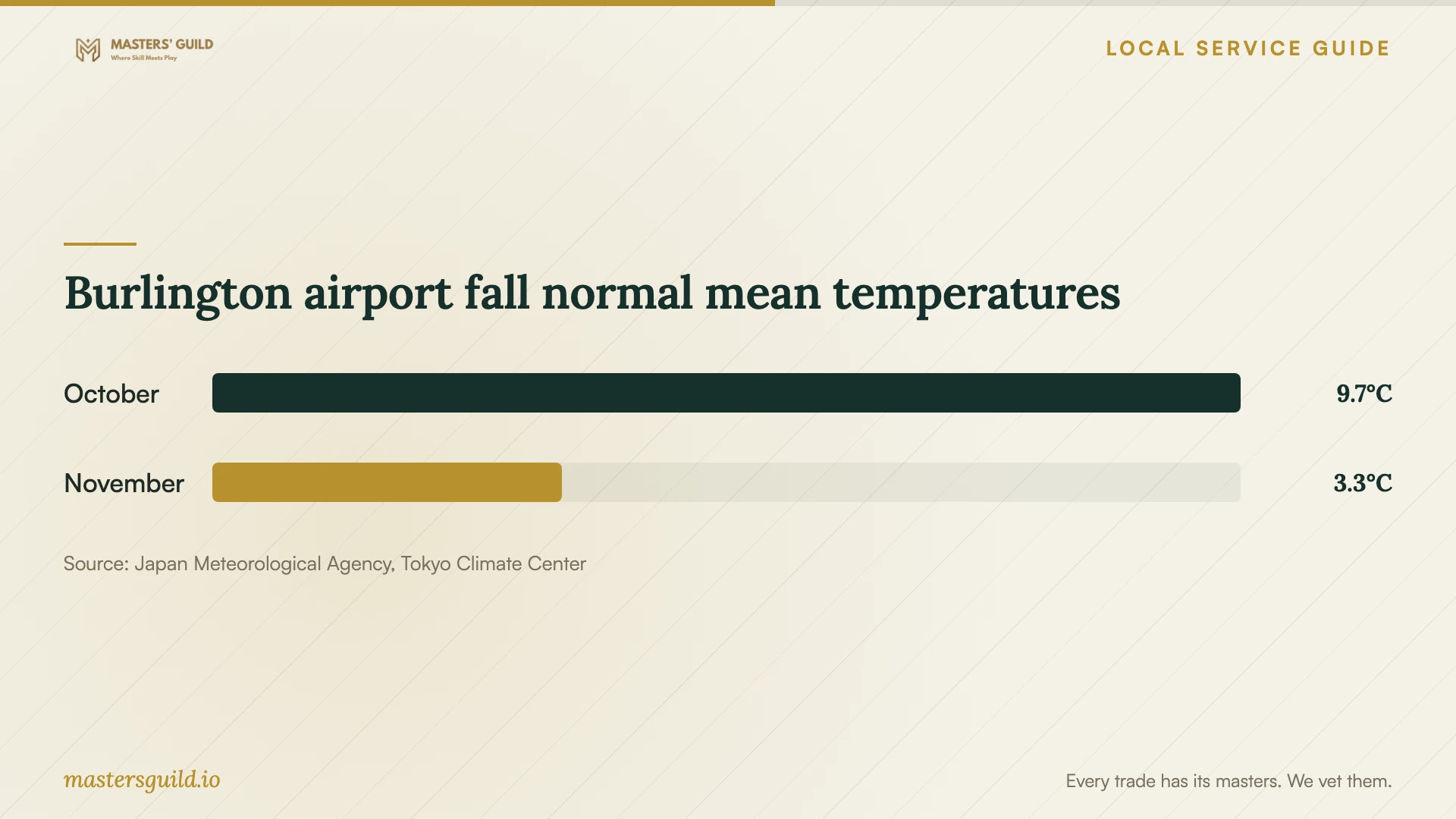
Burlington airport fall normal mean temperatures
Local details that affect your job
Vermont requires an applicator and company credential check
For a pesticide application at your Burlington home, ask for both the commercial applicator’s credentials and the affiliated pesticide company’s license. Vermont’s requirement covers Class A, B and C pesticides on other people’s property, including rented homes. Check the current annual license as well as the certification: the state lists December 31 as the license expiration date. [1]
October remains relevant for tick planning
Vermont’s statewide guidance reports an increase in adult blacklegged tick activity in October and November and possible encounters above freezing throughout the year. Apply that guidance to a Burlington yard assessment by asking the contractor to inspect wooded edges and tall grass and to explain whether the proposed plan addresses fall activity. This statewide pattern does not establish the tick population on your property. [3]
Match the proposal to the problem
| Your concern | What to request | What to clarify before booking |
|---|---|---|
| Rodent signs | Inspection, trapping, entry-point sealing, and food-storage advice | Who seals each opening and who handles cleanup |
| Suspected bed bugs | Identification and a heat-led treatment discussion | Preparation, any pesticide use, return instructions, and follow-up |
| Recurring household pests | A prevention and monitoring plan using Integrated Pest Management | Why the contractor proposes each treatment and how progress will be assessed |
| Ticks around the yard | Assessment of wooded edges, tall grass, and brush | Relevant applicator category and timing that considers Vermont’s fall activity |
Your hiring checklist
- Record sightings, dates, affected rooms, and photographs before the inspection.
- Ask the contractor to identify the pest and define the inspection area.
- Request the applicator’s credential information, company license information, and proof of insurance.
- Ask for separate prices for treatment, entry-point repairs, monitoring, and follow-up.
- Get preparation instructions that address occupants, pets, belongings, and access.
- Confirm return instructions and the contact for questions after treatment.
- Read recurring-service, cancellation, and guarantee terms before agreeing.
Frequently Asked Questions
Does a pest-control company need Vermont credentials?
For Class A, B or C pesticide applications on another person’s home or land, Vermont requires commercial applicator certification and affiliation with a licensed pesticide applicator company. Ask for both sets of credential information and the category covering your job. [1]
Should I request heat treatment for bed bugs?
Ask the contractor to discuss it. Vermont’s Health Department recommends heat as the primary bed bug treatment, with encasements, interceptors, or pesticides as additional tools. Request written preparation and return instructions for the method the contractor proposes. [2]
Can I vacuum mouse droppings before the contractor arrives?
Vermont’s Health Department advises against sweeping or vacuuming rodent droppings. Its guidance calls for rubber or plastic gloves and wiping the area. Ask whether the contractor includes cleanup and request instructions for your affected space. [2]
Do I need to consider ticks after summer?
Yes. Vermont reports increased blacklegged tick activity in October and November and possible encounters whenever temperatures exceed freezing. Ask about fall conditions during a yard assessment; the statewide activity pattern does not measure infestation at your home. [3]
Sources and scope
This guide combines the sources below with practical planning guidance. Figures apply to the stated geography and period; request a written quote for your property.