
Local service guide
Mold removal in Burlington, VT: Hiring and Planning
For mold removal in Burlington, choose a contractor who will address the moisture source, explain cleanup methods, and separate removal from rebuilding in the quote. Vermont health officials suggest considering a specialist when mold covers more than 10 square feet. Before anyone removes building materials, check Burlington’s demolition permit requirements and Vermont’s lead and asbestos precautions. [1] [2] [3]
Decide whether to clean a small patch or hire help
Vermont’s Department of Health says you may be able to clean an area smaller than 10 square feet yourself. Children, people with breathing problems and people with weakened immune systems should not participate. For a larger area, the department suggests considering a contractor who specializes in mold cleanup. Treat the area threshold as a starting point for planning rather than a promise that a small job is suitable for you. [1]
The material matters too. State guidance recommends soap and water for moldy surfaces that do not absorb water, such as tile, glass and metal. It recommends discarding moldy absorbent materials that you cannot wash or launder, including drywall, insulation and carpet. Tell prospective contractors which materials you can see, and ask them to explain any proposed removal. [1]
Before the visit, photograph the affected area and describe when you first noticed it, any leak or flooding, and whether it has returned after cleaning. Ask who will investigate the moisture source and who will repair it. Vermont notes that this repair may require a plumber, roofer, general contractor or landscaper. [1]
Check the contractor’s methods and credentials
Ask the contractor to follow EPA or IICRC cleanup guidance and provide references from previous clients. Vermont health officials recommend these checks and state that neither the federal government nor Vermont issues mold-cleanup certifications or licenses. If someone advertises a credential, ask who issued it, what training it covers and whether the workers assigned to your home hold it. [1]
Ask how the crew will separate the work area from occupied rooms, limit dust and debris, and use HEPA equipment. Vermont’s cleanup guidance discusses plastic-sheet containment, HEPA air cleaners and HEPA vacuuming. Request a written explanation of the proposed methods so you can compare offers for the same scope. [1]
Request product names if the contractor proposes chemicals. Vermont says many mold-cleanup chemicals are pesticides and their use may require certification through the Agency of Agriculture, Food and Markets. Ask the contractor to explain which certification applies to the proposed products and who will apply them. [1]
Compare quotes without assuming a local price
Request separate prices for assessment, containment, cleaning, material removal, disposal, drying, moisture-source repairs and rebuilding. Ask each bidder to identify exclusions and explain how they will price additional damage discovered after opening a wall or ceiling. Compare the work each contractor includes before comparing the totals.
Agree on who will arrange permits and any lead or asbestos work before approving demolition. Ask for a schedule that distinguishes cleanup, drying, inspection and reconstruction. Get written approval terms for changes, including who can authorize extra work and whether the contractor must provide photos before proceeding.
Avoid treating routine mold testing as a required first purchase. Vermont health officials do not recommend it because there are no standards for interpreting results, and tests cannot establish whether a building is safe or unsafe. If a bidder proposes testing, ask what specific question it will answer and how the result would change the work. [1]
Prepare the home and agree on completion
Ask which rooms you can use during the job, how workers will enter, and where they will move removed materials. Discuss children, pets and anyone with breathing problems before setting the work dates. Vermont identifies people with breathing problems or weakened immune systems as potentially at greater risk from mold exposure; consult your health care provider about personal health concerns. [1]
Ask the contractor to document the moisture repair, materials removed and cleaning performed. Agree on how they will assess drying before rebuilding and what follow-up they offer if you notice moisture or mold again. Keep the scope, change approvals, photos and completion records together.
After cleanup, follow Vermont’s prevention guidance: repair leaks, vent bathroom fans and clothes dryers outdoors, use a dehumidifier in damp areas, and direct water away from the foundation. The department recommends cleaning and drying wet materials within 48 hours after flooding. Discuss the measures that fit your home with the person responsible for moisture repairs. [1]
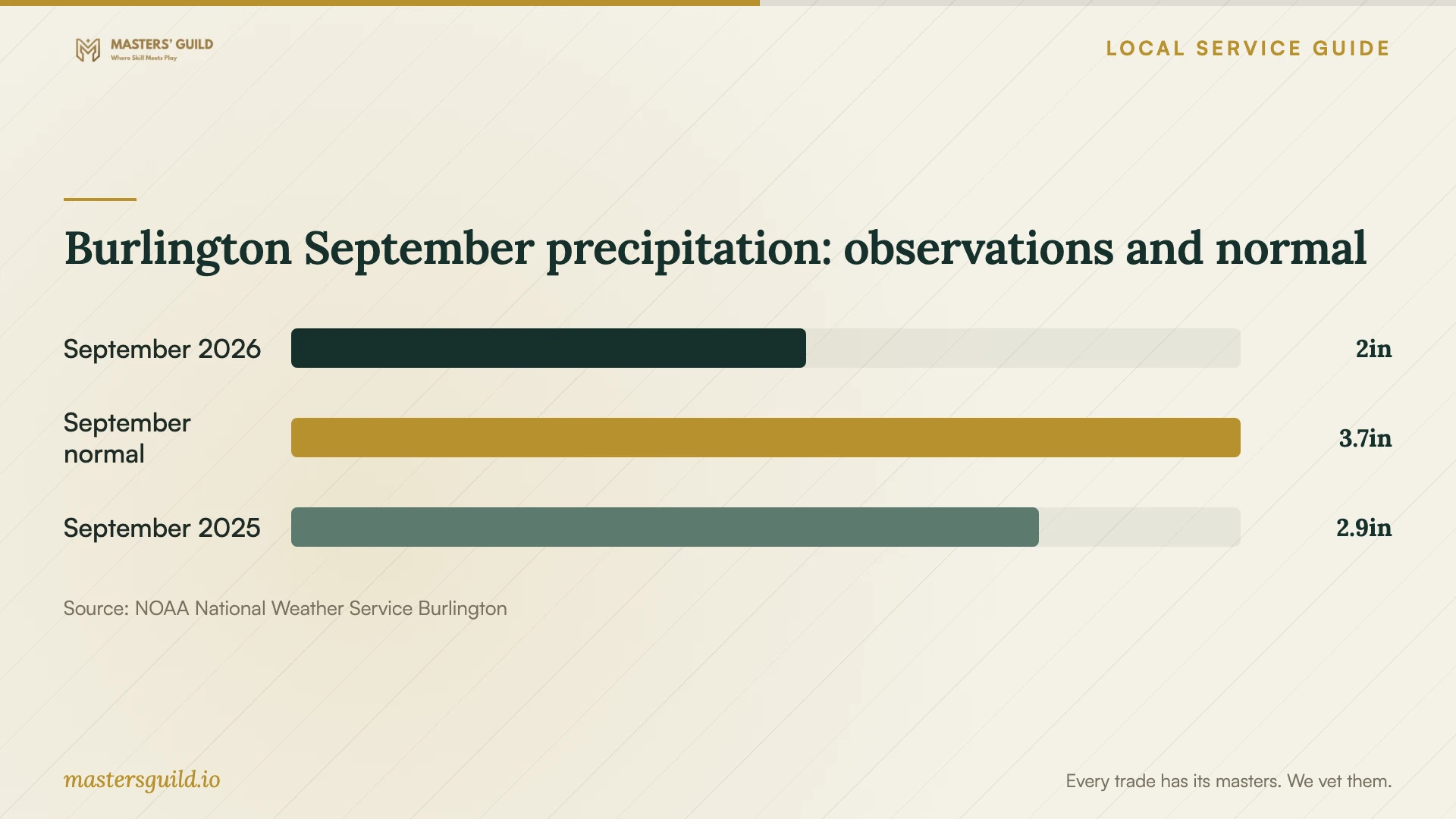
Burlington September precipitation: observations and normal
Local details that affect your job
Burlington demolition and repair permits
The City of Burlington requires a building permit for demolition and for non-mechanical, electrical or plumbing work except its listed exemptions. Its in-kind repair exemption applies only to work costing $1,000 or less. Before approving removal or reconstruction, have the contractor confirm the scope with the Building & Trades Division. Ask separately about mechanical, electrical or plumbing permits for associated repairs. [2]
Vermont lead and asbestos checks before removal
If your home predates 1978, Vermont requires you to assume lead-based paint is present and directs you to hire a Vermont Licensed Lead-Safe RRPM Firm for renovation or repair. Vermont also requires you to assume asbestos-containing materials are present, including in newer homes. Before workers disturb drywall, ceilings, flooring or insulation, ask how they will address these requirements. Use the state’s contractor lookup guidance to check RRPM firms and locate asbestos consulting or abatement companies for the appropriate task. [3] [4]
Notice for rental-property permit inspections
If you own a rental property, Burlington requires tenants to receive 48 hours of advance notice for permit inspections. The owner or local property manager must meet the inspector, with the contractor also present for mechanical, electrical or plumbing permits. Assign responsibility for notice and attendance when arranging the work. [2]
Choose the next step for your mold problem
| Situation | Next step | Question to resolve |
|---|---|---|
| Visible area smaller than 10 square feet | Consider the state’s self-cleanup guidance and your ability to follow it. | Can you clean the material and fix the moisture source? |
| Mold covering more than 10 square feet | Consider a contractor specializing in mold cleanup. | Which cleanup guidance and containment methods will the crew follow? |
| Job includes demolition in Burlington | Arrange the required building permit before demolition. | Who will apply and coordinate inspections? |
| Renovation or repair in a pre-1978 home | Hire a Vermont Licensed Lead-Safe RRPM Firm. | Can you verify the firm through the state lookup process? |
| Removal may disturb asbestos-containing materials | Resolve asbestos precautions before disturbing materials. | Do you need an asbestos consulting company or an abatement company? |
Your hiring checklist
- Photograph visible damage and write down the leak, flooding or recurrence history.
- Ask who will identify and repair the moisture source.
- Request references, training details and a written cleanup method.
- Confirm who will arrange permits and address lead or asbestos before material removal.
- Compare itemized quotes with the same removal and rebuilding scope.
- Agree on room access, work dates and written approval of additional work.
- Request completion photos and documentation of moisture repairs and drying.
Frequently Asked Questions
Do I need a mold test before hiring a contractor?
Vermont health officials do not recommend routine mold testing. They say results cannot establish whether a building is safe or unsafe. The recommended actions remain removing moldy items, drying the space and fixing the moisture problem. [1]
Does Vermont license mold-removal contractors?
Vermont has no mold-cleanup license or certification. Ask about training and references. Separate requirements may apply to chemical use, lead-safe renovation or asbestos work, so check credentials against the proposed scope. [1] [3] [4]
Can a contractor identify danger from black mold’s color?
Vermont health officials say no species is named black mold and color does not establish the type or hazard. Ask the contractor to explain the moisture source and cleanup plan rather than base the scope on color. [1]
Can I arrange cleanup without repairing the leak?
Vermont health officials warn that mold will return if you leave the moisture problem unresolved. Arrange responsibility for the leak or moisture repair alongside cleanup, even if a separate contractor performs it. [1]
Sources and scope
This guide combines the sources below with practical planning guidance. Figures apply to the stated geography and period; request a written quote for your property.