
Local service guide
Kitchen Remodeling in Burlington, VT: Plan and Hire
Arrange Kitchen Remodeling in Burlington by giving contractors the same scope and assigning permit and inspection responsibilities before signing. Vermont generally requires residential contractor registration for direct homeowner contracts of $10,000 or more, including labor and materials, subject to exemptions. OPR defines residential contracting to include work on a residential dwelling unit, or a building or premises with four or fewer residential dwelling units. For a kitchen in a larger residential building, check the project’s scope with OPR rather than assuming an exemption. [3]
Define the kitchen before requesting bids
List what you want to keep, replace and move: sink, dishwasher, cooking equipment, refrigerator, cabinets, countertops and lighting. Give each bidder the same list and a measured sketch. Have the contractor check dimensions before you order cabinets or appliances.
Request prices for your preferred layout and an alternative that keeps the sink and cooking equipment in place. Ask bidders to identify the plumbing, electrical and wall work in each option so you can decide which changes deserve a place in your budget.
Build your kitchen budget from itemized bids for your project. Ask contractors to separate installation, materials, appliance allowances, permits, demolition, disposal and testing or containment. Compare exclusions as well as totals, and agree on how the contractor will price concealed problems.
Assign permits and inspections before demolition
Burlington requires a building permit for non-mechanical, electrical or plumbing work except carpeting, painting, nonsolid fences, storm doors or windows, and in-kind repairs costing $1,000 or less. The city also requires demolition permits and says most demolition work needs asbestos testing. Describe your kitchen scope to the Building & Trades Division before scheduling removal work. [1]
The city provides separate building and mechanical, electrical or plumbing permit applications. Put the applicant’s name, permit costs and inspection responsibilities in your agreement. Ask which approvals the crew needs before closing walls and installing finishes. [1]
Burlington requires plumbing applicants to arrange inspections, including a rough inspection before walls close and a final inspection. Vermont master-licensed plumbers must secure permits where required before working in the city. Schedule wall closure around inspection approval. [2]
Check the contractor’s registration and contract
OPR defines residential contracting as work on a residential dwelling unit, or a building or premises with four or fewer residential dwelling units. These are separate branches of the definition; the four-unit wording does not establish a blanket exclusion for kitchens within larger residential buildings. Ask OPR to clarify coverage for your project if needed. Contractors entering direct homeowner contracts for covered work valued at $10,000 or more, including labor and materials, must register unless exempt. [3]
OPR says subcontractors hired by another contractor rather than the homeowner do not need residential contractor registration. It also lists exemptions for licensed tradespeople working within their credential’s scope. Ask a contractor claiming an exemption to identify its basis, and check applicable trade credentials. [3]
Secretary of State business registration differs from OPR residential contractor registration. Match the registered contractor name to your agreement. OPR requires registered residential contractors to maintain liability insurance of at least $1 million per occurrence and $2 million aggregate. Request a current certificate. [3]
OPR describes required contract provisions for price, estimated start and completion dates, services, materials and change approval. The parties must document amendments in a signed writing. Specify cabinet selections, countertop materials and appliance models, and clarify whether time-and-materials billing has a maximum price. [3]
Resolve lead-safe work before disturbing paint
Vermont assumes lead-based paint is present in pre-1978 housing unless the Health Department exemption process establishes otherwise. Contractors need Lead-Safe RRPM licenses for work disturbing more than one square foot of painted surface per interior room. The department classifies painted-surface demolition as RRPM work. [4]
For covered contractor work, request current RRPM Firm and Supervisor licenses and specify lead-safe practices in the contract. Discuss containment, household access and cleanup before demolition. Vermont does not accept hardware-store lead test kits as proof that lead is absent. [4]
Agree on a temporary food-preparation area, refrigerator access, work hours and delivery storage. Ask the contractor to explain how you should stay outside contained work areas and where you can move household items before the crew arrives.
Coordinate appliances and completion
Ask your electrician to review an induction appliance’s requirements before approving the cabinet plan. Burlington Electric’s guidance calls for a 220-volt outlet and hiring an electrician if you lack one behind the stove. Confirm the circuit and connection requirements for your selected model. [5]
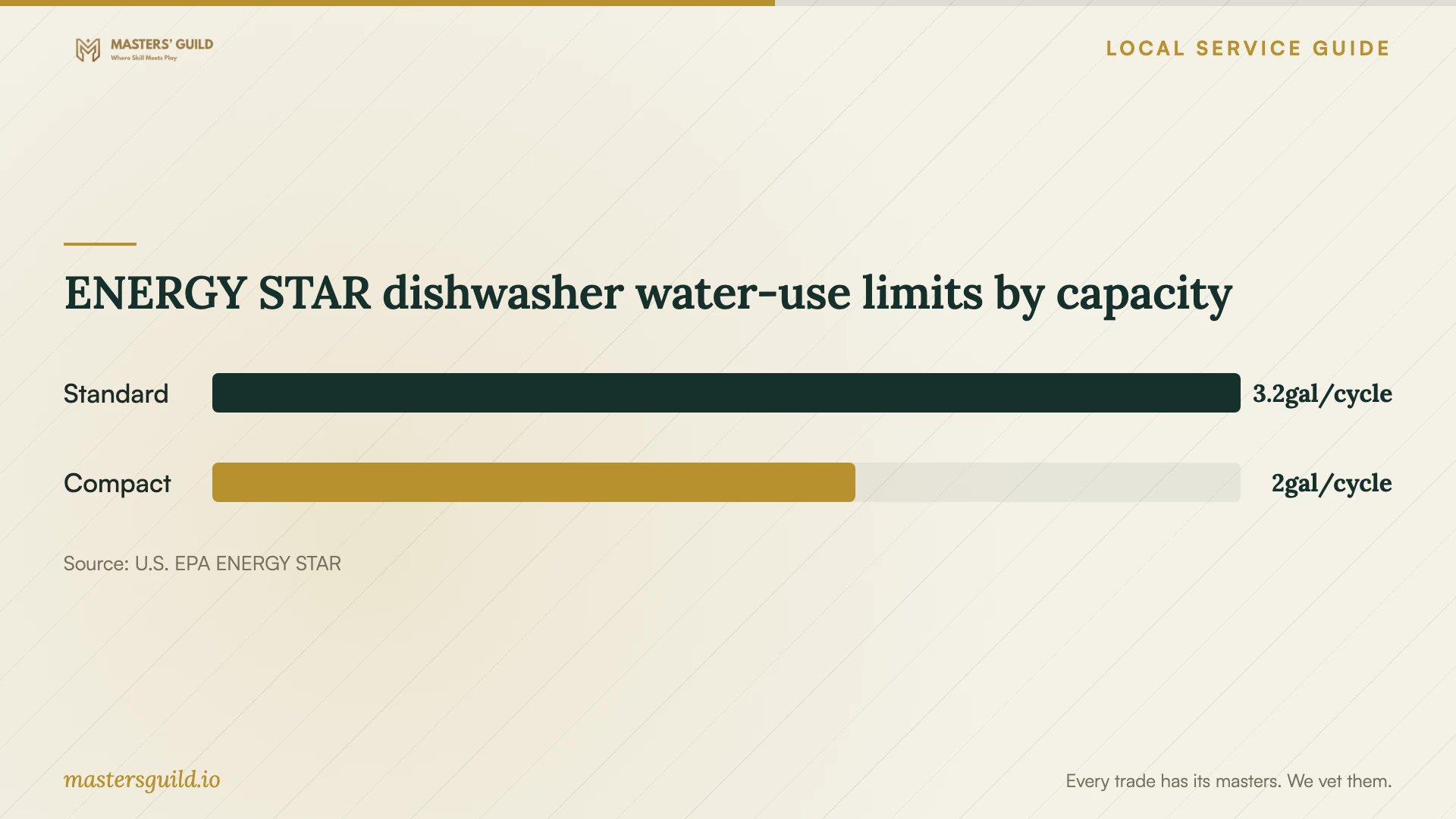
Compare dishwasher capacity, dimensions, door clearance and EnergyGuide estimates. ENERGY STAR’s national criteria limit standard dishwasher water use to 3.2 gallons per cycle and compact dishwasher water use to 2.0 gallons per cycle. These certification ceilings apply to different capacity categories; they do not measure your household’s consumption. [6]
Request a schedule covering selections, deliveries, demolition, rough work, inspections, installation and completion. Agree on how you will receive updates and approve changes. At closeout, collect inspection records, appliance manuals, warranty information and a written list of unfinished items.
ENERGY STAR dishwasher water-use limits by capacity
Local details that affect your job
Occupancy determines the city’s DIY plumbing exception
Burlington allows you to perform plumbing work in the single-family home where you live, provided you secure the permit, follow inspections and meet adopted codes. The city requires plumbing licenses for work in public buildings, including rental single-family homes. Establish occupancy before deciding who will handle the sink and dishwasher connections. [2]
Check induction eligibility before purchase
As of October 12, 2026, Burlington Electric offers active-account customers an eligible induction bill credit equal to the lesser of $200 or 50% of the purchase price. For an existing kitchen, the offer covers replacing natural-gas or propane ranges or cooktops with new induction equipment. The appliance must have at least three elements and measure at least 24 inches in both length and width. Submit within 90 days of installation. The offer runs through December 31, 2026; BED may change or end it, so confirm terms before buying. [5]
Refrigerator rebates apply to rentals
BED’s $250 ENERGY STAR refrigerator or freezer replacement rebate goes to rental-property owners and excludes owner-occupied homes. Active-account customers need purchase documentation, a completed W9 and a receipt for proper disposal of the existing unit. Submit within 90 days of installation. The offer runs through December 31, 2026, subject to utility changes. [5]
Match your scope to the next step
| Your plan | Rule or consideration | Next step |
|---|---|---|
| Paint the kitchen | Burlington exempts painting from building permits; pre-1978 painted-surface work may require RRPM licensing. | Check lead-safe requirements before surface preparation. |
| Remove cabinets or walls | The city requires demolition permits and says most demolition needs asbestos testing. | Describe the removal scope to the city and ask about testing. |
| Move the sink | Plumbing rough inspections must precede wall closure. | Assign the permit applicant and inspection scheduling. |
| Contract with a remodeler for $10,000 or more | OPR generally requires registration for covered direct homeowner contracts, subject to exemptions. Its definition includes work on a residential dwelling unit, or a building or premises with four or fewer residential dwelling units. | Verify registration or an exemption. For a kitchen in a larger residential building, check the project’s scope with OPR. |
| Replace gas cooking with induction | BED offers eligible customers up to $200 under its current terms. | Check appliance eligibility and electrical requirements before purchase. |
Your hiring checklist
- Give bidders the same measured sketch and keep, replace or move instructions.
- Compare allowances, exclusions and concealed-work pricing alongside bid totals.
- Confirm your building and trades permit requirements with the city.
- Assign permit applications, inspections and closeout records to named people.
- Check contractor registration scope, insurance and applicable lead-safe credentials.
- Confirm appliance dimensions and electrical requirements before ordering cabinets.
- Agree on temporary cooking arrangements and access through the house.
- Document scope and price changes before the contractor proceeds.
Frequently Asked Questions
Does keeping the layout eliminate permit requirements?
Keeping the layout does not establish a Burlington permit exemption. The city lists specific exceptions, including painting and in-kind repairs costing $1,000 or less. Describe your cabinet, demolition and trades work to the city before assuming it qualifies. [1]
Can I do my own kitchen plumbing?
Burlington allows plumbing work in your own single-family home where you live. You must obtain the permit, follow inspections and comply with adopted codes. The city requires licensed plumbing work in rental single-family homes. [2]
What should I ask about the deposit?
For residential contractors covered by OPR’s registration framework, its FAQ distinguishes pricing arrangements. Maximum-price and time-and-materials contracts with a maximum may require a deposit up to half the labor cost or half the materials price, whichever is greater. For time-and-materials contracts without a maximum, the parties may negotiate the deposit. Identify your contract’s arrangement before agreeing to payment. [3]
Does the induction rebate cover replacing an electric range?
BED’s current replacement offer covers natural-gas or propane ranges or cooktops. It does not list electric-range replacement as eligible. Confirm your appliance and installation qualify before including the credit in your budget. [5]
Sources and scope
This guide combines the sources below with practical planning guidance. Figures apply to the stated geography and period; request a written quote for your property.