
Local service guide
Gardening in Burlington, VT: Plan and Hire
Arrange Gardening in Burlington, VT by requesting a written scope that separates bed maintenance, planting, materials and debris removal. Before approving soil amendments, consider a UVM soil test. If the gardener proposes Class A, B or C pesticide treatment, check the applicator’s commercial certification and licensed company affiliation. Agree on the disposal destination before work starts. [1] [2]
Define the work before comparing quotes
Walk through the garden with the person preparing the quote. Identify the beds, shrubs and containers you want them to maintain. Mark volunteer plants you want to keep, explain which areas need hand weeding and agree on the finished appearance. For an overgrown bed, have the gardener identify plants before removing them.
Request separate entries for labor, plants, mulch or other amendments, delivery and hauling. For hourly work, establish whether the rate applies to one worker or the whole crew, and set a spending limit that requires your approval before they exceed it. For a fixed quote, list the tasks and exclusions in writing.
For recurring care, agree on visit frequency, the tasks for each visit and how you will approve extra work. Decide who waters between visits and who buys replacement plants. Request proof of liability insurance and examples of work similar to your garden, then discuss access, gates, parking and water supply.
Test existing soil before ordering amendments
Consider soil testing when the job includes renovating beds or choosing fertilizer and lime. UVM’s basic soil test covers pH, organic matter, nutrients and fertilizer and lime recommendations for one crop. You must identify the crop you intend to grow; the lab does not select suitable crops for you. [1]
UVM accepts one-half to one cup of soil in a clean plastic bag with the appropriate submission form. You can print the form without obtaining a kit. Label multiple sample bags to match the names or numbers on the form. Have the gardener follow UVM’s sampling instructions and distinguish areas you want assessed separately. [1]
Review the test report before approving an amendment order. UVM cautions that Vermont has no legal definition or guaranteed content for purchased soil, and even good purchased soil may need adjustment. Have the gardener explain why importing soil serves your project and specify the material and quantity in the quote. [1]
Confirm credentials before pesticide treatment
Find out whether the proposed work includes herbicides or other pesticides. Vermont requires commercial applicator certification for using Class A, B or C pesticides on other people’s land or homes, including rented property. The applicator must also have an affiliation with a licensed pesticide applicator company. [2]
Request the name of the person applying the product, their current credential and the company’s license information. Discuss what they intend to treat, which product they propose and what instructions you must follow afterward. If you want hand weeding or another approach without pesticides, write that preference into the scope before accepting the quote.
Choose a debris destination before cleanup
Specify whether the gardener will leave debris in an agreed area, bag it for you or haul it away. Have them identify the disposal facility and include loading, transport and disposal charges in their quote. Separate branches, leaves and garden debris from demolition material or treated wood.
The nearby CSWD Drop-Off Center at 87 Landfill Road in South Burlington accepts garden debris, leaves, grass and natural wood. It prohibits trailers and dumping mechanisms and limits material sizes and loads. Have your gardener confirm that the intended vehicle and load meet the site’s restrictions before choosing this destination. [3]
Burlington Electric’s Waste Wood Yard at 111 Intervale Road accepts clean waste wood at no charge, including brush and limbs up to six feet long and two feet in diameter. It excludes tree stumps, pressure-treated wood, plywood and particle board. Its page gives conflicting statements about commercial landscapers’ yard waste, so confirm acceptance with the yard before a hired gardener brings leaves or mixed garden debris. [4]
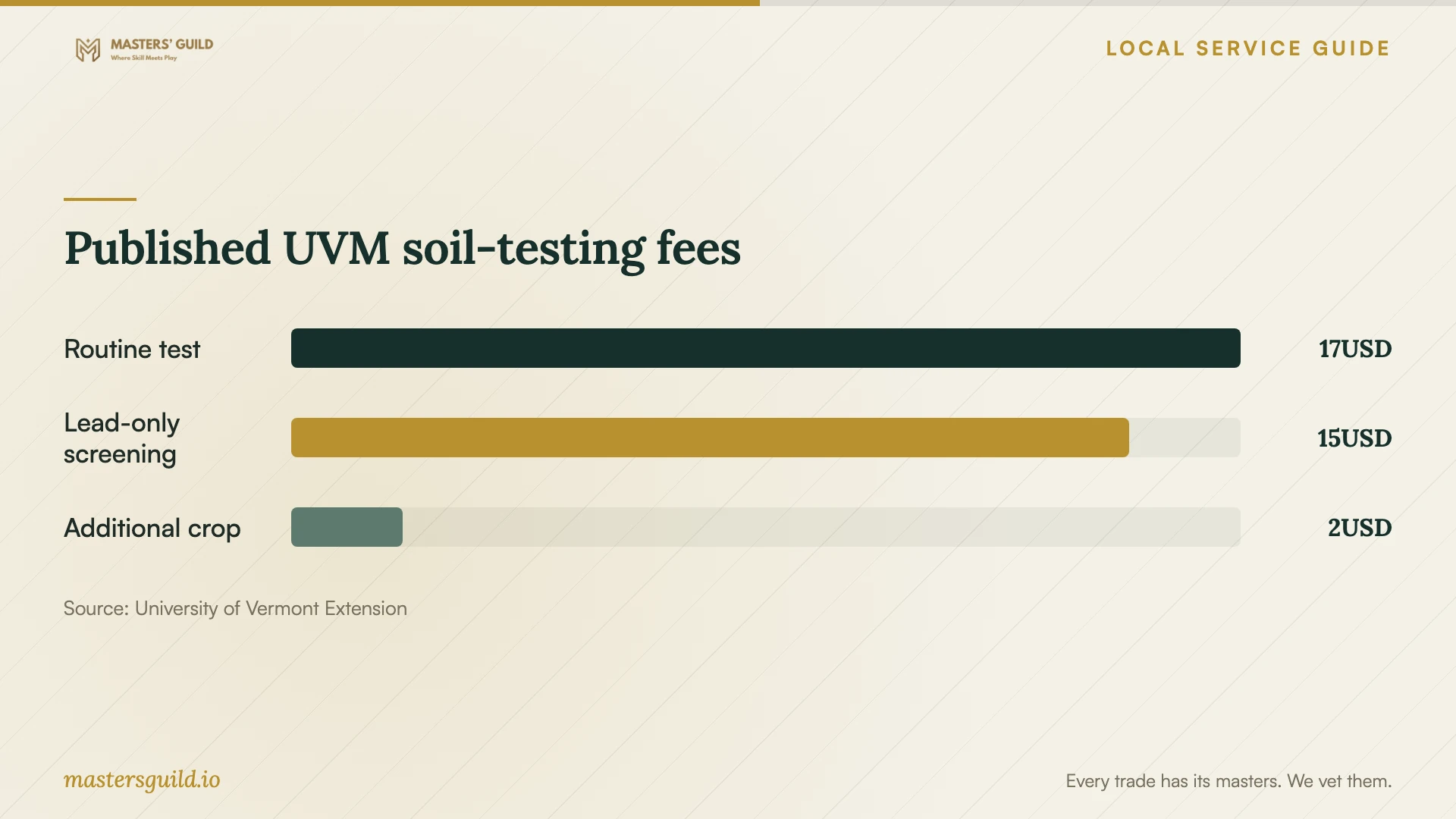
Published UVM soil-testing fees
Local details that affect your job
Use UVM’s home soil-test submission route
UVM treats a submission with an entry on the Farm/Company line as commercial, even when the soil comes from a homeowner. Home reports go to the Master Gardener Helpline; the helpline does not handle commercial reports. If a gardener submits your sample, agree on the appropriate submission type and who will answer questions about the recommendations. [1]
Check the hauler’s vehicle for South Burlington
CSWD’s South Burlington site prohibits trailers and dumping mechanisms. It also operates as a self-service facility, and staff cannot help unload vehicles. For a cleanup quote that names this destination, have the gardener confirm the load restrictions and provide the labor needed to unload. [3]
Confirm commercial yard waste at Intervale Road
Burlington Electric lists both a restriction against commercial landscapers’ yard waste and an allowance up to six cubic yards. Treat that conflict as unresolved and call 802-864-7446 before arranging a commercial load. Request a separate destination for stumps, which the yard excludes. [4]
Match the scope to your garden
| Your project | Ask for | Before approving |
|---|---|---|
| Routine bed care | Named beds, tasks and visit schedule | Agree on watering and extra-work approval. |
| Bed renovation | Soil sampling and an amendment proposal | Review UVM recommendations for your chosen crop. |
| Class A, B or C pesticide treatment | Commercial applicator certification and licensed company affiliation | Confirm credentials for the proposed treatment. |
| Cleanup using CSWD South Burlington | A vehicle and unloading plan | Confirm load limits; trailers and dumping mechanisms are prohibited. |
| Brush hauling to the Waste Wood Yard | Separated clean wood and a destination for other debris | Meet branch dimensions, exclude stumps and clarify commercial yard-waste acceptance. |
Your hiring checklist
- Photograph each work area and mark plants to keep.
- Write the tasks and finished appearance you expect.
- Separate labor, materials, delivery and hauling in the quote.
- Agree who collects soil samples and reviews the recommendations.
- Request current applicator and company credentials if pesticides are proposed.
- Confirm the debris destination, vehicle restrictions and unloading plan.
- Set an approval limit for extra work and a watering plan between visits.
Frequently Asked Questions
How much should I budget for a gardener?
Request a quote for your actual beds and tasks. Ask for the crew size, labor basis, materials and disposal costs, then compare the same scope across offers. The published testing fees below cover lab services; they do not establish local gardener rates. [1]
Do I need to buy a soil-test kit?
UVM lets you print its submission form and use a clean plastic bag. It requests one-half to one cup of soil per sample. Follow its sampling instructions and label bags to match the form when sending multiple samples. [1]
Can my gardener spray weeds?
For Class A, B or C pesticides on your property, Vermont requires commercial applicator certification and affiliation with a licensed pesticide applicator company. Request the credentials of the person performing the treatment and the company before approving it. [2]
Can the gardener take all cleanup debris to the Waste Wood Yard?
Confirm the material mix first. Burlington Electric excludes stumps and several manufactured or treated wood products. Its commercial yard-waste statements conflict, so confirm acceptance with the yard before the gardener transports leaves or mixed garden debris. [4]
Sources and scope
This guide combines the sources below with practical planning guidance. Figures apply to the stated geography and period; request a written quote for your property.