
Local service guide
Duct and Vent Cleaning in Burlington, VT
Arrange Duct and Vent Cleaning in Burlington by identifying the system you need serviced, asking the contractor to show the problem, and getting a written scope before work starts. EPA recommends air-duct cleaning as needed for substantial contamination. For dryer exhaust, ask for lint removal and a route inspection against the city’s published requirements. [1] [2]
Choose the service from the problem
Tell the contractor whether you mean forced-air heating and cooling ducts, dryer exhaust, or another exhaust vent. Describe what you have observed and identify the rooms or equipment involved. Ask the contractor to list each system as a separate line in the estimate so you can compare offers with the same scope.
EPA says a dusty return register does not establish heavy contamination inside the ducts. You can vacuum or remove and clean the register. Before accepting a whole-system cleaning recommendation, ask the contractor to show the contamination, identify its location, and explain which components need attention. [1]
Address the source of contamination before paying to remove it. EPA advises correcting underlying causes to prevent recurrence. Wet or moldy duct insulation needs replacement because cleaners cannot clean it effectively. For suspected mold, ask for evidence and an explanation of any proposed confirmation method before accepting a treatment package. [1]
Compare written scopes before comparing prices
EPA recommends written estimates from at least three providers and a written agreement covering total cost and scope. Ask each bidder to identify the supply and return ducts, registers, blower, coils, drain pans, and air-handler housing included in the work. Have the contractor explain any exclusions and who would handle those components. [1]
Ask how the crew will collect dust and protect your rooms. EPA calls for equipment that exhausts particles outdoors or HEPA vacuum equipment when the exhaust stays indoors. The contractor should inspect for asbestos-containing materials before cleaning, use methods suited to the duct material, and seal and reinsulate access holes after the work. [1]
Request separate prices for dryer-vent cleaning, repairs, and chemical treatments. Agree on who must approve added work and whether the contractor will pause for your decision. Request proof of liability insurance and references from jobs involving a system like yours. Record access arrangements and the contractor’s expected work duration in the agreement.
Avoid providers who promise broad health benefits or describe themselves as EPA-certified duct cleaners. EPA does not certify duct-cleaning companies and says cleaning has not been shown to prevent health problems. Before accepting a biocide or interior coating, ask why physical cleaning and moisture correction would not address the problem and request the product label. [1]
Prepare access and agree on completion checks
Before the appointment, send photographs of the equipment, accessible ductwork, dryer connection, and exterior outlet. Tell the contractor about inaccessible rooms or shared utility spaces. Agree on who will move the dryer and furniture, provide entry, protect floors, and restore anything moved during the job.
Request photographs from identified locations before and after cleaning. EPA recommends a visual inspection of the system and asking the provider to demonstrate that the components are clean. Have the crew show you cleaned supply and return locations, reattached registers, and completed access closures before you accept the work. [1]
Ask the contractor to demonstrate system operation after cleaning. EPA’s completion checklist covers heating and cooling operation, clean blower components, drain-pan condition, filter fit, and leakage at access covers. Agree in advance on how the crew will document components you cannot inspect from the room. [1]
Plan maintenance around the equipment
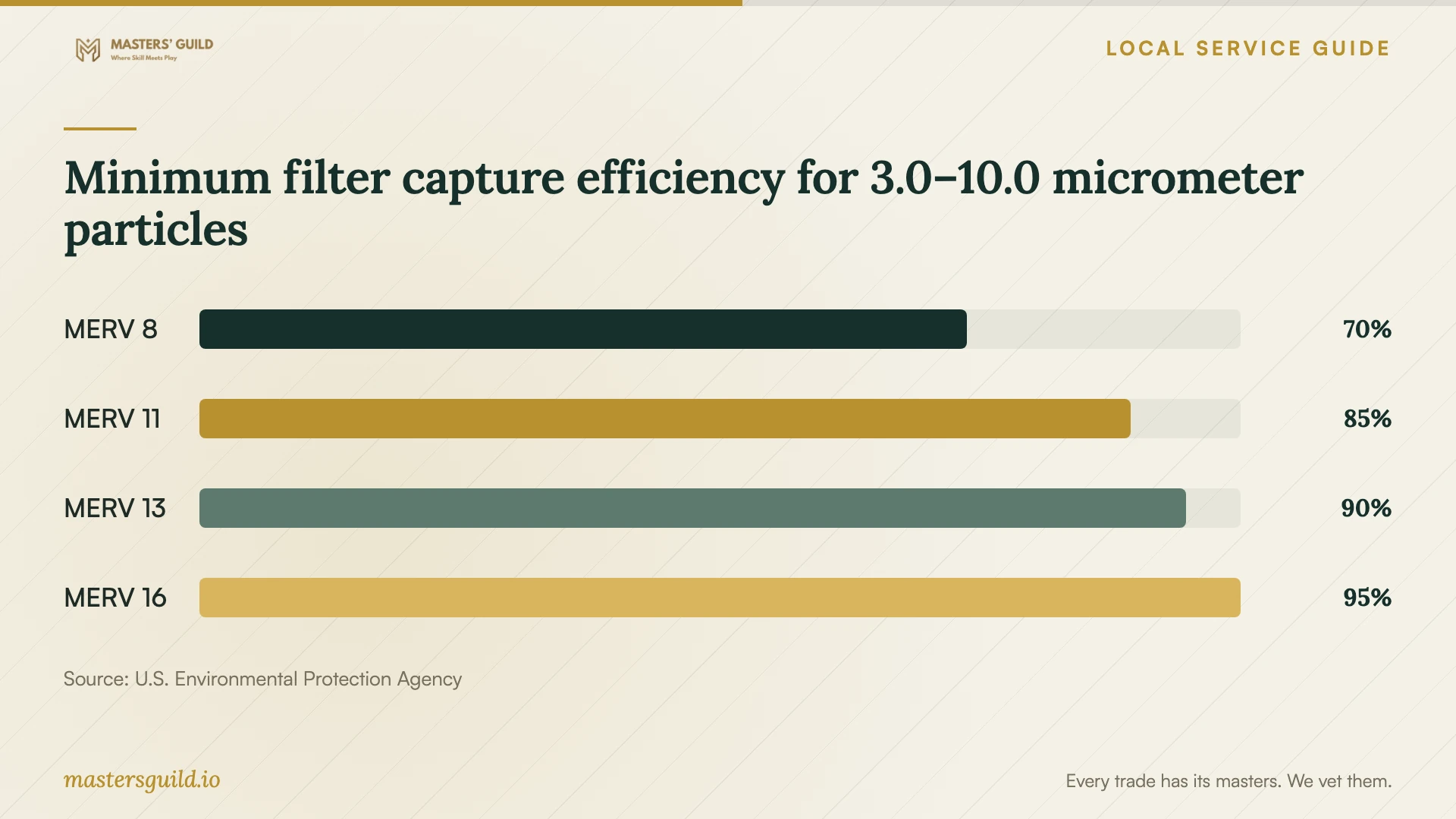
Use the filter efficiency your HVAC equipment can accommodate and follow the manufacturer’s replacement instructions. EPA recommends MERV 13 or the highest rating the fan and filter slot can accommodate when upgrading. Ask an HVAC technician to confirm compatibility before buying a higher-rated filter. [5]
The filter chart compares published minimum capture efficiencies for one particle-size band. Use it to discuss filter options, not to estimate the benefit of a cleaning visit. EPA says little evidence supports claims that cleaning ducts alone improves system efficiency. [1] [5]
For fuel-burning equipment, arrange the inspection and service EPA recommends before each heating season. Treat that appointment as its own scope when discussing duct cleaning. Ask who will inspect the appliance, what service they will perform, and what documentation you will receive. [1]
Minimum filter capture efficiency for 3.0–10.0 micrometer particles
Local details that affect your job
Check the dryer route before a property sale
Burlington’s residential time-of-sale guidance requires dryer exhaust to discharge outdoors through an independent system. It specifies a maximum vent length of 35 feet, reduced by 2.5 feet per 45-degree bend and 5 feet per 90-degree bend. It also specifies smooth rigid sheet metal or other noncombustible duct material and prohibits fasteners that project into the duct. Ask the contractor to document the route, bends, connections, and any proposed corrections alongside the cleaning quote. [2]
Resolve permit questions before closing walls
If cleaning expands into duct or ventilation alterations, ask Burlington Permitting & Inspections which permits apply to the proposed work. The city states that mechanical inspections apply to permits issued for HVAC and that rough inspections must occur before walls close. Its published page does not establish a permit requirement for routine cleaning. Separate cleaning from alterations in the agreement and identify who will arrange any required inspections. [4]
Check materials before creating access
Vermont Department of Health says homeowners must assume lead-based paint in homes built before 1978 and hire a Vermont Licensed Lead-Safe RRPM Firm for renovation or repair work in those homes. It also says Vermont law requires assuming asbestos-containing materials are present; even newer buildings can contain them. If access or vent replacement would disturb painted surfaces or suspect insulation, resolve material assessment and the applicable work practices before authorizing that disturbance. [3]
Choose the next step from what you find
| Observation | Next step | Scope to discuss |
|---|---|---|
| Dust on a return grille | Clean the grille and inspect before ordering whole-system work. | EPA says grille dust alone does not establish heavy duct contamination. |
| Excessive debris or particles from supply registers | Ask the contractor to show the deposits and identify the cause. | Inspection and cleaning of affected system components. |
| Wet or moldy duct insulation | Discuss replacement and moisture correction. | EPA says this insulation cannot be cleaned effectively. |
| Dryer route with multiple bends | Request route measurements and a connection inspection. | Burlington’s guidance reduces allowable length for each bend. |
| Vent alteration behind a wall | Check permit requirements before authorizing the alteration. | For permitted HVAC work, Burlington requires rough inspection before walls close. |
Your hiring checklist
- Identify each system you want inspected or cleaned.
- Photograph the concern and ask the contractor to show the contamination.
- Compare written scopes with the same components and exclusions.
- Request separate prices for cleaning, repairs, and proposed treatments.
- Agree on access, furniture moving, floor protection, and equipment restoration.
- Resolve material and permit questions before approving alterations.
- Specify completion photographs, an operating check, and how the contractor will correct unfinished work.
Frequently Asked Questions
How often should I clean my air ducts?
EPA recommends cleaning as needed rather than on a routine schedule. Ask for evidence of substantial contamination and consider filter maintenance, moisture control, and equipment service when deciding what work to arrange. [1]
Does duct cleaning include the dryer vent?
Ask the bidder to state this in writing. EPA’s description of air-duct cleaning concerns forced-air heating and cooling components. Burlington describes dryer exhaust as an independent system, so request a separate dryer-vent scope. [1] [2]
Will cleaning correct a dryer-vent installation problem?
Ask for a cleaning scope and a correction scope. Burlington’s time-of-sale guidance addresses exhaust routing, materials, bends, and connections as well as lint maintenance. Removing lint does not change those installation details. [2]
Can I approve a sanitizer during the visit?
Request the product label, evidence of the problem, and an explanation of why the contractor recommends it. EPA advises understanding the benefits and risks before permitting chemical treatments and says no biocides are registered for fiberglass-lined ducts or fiberglass duct board. [1]
Sources and scope
This guide combines the sources below with practical planning guidance. Figures apply to the stated geography and period; request a written quote for your property.