
Local service guide
Door and Window Repair in Burlington, VT
Arrange Door and Window Repair by requesting a parts-level diagnosis and written repair scope before approving replacement. Check Burlington’s building and zoning requirements separately: the in-kind building-repair exception covers work costing $1,000 or less, while the exterior-feature zoning exemption requires unchanged location, design, material and appearance. For pre-1978 housing, discuss Vermont’s lead-safe rules and any Health Department lead-free exemption before hiring. [1] [2] [4]
Define the repair before comparing offers
Describe what you observe: a door that rubs or will not latch, a sash that will not stay open, damaged glass, moisture you cannot wipe away, or water around the frame. Send photographs of the whole opening and close views of the damage. Include manufacturer labels and explain whether the problem changes after rain or during cold weather.
Request the names of the parts the contractor proposes to adjust, repair or replace. For a door, discuss hinges, latch, threshold and frame. For a window, distinguish hardware, sash, glass and whole-unit work. If the contractor recommends replacement, have them explain why they ruled out a smaller repair and which existing parts they will retain.
For broken glass or an opening you cannot secure, discuss temporary protection and permanent repair as separate tasks. Agree on how the contractor will secure the opening between visits. Keep people away from loose glass and avoid forcing a stuck sash while you arrange an assessment.
Resolve building and zoning questions before ordering
Burlington requires a building permit for non-mechanical, electrical or plumbing work except its listed categories. The city exempts storm doors, storm windows and only in-kind repair work costing $1,000 or less. Give the Building & Trades Division your written scope and cost before assuming the repair qualifies. [1]
For zoning, the city lists window replacement or addition and changes to trim or exterior appearance among work requiring approval, subject to exemptions. Its exterior-feature repair and in-kind replacement exemption requires no change in location, design, material or outward appearance. Discuss a proposed frame-material change with zoning staff even if you intend to keep the opening’s dimensions. [2]
Send photographs and describe the existing feature and proposed work. Burlington’s zoning administrative officer can issue a written determination that a zoning permit is unnecessary. The city requires photographs for that determination and subjects the decision to an appeal period. Name who will handle any required applications in your contract. [2]
Check lead-safe credentials for older housing
Vermont applies Renovation, Repair, Painting and Maintenance rules to housing and child-occupied facilities built before 1978. The state assumes these buildings contain lead-based paint unless the Health Department’s exemption process establishes that they are lead-free. The department does not accept hardware-store lead test kits as proof that lead is absent. [4]
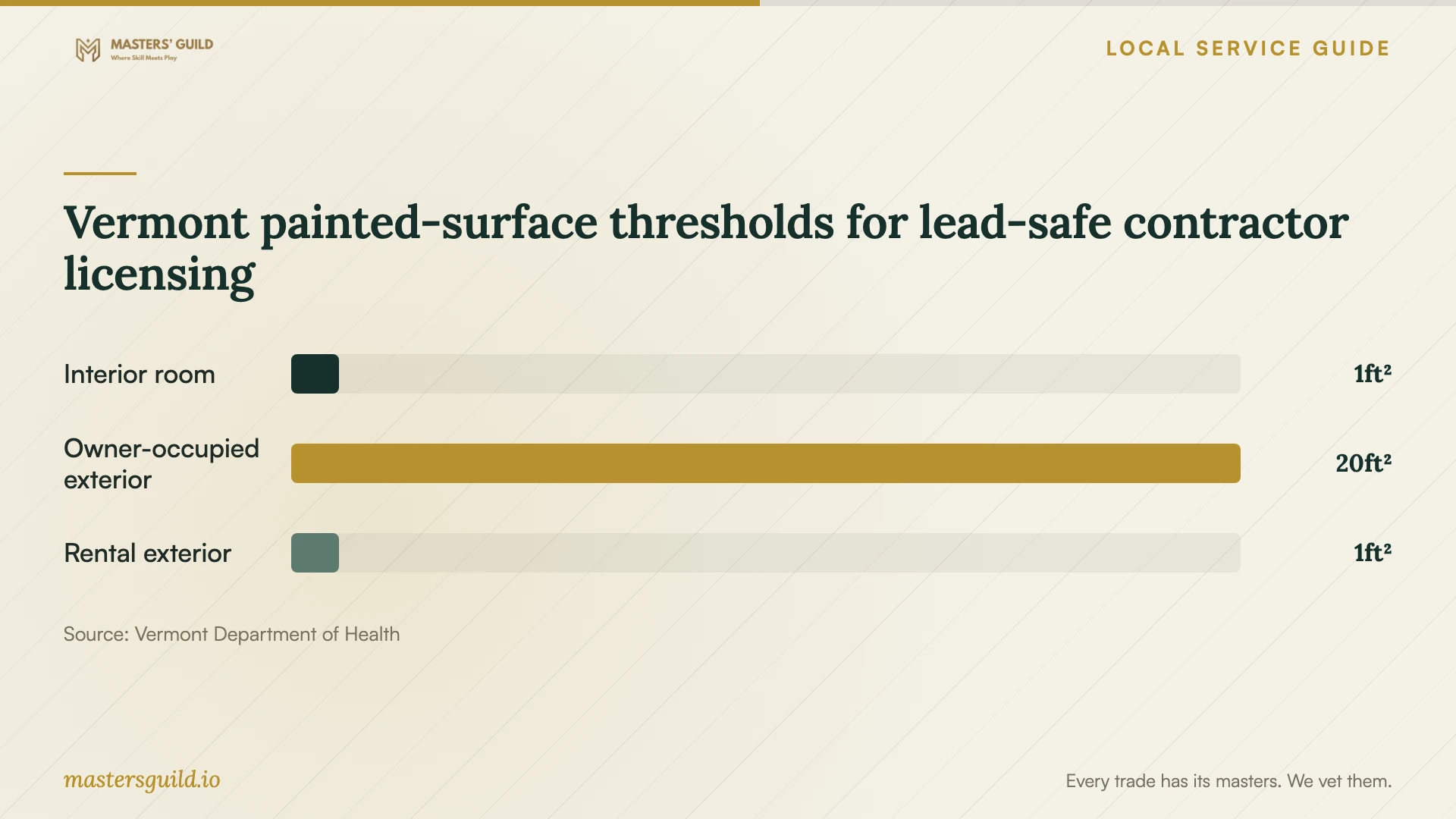
Unless the applicable lead-free exemption applies, window replacement in pre-1978 housing counts as RRPM work regardless of window size. For other contractor work on painted surfaces, Vermont requires lead-safe licenses above its disturbance thresholds: 1 square foot per interior room, 20 square feet per exterior side for owner-occupied housing, and 1 square foot per exterior side for rental housing. [4]
For covered contractor work, request copies of both the Lead-Safe RRPM Supervisor and RRPM Firm licenses and verify their current status through the Health Department’s lookup. Include lead-safe practices in the contract. The department requires containment, cleanup and supervisor cleaning verification; have the contractor explain how they will protect occupied rooms and manage debris. [4]
Compare the full quote and plan the visits
Have each contractor quote the same scope. Request separate amounts for assessment, parts, labor, temporary protection, disposal and permit coordination. Identify finish work, exclusions and the process for approving concealed damage. Confirm whether you owe an assessment fee if you decline the repair, and request written warranty terms.
Keep material orders and installation dates conditional on required approvals. Burlington publishes a typical zoning-permit timeline of 3 to 4 weeks, including staff review and a 15-day appeal period. Board-reviewed permits take longer. Use that timeline as a planning allowance and confirm the schedule for your application. [3]
Discuss part availability, measurement visits and how long the contractor expects to leave the opening exposed. Agree on access, weather conditions that would trigger rescheduling and protection for unfinished work. Before accepting completion, have the contractor demonstrate opening, closing and locking, then review finish work and cleanup together.
Vermont painted-surface thresholds for lead-safe contractor licensing
Local details that affect your job
The $1,000 building exception also depends on scope
Burlington exempts only in-kind repair work costing $1,000 or less from its general building-permit requirement, alongside named exceptions including storm doors and storm windows. Give city staff both the scope and cost. Do not use the dollar amount alone to decide whether you need a permit. [1]
Exterior material and appearance affect zoning
Burlington’s exterior-feature repair and in-kind replacement exemption requires unchanged location, design, material and outward appearance. Before ordering a different frame material, trim detail or window design, seek zoning guidance. You can request a written non-applicability determination with photographs; the city subjects that decision to an appeal period. [2]
Submit zoning applications online
Burlington’s application instructions direct applicants to its online permitting system and reject email or fax submissions. Use that submission route and confirm the approval schedule before committing to installation. The city describes a typical process of 3 to 4 weeks, with longer processing for board-reviewed permits. [3]
Match the proposed work to the next step
| Proposed work | Decision before approval |
|---|---|
| Adjustment or hardware repair | Request exact parts and finish work in the quote; confirm whether the city considers the scope an in-kind repair. |
| In-kind repair costing $1,000 or less | Confirm the building-permit exception and assess zoning separately. |
| Different exterior material, design or trim | Seek zoning guidance before ordering; the exterior-feature in-kind exemption requires those features to remain unchanged. |
| Window replacement in pre-1978 housing | Unless the Health Department’s lead-free exemption applies, treat replacement as RRPM regardless of size and verify required contractor licenses. |
| Work requiring zoning approval | Allow for the published typical 3 to 4 week process and longer processing for board review. |
Your hiring checklist
- Photograph the whole opening, damaged area and manufacturer label.
- Describe temporary protection and permanent repair needs.
- Request a parts-level scope and an explanation for any replacement recommendation.
- Confirm building and zoning requirements before ordering materials.
- Establish whether older-home work falls under RRPM rules or a documented lead-free exemption.
- Verify required lead-safe credentials and discuss containment for covered work.
- Compare itemized quotes, exclusions, warranties and change-order terms.
- Agree on access, rescheduling and security between visits.
Frequently Asked Questions
Does a repair under $1,000 need a permit?
Burlington’s building-permit exception covers only in-kind repair work costing $1,000 or less. Confirm that your scope qualifies. Zoning uses separate criteria, including whether exterior location, design, material or appearance changes. [1] [2]
Can a small replacement window avoid RRPM requirements?
In pre-1978 housing, Vermont treats window replacement as RRPM work regardless of size unless the Health Department’s exemption process establishes that the building is lead-free. For covered contractor work, verify current Supervisor and Firm licenses and discuss containment. [4]
How much should I budget for repair?
Request a quote after the contractor identifies the parts and scope. Compare offers with the same glass or hardware, finish work, disposal and access arrangements. Request separate repair and replacement prices if you are considering both options.
What should I keep after the contractor finishes?
Keep the written scope, itemized invoice, warranty terms and any permit records. Record remaining tasks with the contractor and agree on who will complete them and when.
Sources and scope
This guide combines the sources below with practical planning guidance. Figures apply to the stated geography and period; request a written quote for your property.