
Local service guide
Concrete Work in Burlington, VT: Plan Before Hiring
Arrange Concrete Work in Burlington by having contractors assess the site and quote the same repair or replacement scope. Before booking, confirm building permit requirements with Permitting & Inspections and consult Public Works if the crew will block or disturb a public sidewalk, curb or street. Resolve drainage and delivery access before approving the layout. [1] [2]
Choose the scope before comparing prices
Have each contractor explain what they would retain, remove and rebuild. For a cracked or uneven surface, request an assessment of the cause and the limits of the proposed repair. Discuss crack treatment, surface repair, leveling or replacement, and have the bidder explain why their approach fits your site.
Give bidders the same measurements, photographs and intended use. Describe vehicle use for a driveway, furniture placement for a patio, and access needs for steps or a walkway. Request specifications for excavation, base preparation, concrete thickness, reinforcement, joints, finish and drainage. Compare those assumptions before comparing totals.
For steps attached to the house, have the contractor describe the connection, landing and any proposed rail work. If you see movement near the foundation, discuss whether you need a separate structural assessment before accepting a repair proposal.
Confirm permits and delivery access
The City of Burlington requires a building permit for non-mechanical, electrical or plumbing work except its listed exclusions, which include in-kind repairs costing $1,000 or less. The city also requires a permit for demolition. Describe both removal and replacement when consulting Permitting & Inspections about your project. [1]
Public Works requires permits when someone blocks or disturbs ground or pavement within the public right-of-way. Its page lists curb-cut, excavation and obstruction applications and calls for insurance, a permit bond and plans. Confirm which applications cover your proposed work and access arrangement before reserving a delivery. [2]
Have the contractor mark where trucks, equipment and removed material will go. Put responsibility for applications, fees and inspections in the agreement. Review the access arrangement before work starts, including how you will reach your entrance while the crew works.
Settle drainage before approving the layout
Burlington residents can request a free on-site stormwater evaluation through Blue BTV. A representative reviews drainage patterns, soil and roof runoff, then discusses property-specific improvements. The city lists permeable surfaces, gutter improvements and driveway improvements among possible recommendations. [3]
Bring photographs of standing water and roof discharge to the contractor’s visit. Request a sketch showing proposed surface elevations and where water will go. Discuss the driveway entrance, doorway thresholds and adjacent surfaces you intend to keep before approving excavation.
The city offers rebates for approved residential stormwater practices and bases eligibility and amounts on the practice and the impervious surface managed. Consult Blue BTV about approval before including a rebate in your budget. Confirm eligibility for your proposed installation rather than assuming a conventional concrete replacement qualifies. [3]
Check registration and insurance for the actual job
Vermont’s Office of Professional Regulation requires residential contractor registration for qualifying construction with an estimated value of $10,000 or more, including labor and materials. Its FAQ lists exemptions, including a person working on a structure unattached to a residential building. For a detached patio, driveway or mixed project, consult OPR about how the exemption applies to the full scope. [4]
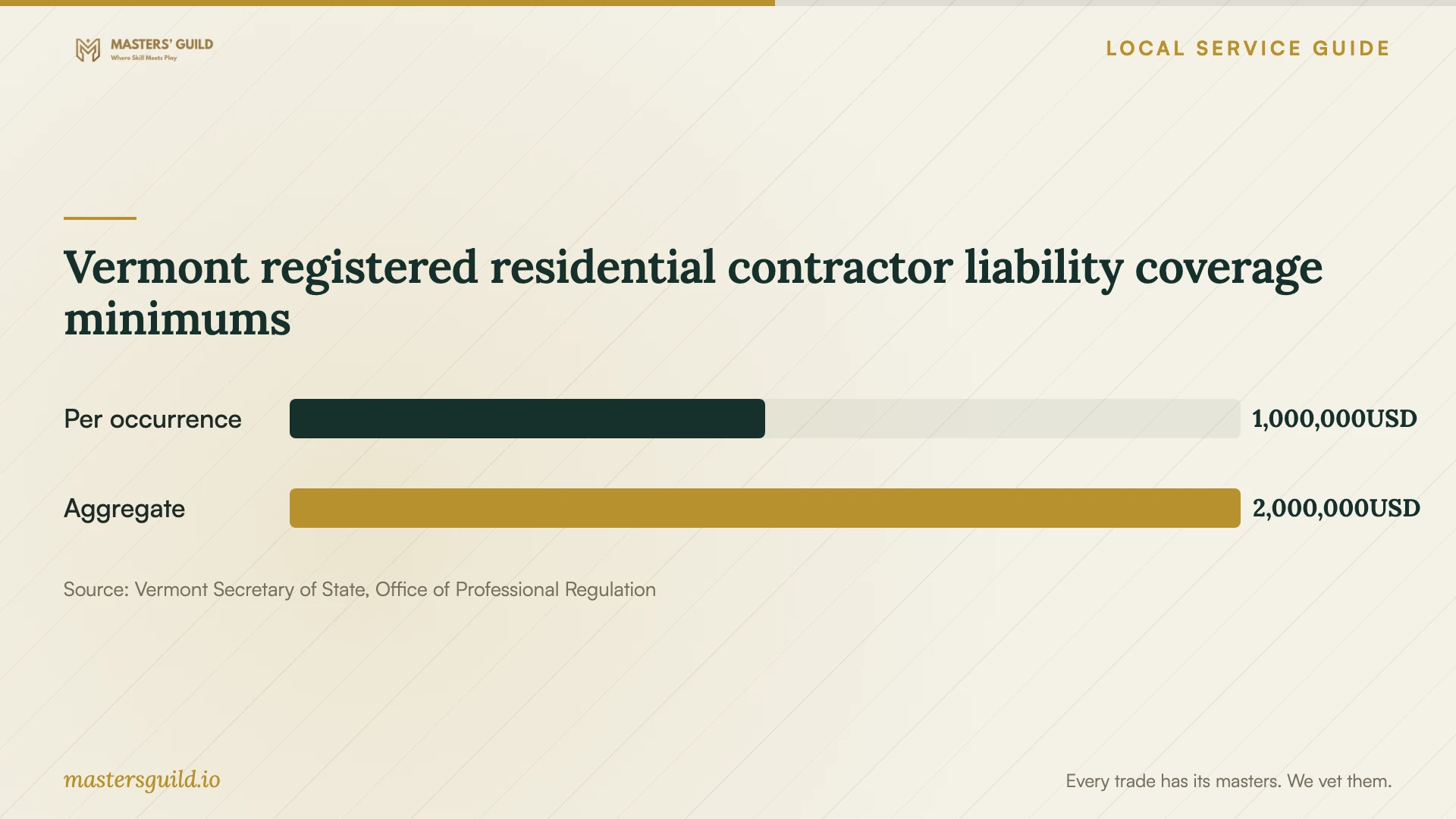
OPR requires registered residential contractors to maintain minimum liability coverage of $1 million per occurrence and $2 million aggregate. The chart compares those two required limits. Check the registration under the name on your agreement and request a current insurance certificate. For a contractor whose work falls within an exemption, discuss insurance as part of your hiring review. [4]
Review the certificate’s business name and coverage dates with the contractor. Have them explain who will perform the work and how you should raise a damage concern. Use this conversation alongside your review of the scope, references and proposed site protection.
Write down the schedule, changes and care instructions
OPR’s contract requirements include the pricing basis, estimated start and completion dates, services, materials and a change-order provision. The parties must document contract amendments in a signed writing. Have the contractor include removal and disposal, permit responsibilities, site restoration, payment stages and the process for addressing defects. [4]
Agree on how the contractor will handle weather delays and protect the concrete during curing. Request separate return-to-use instructions for foot traffic, furniture and vehicles. Include a plan for keeping household members away from the work area without losing access to the home.
Get care guidance for the chosen surface, including snow removal and deicing products. Discuss where you intend to store cleared snow and how the crew will leave adjoining landscaping. Before final payment, walk through the work with the contractor and record any agreed follow-up items.
Vermont registered residential contractor liability coverage minimums
Local details that affect your job
Include removal in the building permit inquiry
Burlington requires a permit for demolition and limits its in-kind repair exception to work costing $1,000 or less. Send Permitting & Inspections a description of the existing concrete, what the crew will remove and what it will install. Request confirmation of the permits and inspections for that scope. [1]
Check the public edge of a driveway
Public Works requires permits to block or disturb ground or pavement in a street, sidewalk, greenbelt or curb within the right-of-way. For an apron replacement or work involving a curb, confirm which curb-cut, excavation or obstruction application applies. The department requires insurance, a permit bond and plans with complete submissions. [2]
Arrange a Blue BTV visit before choosing drainage work
All Burlington residents qualify for a free on-site stormwater evaluation. Complete the city’s assessment request form to arrange a visit. Discuss driveway improvements or permeable surfaces with the representative and confirm approval requirements before budgeting for a residential rebate. [3]
Choose the next step for your project
| Situation | Next step | What to clarify |
|---|---|---|
| Small in-kind repair | Consult Permitting & Inspections about the exception. | The city limits the in-kind repair exception to work costing $1,000 or less. |
| Removal and replacement | Describe demolition as well as the new work to the city. | Burlington requires a permit for demolition. |
| Apron, curb or sidewalk involvement | Consult Public Works about right-of-way applications. | Include ground disturbance, delivery access and obstruction. |
| Runoff concerns | Request a Blue BTV evaluation before approving the layout. | Discuss drainage improvements and approval for any rebate. |
| Residential scope of $10,000 or more | Confirm registration applicability with OPR. | Include labor and materials, and check relevant exemptions. |
Your hiring checklist
- Photograph cracks, uneven edges and standing water; measure the area you want repaired or replaced.
- Give each bidder the same intended use, dimensions and access constraints.
- Confirm permit responsibilities before booking removal, replacement or delivery.
- Request a drainage sketch showing proposed elevations and runoff destinations.
- Confirm registration applicability and review the contracting name and insurance certificate.
- Compare itemized quotes for excavation, base, concrete, finish, disposal and restoration.
- Record weather delays, payment stages and change-order procedures in the agreement.
- Get written instructions for curing protection, return to use and winter care.
Frequently Asked Questions
Do I need a permit to repair concrete?
Consult Burlington’s Permitting & Inspections office about the exact repair. The city’s in-kind repair exception covers work costing $1,000 or less. Describe removal, layout changes and replacement so the office can assess the full scope. [1]
Does every concrete contractor need Vermont registration?
OPR requires registration for qualifying residential construction valued at $10,000 or more, including labor and materials, but lists exemptions. One covers a person working on a structure unattached to a residential building. Confirm applicability to your project before treating registration as a hiring requirement. [4]
Can I get help planning driveway drainage?
Blue BTV offers Burlington residents free on-site evaluations covering drainage patterns, soil and roof runoff. The representative may recommend driveway improvements or permeable surfaces. Confirm approval and eligibility before including a rebate in your budget. [3]
How should I compare concrete quotes?
Have bidders price the same area and intended use, then compare excavation, base preparation, thickness, reinforcement, joints, finish, drainage and disposal. Request exclusions and a procedure for pricing unforeseen work. Discuss return-to-use instructions for pedestrians and vehicles before accepting the schedule.
Sources and scope
This guide combines the sources below with practical planning guidance. Figures apply to the stated geography and period; request a written quote for your property.