
Local service guide
Business Plan Consulting in Burlington, VT
Arrange Business Plan Consulting in Burlington by naming the plan’s intended reader, required deliverables, and deadline before requesting quotes. Consider Vermont Small Business Development Center’s no-cost advising and loan-document preparation support first. For a paid engagement, agree on research, drafting, financial modeling, revisions, editable files, and a delivery schedule after the consultant reviews your records. [1]
Choose advising or a defined consulting project
Consider an advising conversation before buying a complete written plan. VtSBDC supports businesses from startup through growth and transition, and provides advising at no cost. Existing business owners can begin intake by providing business information and the topics they want to discuss. [1]
For an internal planning project, identify the decisions you need help making: pricing, staffing, opening cash, or expansion spending. Ask a consultant to explain which questions they will investigate and which assumptions you must supply. Request a written plan only if you need that document alongside the analysis.
For an investor discussion, specify whether you need a business plan, pitch deck, financial model, or a combination. Ask who will substantiate customer demand and explain sales assumptions. Include responsibility for checking those assumptions in the agreement.
Prepare a financing plan around lender requirements
VtSBDC can help identify financing sources and prepare business-planning documents for a loan application. It does not lend money or guarantee approval. You must apply through the usual loan process and supply the records the lender requires. [1]
Ask the intended lender for its checklist before agreeing on paid deliverables. Share that checklist with the consultant and identify who will prepare each item. Clarify whether the fee includes responding to lender questions and revising projections after feedback.
Request a model you can explain yourself. Ask the consultant to walk through revenue assumptions, operating expenses, owner contributions, borrowing, and repayment. Test a downside case with lower sales or a delayed opening, then discuss the cash you would need and spending you could postpone.
Compare quotes and prepare your records
Use VtSBDC’s no-cost advising as one option when deciding what paid help to commission. The organization charges nominal fees for some seminars and workshops. Its advising offer does not establish a private consultant’s price or scope. [1]
Obtain project-specific quotes after sharing your records and intended deliverables. Ask each consultant to distinguish writing, research, modeling, meetings, and additional revisions. Agree on whether they will charge a fixed fee or bill for time, and how they will price changes to the scope.
Bring your draft, proposed prices, funding target, ownership information, and deadline. For an operating business, gather available financial statements, debt details, and sales records. For a startup, prepare supplier quotes, equipment costs, staffing assumptions, and notes from customer conversations. Label figures you have yet to confirm.
For a premises-based business, use the proposed lease terms and actual fit-out quotes. Define the customer area you intend to serve and explain how customers will buy. Request a relevant redacted sample from the consultant, then ask how they would connect your evidence to the forecast.
Sequence Vermont formation and final delivery
The Vermont Secretary of State recommends discussing business structure with an attorney, accountant, or business advisor. In its LLC guidance, it advises waiting for a certificate confirming name availability and ownership before investing in websites, signs, business cards, or other marketing materials. Follow that sequence when planning branded launch spending. [3]
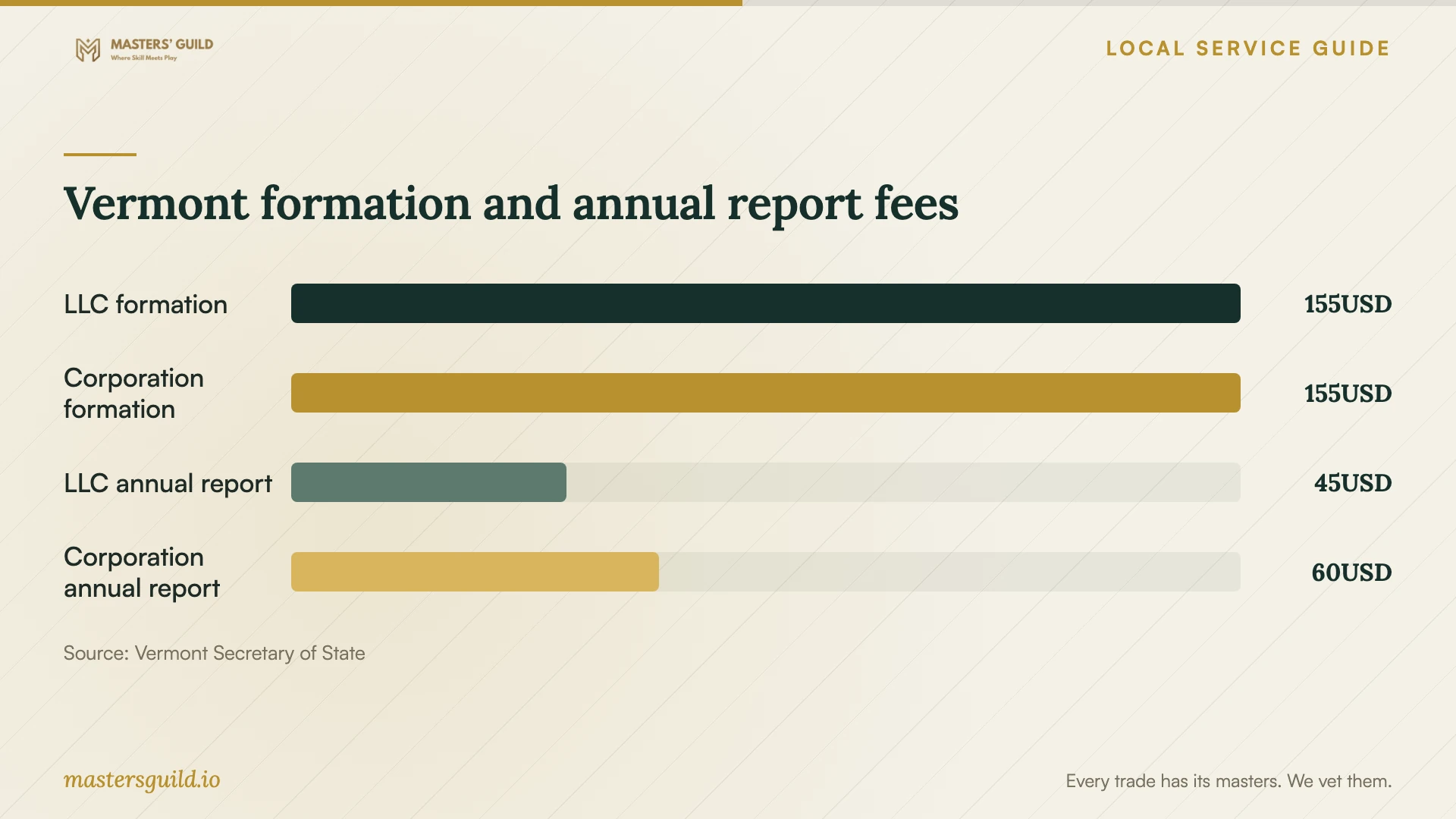
Budget the applicable state charges as separate expenses. Vermont lists formation at $155 for either a domestic LLC or domestic business corporation. It lists annual report fees of $45 for a domestic LLC and $60 for a domestic business corporation. These selected filing fees do not represent total startup costs. [2]
Agree on a consulting delivery schedule after reviewing records and deliverables. Set milestones for approving assumptions, reviewing the draft, returning feedback, and receiving final files. Before accepting the work, check that the narrative and spreadsheet agree on funding uses, staffing, debt payments, and opening dates.
Vermont formation and annual report fees
Local details that affect your job
Vermont advising changes your first step
Burlington owners can consider the statewide VtSBDC program before commissioning a paid plan. Startup applicants attend the no-cost Starting Your Own Business workshop, available virtually each month with live questions or on demand, answer basic venture questions, and review part 2 of the startup FAQ. Existing owners can begin intake with business information and advising topics. VtSBDC focuses on for-profit businesses; nonprofit leaders may attend applicable workshops. [1]
Name confirmation affects branded spending
For a proposed Vermont LLC, search the state’s business-name database and wait for its certificate confirming name availability and ownership before purchasing branded marketing materials. The Secretary of State says it rejects requested names that are too similar to names on record. Ask your consultant to account for that confirmation when scheduling signage and website spending. [3]
Separate filing time from consultant delivery
Vermont’s LLC guidance says online filing normally takes less than one business day and asks applicants to allow 7 to 10 business days for mailed filings. The state charges no extra fee for online filing. Use those processing estimates for the formation step; agree on a separate schedule for your consultant’s research, drafting, and revisions. [3]
Choose your planning route
| Your situation | Suggested route | Confirm before proceeding |
|---|---|---|
| Starting a for-profit business | Consider VtSBDC’s no-cost advising intake | Attend the startup workshop, answer venture questions, and review part 2 of its startup FAQ |
| Already operating a business | Request VtSBDC advising or scope a paid project | Provide business information and the topics you want to discuss |
| Preparing a loan application | Use advising for preparation and scope paid work against lender requirements | Supply the required lender records; VtSBDC cannot guarantee approval |
| Need drafting and financial modeling | Obtain a project-specific consulting quote | Agree on editable files, assumptions, revisions, and delivery milestones |
| Choosing a Vermont business structure | Consult an attorney, accountant, or business advisor | Include the applicable formation and annual report fees in your budget |
Your hiring checklist
- Name the intended reader and the decision or application your plan must support.
- Obtain the lender’s or investor’s requested format before agreeing on deliverables.
- Gather financial records or startup quotes and mark unconfirmed assumptions.
- Request a relevant redacted sample and discuss how the consultant develops projections.
- Agree in writing on fees, milestones, revisions, and your responsibilities.
- Require editable documents, visible spreadsheet formulas, and a handoff meeting.
- Clarify confidentiality, access to records, and permission to share files with others.
Frequently Asked Questions
Can I get business-planning help at no cost?
VtSBDC provides no-cost advising and charges nominal fees for some seminars and workshops. Startup applicants attend its no-cost Starting Your Own Business workshop, answer venture questions, and review part 2 of its startup FAQ. Existing owners can begin intake by providing business information and advising topics. [1]
Will an advisor secure my loan?
VtSBDC helps with financing options and planning documents, but it does not lend money or guarantee approval. You must follow the lender’s application process and supply its required records. For paid consulting, agree on the work you will receive and the support available after submission. [1]
How much time should I allow for consulting?
Agree on a delivery schedule after the consultant reviews your records and deliverables. Set dates for intake, assumptions approval, draft review, feedback, and final handoff. Ask how missing information or changes requested by your lender will affect the schedule and fee.
Will VtSBDC keep my information confidential?
VtSBDC says it keeps client information confidential and does not release it without client consent. Clients sign a document containing its confidentiality commitment. For a private consultant, request written confidentiality terms and identify anyone else who will receive your records. [1]
Sources and scope
This guide combines the sources below with practical planning guidance. Figures apply to the stated geography and period; request a written quote for your property.