
Local service guide
Bathroom Remodeling in Burlington, VT
For Bathroom Remodeling in Burlington, hire a contractor who puts the scope, permit responsibilities, inspection stages and change-order process in writing. Vermont requires residential contractor registration for qualifying work valued at $10,000 or more, including labor and materials, with exemptions. Before agreeing to demolition, confirm the city's building-permit requirements and, for a pre-1978 home, the contractor's applicable lead-safe licenses. [1] [2] [3] [4]
Define the bathroom you want before requesting bids
Write down which fixtures you want to keep, replace or move. Include the toilet, vanity, tub or shower, lighting and fan. Tell bidders whether you want to preserve the layout, improve access or change the room's size. Give each contractor the same description so you can compare their proposed work.
Ask the contractor to describe the work beneath the finishes: shower waterproofing, drain connections, wall backing, subfloor repairs and ventilation routing. Specify tile coverage and fixture models, or agree on purchase allowances. Ask who orders materials and handles damaged or incorrect deliveries.
Discuss bathroom access during construction before choosing a start date. If this is your only bathroom, ask when you will lose use of the toilet and shower, whether the contractor can restore either between stages, and what arrangements you should make. Request a schedule that identifies those interruptions.
Settle permits and inspections before demolition
Burlington's Building & Trades Division requires a building permit for non-mechanical, electrical or plumbing work except listed categories such as painting, carpeting and in-kind repairs costing $1,000 or less. The city also requires a building permit for demolition. Describe the removal and replacement work to the division rather than relying on the project's name. [2]
The city identifies a building permit application and a Trades (MEP) permit application for mechanical, electrical or plumbing work. Ask your contractor to identify which applications your scope requires and who will submit them. Burlington requires plumbing rough inspections before walls close and a final inspection to confirm completion and operation. Put these stages into the proposed schedule. [1] [2]
Include ventilation in the site visit. Burlington requires a bathroom fan where the bathroom lacks an exterior window of at least three square feet. Ask the contractor to review the existing window and fan arrangement with the city, then describe any fan, duct and electrical work in the bid. [1]
Check the contractor and the written agreement
Vermont's residential contractor registration threshold is $10,000 or more in estimated value, including labor and materials. The state lists exemptions, including certain licensed tradespeople working within their license scope. Check the registration of the person or business named on your agreement, or ask them to explain the exemption they rely on. [3]
The Secretary of State says registered contractors must maintain liability insurance and submit proof with registration applications. Ask for a current insurance certificate. Treat registration as one hiring check, and ask for references from bathroom projects with a comparable scope. [3]
Vermont's contract requirements include pricing terms, estimated start and completion dates, services, materials and a change-order provision. The parties must document amendments in a signed writing. Before signing, ask whether you are accepting a maximum price, time-and-materials billing with a cap, or time-and-materials billing without a maximum. [3]
Request separate descriptions for included repairs and discoveries that require your approval. For example, agree on how the contractor will document damaged flooring after removing a tub. Ask for photographs, a written repair scope and the added price before authorizing the change.
Prepare an older home for painted-surface removal
Vermont assumes lead-based paint is present in housing built before 1978 unless an exemption establishes otherwise. For contractor work disturbing more than one square foot of painted surface per interior room, the Health Department requires Lead-Safe RRPM licenses. The department also identifies demolition of painted surfaces as RRPM work. [4]
Before hiring for covered work, ask for the contractor's Lead-Safe RRPM Supervisor and Firm licenses and check that they are current. Include the lead-safe work arrangements in the agreement. Vermont requires covered workers to contain dust and debris, clean the work area, and have the supervisor perform cleaning verification. [4]
Ask the contractor how you should clear the bathroom and how they will separate it from occupied rooms. Burlington also says most demolition projects need asbestos testing. Confirm the testing requirements for your planned removal with the city before setting the demolition date. [2]
Choose fixtures with clear specifications
Ask bidders to name the faucet and showerhead models and record their rated flow rates. Compare those specifications alongside the controls, reach, cleaning access and spray options you want. Keep the approved product list with your agreement so substitutions require a discussion.
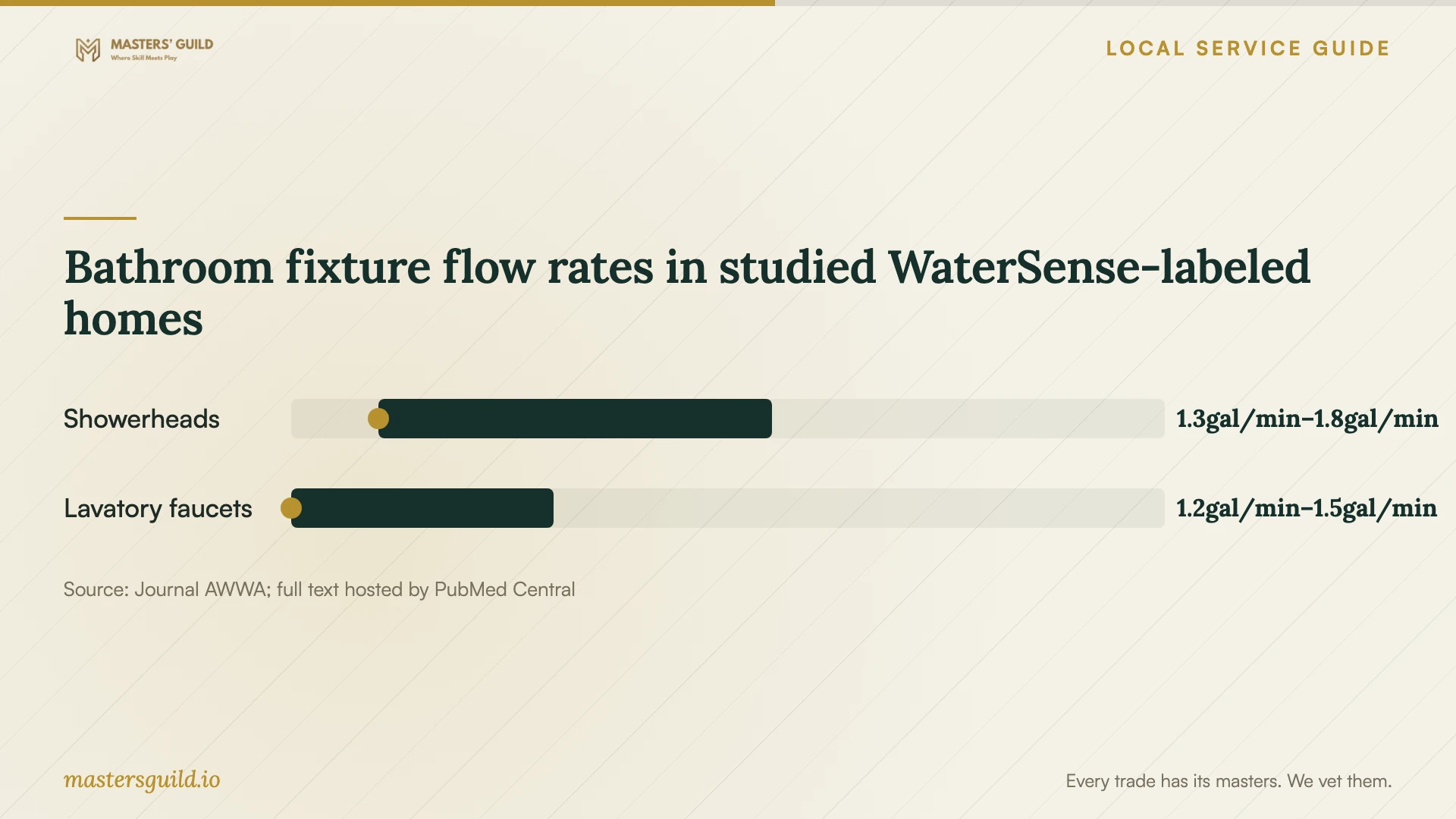
The chart provides a fixture reference from a study of 160 WaterSense-labeled homes in the Las Vegas area. Researchers reported showerhead flow rates of 1.3 to 1.75 gallons per minute and lavatory faucet rates of 1.2 to 1.5. Use those ranges to frame product questions; the study does not establish Burlington requirements or predict savings from your bathroom remodel. [5]
Bathroom fixture flow rates in studied WaterSense-labeled homes
Local details that affect your job
Owner-occupied plumbing work has a specific exception
Burlington allows you to perform plumbing work in the single-family home where you live, but you must secure the plumbing permit, follow inspections and comply with adopted codes. The city requires plumbing licenses for work in public buildings, including rental single-family homes. Tell the city your property's occupancy before deciding who will perform the work. [1]
Rental inspections require advance tenant notice
For inspections at rental properties, Burlington requires tenants to receive 48 hours of advance notice. The owner or local property manager must meet the inspector, along with the contractor for mechanical, electrical or plumbing permits. If you are arranging work in a rented home you own, assign notice and inspection attendance before scheduling. [2]
Match the planned work to the next step
| Planned work | Relevant requirement | Next step |
|---|---|---|
| Painting | Burlington lists painting as a building-permit exception. | Check lead-safe requirements before disturbing older painted surfaces. |
| Bathroom demolition | Burlington requires a building permit for demolition and says most cases need asbestos testing. | Confirm testing and building-permit requirements before removal. |
| Plumbing behind walls | Burlington requires the rough inspection before walls close. | Include inspection access in the schedule. |
| Qualifying residential work of $10,000 or more, including labor and materials | Vermont requires contractor registration, subject to exemptions. | Check the contracting name or applicable exemption. |
| Contractor removal of painted surfaces in pre-1978 housing | Work above one square foot per interior room requires Lead-Safe RRPM licenses. | Verify Supervisor and Firm licenses before hiring. |
Your hiring checklist
- Give each bidder the same list of fixtures, layout changes and finish selections.
- Ask the city to confirm permits for the exact removal and installation scope.
- Name the person responsible for permit applications and inspection scheduling.
- Check the contractor's applicable registration, insurance and lead-safe credentials.
- Request written waterproofing, ventilation and subfloor repair descriptions.
- Agree on pricing terms, exclusions and signed change approvals.
- Plan toilet and shower access during construction.
- Request final inspection documentation and product care instructions at handover.
Frequently Asked Questions
Does a small bathroom remodel need a permit?
Confirm the scope with Burlington's Building & Trades Division. The city lists limited building-permit exceptions, including painting and in-kind repairs costing $1,000 or less. It requires a building permit for demolition. The city identifies a building permit application and a Trades (MEP) permit application for mechanical, electrical or plumbing work. [2]
Can I do my own bathroom plumbing?
Burlington allows plumbing work in your own single-family home where you live. You still need the plumbing permit, inspections and code compliance. The city requires plumbing licenses for work in public buildings, including rental single-family homes. [1]
Must I add a bathroom fan?
Burlington requires a fan where a bathroom lacks an exterior window of at least three square feet. Have the contractor review your existing arrangement with the city and include any required installation in the scope. [1]
How should I compare remodel prices?
Ask contractors to price the same layout, fixtures and finish scope. Compare permit responsibilities, demolition, waterproofing, ventilation, repair allowances and exclusions. Ask each bidder to state whether the price has a maximum and how you will approve additional work.
Sources and scope
This guide combines the sources below with practical planning guidance. Figures apply to the stated geography and period; request a written quote for your property.