
Local service guide
Buffalo yard cleanup: Hiring and Disposal
Arrange yard cleanup in Buffalo by agreeing on the areas to clear, the tasks to complete and the debris destination before accepting a written quote. Request separate prices for on-site reuse and off-site hauling. Confirm whether the crew will leave bags, prepare material for compost or remove it. For fall work, agree on weather delays and price any return visit before booking.
Define the work and the finish
Send photos of the lawn, beds, fence line and loading access. Identify the areas you want cleared and mark plants the crew should preserve. List leaf collection, hand weeding, fallen-twig removal and selected plant cutbacks as separate tasks. Ask the contractor to confirm each task in the quote.
Describe what you expect at completion: cleared paths, selected beds cleared of leaves, debris loaded and hard surfaces swept. Specify any leaves you want retained for compost or mulch. Arrange tree climbing, hanging-limb removal or chemical treatments as separate work rather than leaving them inside an undefined cleanup request.
Choose reuse, hauling or city collection
Erie County describes fallen leaves, grass clippings, weeds and garden plant remains as suitable compost materials. Its guidance also describes shredding woody waste for mulch or paths. Ask the contractor to price collection and on-site reuse alongside collection and hauling so you can compare the work you want. [1]
Choose the reuse area before the crew arrives. Confirm who will shred or mix the material and who will maintain the compost afterward. Erie County gives a six-month-to-two-year composting timeframe for holding units, so reserve space for a continuing project if you choose that method. [1]
For hauling, ask the contractor to name the receiving facility and confirm acceptance before loading. For city collection, confirm Buffalo's current collection dates, accepted containers, material limits and placement rules before arranging bagging. Put responsibility for moving bags to the collection point in the quote, and agree on a backup if collection does not fit your schedule.
Plan fall work with a weather agreement
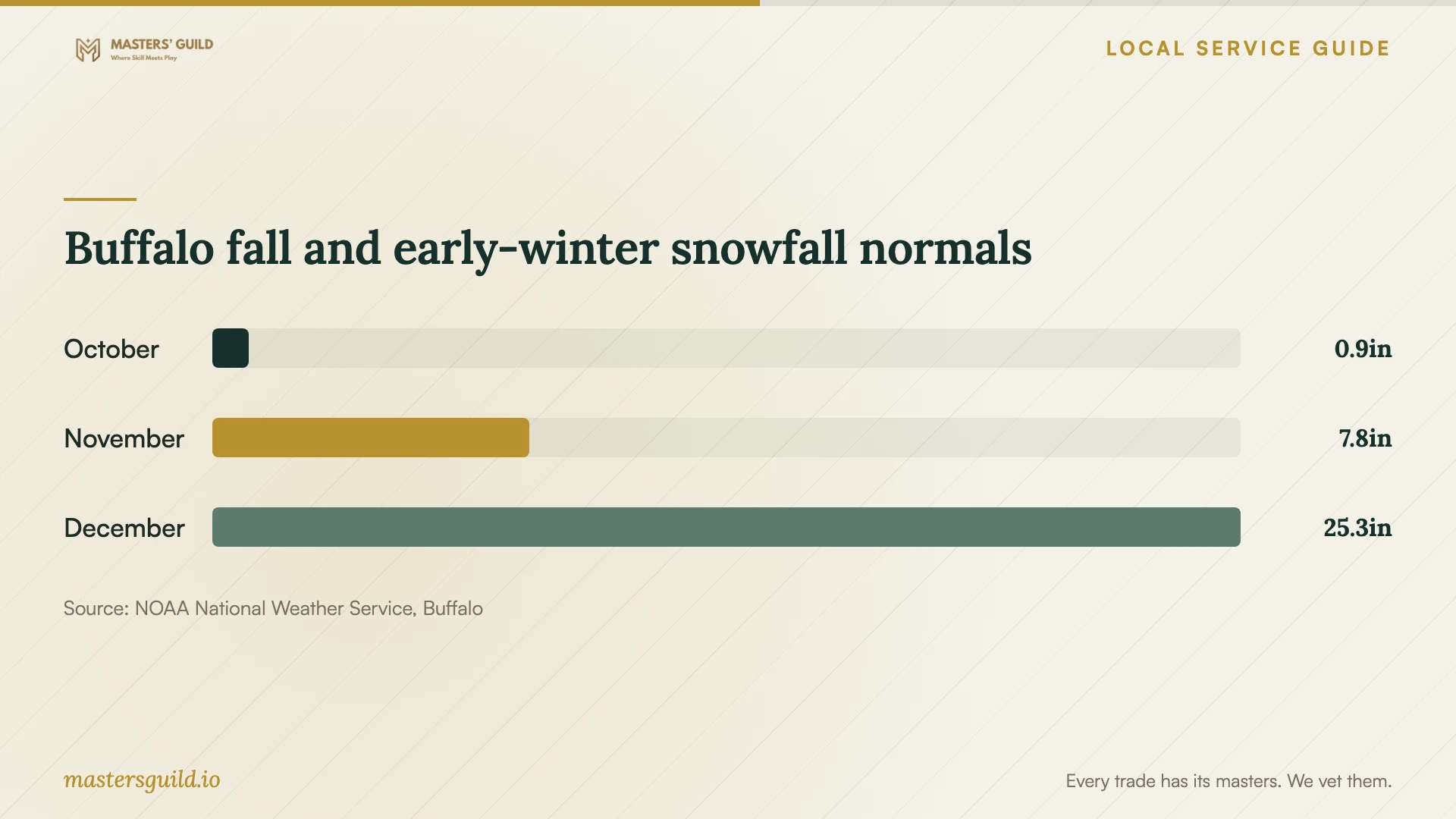
The National Weather Service publishes Buffalo climate-station snowfall normals of 0.9 inches for October, 7.8 inches for November and 25.3 inches for December for 1991–2020. These historical monthly averages give context for discussing late-fall weather delays; they do not predict conditions at your home on the work date. [2]
Request separate prices for an initial cleanup and a later leaf visit if you want both. Decide based on the debris present and the finish you need. Agree on who will contact whom if snow covers the material or you want to postpone work on wet ground. Check the forecast before the appointment rather than choosing a deadline from a climate average.
Handle unexpected chemicals and firewood separately
Exclude old garden chemicals and unknown containers from ordinary leaf and branch debris. Avoid opening or moving unidentified or leaking containers. Keep people and pets away and contact Erie County for handling and disposal guidance before asking the crew to do anything with them.
Erie County lists 716-858-6800 for solid-waste questions and directs residents to its recycling information for collection-event and voucher-program details. Describe what you can see without handling the container and ask which household route applies. The county also operates a separate hazardous-waste program for eligible businesses; confirm eligibility rather than assuming your household contractor can use it. [3]
Ask how the contractor intends to use removed logs. New York DEC regulates wood destined for fuel, including uncut or unsplit wood. It limits transport of untreated New York-grown firewood to 50 miles in linear distance from its source or origin, requires transport documentation and notes that pest quarantines can impose tighter restrictions. [4]
Compare written offers and inspect completion
Request an itemized quote for labor, equipment, hauling and disposal, plus any tax the contractor proposes to charge. Compare offers for the same work. For hourly billing, set a spending limit and require your approval before the crew exceeds it. Ask how the contractor will price extra debris discovered during the visit.
Request proof of liability insurance and confirm who will perform the work. Agree on gate access, parking, pets and equipment restrictions. At completion, walk the agreed areas with the crew or request photos. Check the plants marked for protection, any unfinished tasks and the debris destination before accepting the work.
Buffalo fall and early-winter snowfall normals
Local details that affect your job
Erie County's holding-unit compost option
Erie County describes holding units for non-woody yard waste and gives a six-month-to-two-year composting timeframe for this method. If you choose it, designate the holding area and ask the crew to price placement there. Decide who will manage the material after cleanup. This county guidance concerns home composting, not a city collection service. [1]
New York firewood transport planning
If a contractor intends to use your logs as fuel, confirm the destination and transport documentation before removal. New York's 50-mile linear-distance limit applies to untreated New York-grown firewood from its source or origin. Pest quarantines may impose tighter limits. The firewood rule does not establish a blanket distance limit for all yard debris. [4]
County guidance for unexpected containers
Erie County lists 716-858-6800 for solid-waste questions. If cleanup reveals unidentified or leaking containers, avoid opening or moving them and exclude them from ordinary hauling. Call for handling guidance and the appropriate household disposal route. Confirm current event or voucher arrangements before planning a drop-off. [3]
Choose your cleanup and disposal scope
| Your situation | Work to request | Confirm before work |
|---|---|---|
| Leaves and garden remains, with space for compost | Collection and placement in a designated compost area | Who prepares the material and maintains the pile |
| Woody debris you want to reuse | Shredding for mulch or paths | Suitable material, equipment and placement area |
| Debris you want hauled away | Collection, loading and removal | Receiving facility, acceptance and disposal charges |
| Logs intended for fuel | Removal with a firewood transport plan | Destination, documentation, 50-mile rule and applicable quarantines |
| Old chemicals or unidentified or leaking containers | Exclude from ordinary debris; avoid opening or moving unknown or leaking containers | County handling and household disposal guidance before further work |
Your hiring checklist
- Photograph the work areas and loading access.
- Mark plants to preserve and specify the beds and paths to clear.
- Choose on-site reuse, contractor hauling or a confirmed city collection arrangement.
- Request an itemized quote and an approval requirement for extra work.
- Confirm insurance, crew access, parking and pet arrangements.
- Exclude chemicals and avoid opening or moving unidentified or leaking containers.
- Agree on weather delays and any separately priced return visit.
- Inspect the agreed finish and confirm the debris destination.
Frequently Asked Questions
How should I budget for cleanup?
Request written offers based on photos or a site visit. Ask contractors to separate collection, shredding, hauling and disposal, then compare the same scope. For hourly work, agree on a spending limit and require approval for additional charges.
Can I keep leaves for compost or mulch?
Erie County identifies leaves and grass clippings as compost materials and describes using them beneath plantings as mulch. Ask the crew to prepare and place suitable material in an agreed area. Decide who will maintain it after the visit. [1]
Should I book one fall visit or two?
Ask for separate prices and choose based on the debris present, your desired finish and whether you want another appointment. Buffalo's historical snowfall normals increase from October through December, but they do not establish a leaf-fall date or predict weather for your visit. [2]
Can the crew take logs away for firewood?
Confirm the destination and documentation. New York DEC limits transport of untreated New York-grown firewood to 50 miles in linear distance from its source or origin, with potentially tighter pest-quarantine restrictions. The regulation concerns wood intended for fuel. [4]
Sources and scope
This guide combines the sources below with practical planning guidance. Figures apply to the stated geography and period; request a written quote for your property.