
Local service guide
Roof Cleaning and Repair in Buffalo
Arrange Roof Cleaning and Repair in Buffalo by asking a contractor to assess your concerns, separate cleaning from proposed repairs, and provide a written scope before you authorize work. Include roof material, access, cleanup, tax treatment, and weather delays in the proposal. For repairs that may enter the city permit process, confirm the requirements with Permit and Inspection Services and name the person responsible for applications and inspections. [1]
Describe the problem before choosing the work
Start your request with what you can observe: staining, debris, a damaged area, or water appearing indoors. Include photographs taken from a safe position and explain when you noticed the problem. Ask the contractor to describe what they will inspect and provide photographs supporting any proposed repair.
Ask for a cleaning proposal that names the roof material, intended method, products, affected areas, and protection for landscaping and adjacent surfaces. Request the applicable roof manufacturer's instructions before accepting a treatment. The sources provided here do not establish a suitable cleaning method for your roof, so do not use this page as chemical or equipment guidance.
For repair work, request a description of the defect, materials to be removed or installed, and the contractor's proposed completion check. Specify whether the price includes an assessment, temporary work, or a completed repair. Ask how the contractor will seek your approval if inspection reveals additional work.
Resolve city approvals before setting the start date
Buffalo's permit process starts with project registration by the designer, general contractor, or owner. The city accepts registration in Room 301 at City Hall or through ePermits. Bring the proposed repair description to Permit and Inspection Services and ask which requirements apply; the city's process page does not classify roof cleaning or each type of minor roof repair. [1]
The city lists possible Preservation Board approval for a historic building or property in a historic district. It also requires a licensed New York architect's or engineer's original seal and signature for structural or public safety-related alterations or repairs. If your proposal includes structural work, ask the city what documentation you need before accepting a construction start date. [1]
For work requiring a permit, Buffalo says construction cannot start before issuance. The city assigns inspection scheduling to the agent of record and requires a final inspection to close the permit. Put these responsibilities in the agreement and request the applicable closeout document with your completion records. [1]
Compare the full bill
Ask each bidder to price the same scope. Request separate amounts for cleaning, repairs, debris disposal, access arrangements, and any permit or professional-design work. Ask whether the total includes tax and how the contractor will price additional work. The supplied evidence contains no verified local roof-cleaning or repair prices; obtain property-specific quotes rather than relying on a citywide allowance.
New York's tax guidance distinguishes taxable repair and maintenance from qualifying capital improvements. A capital improvement must satisfy all three state tests concerning added value or prolonged useful life, permanent attachment, and intended permanence. Do not assume that calling work a replacement establishes its tax treatment. [3]
For qualifying capital improvement work, the state directs property owners to provide Form ST-124, Certificate of Capital Improvement. Contractors may include the sales tax they paid on materials in the project price. Ask for an explanation of the classification and documentation before comparing a taxed repair quote with a proposal described as a capital improvement. [3]
Agree on weather delays and completion records
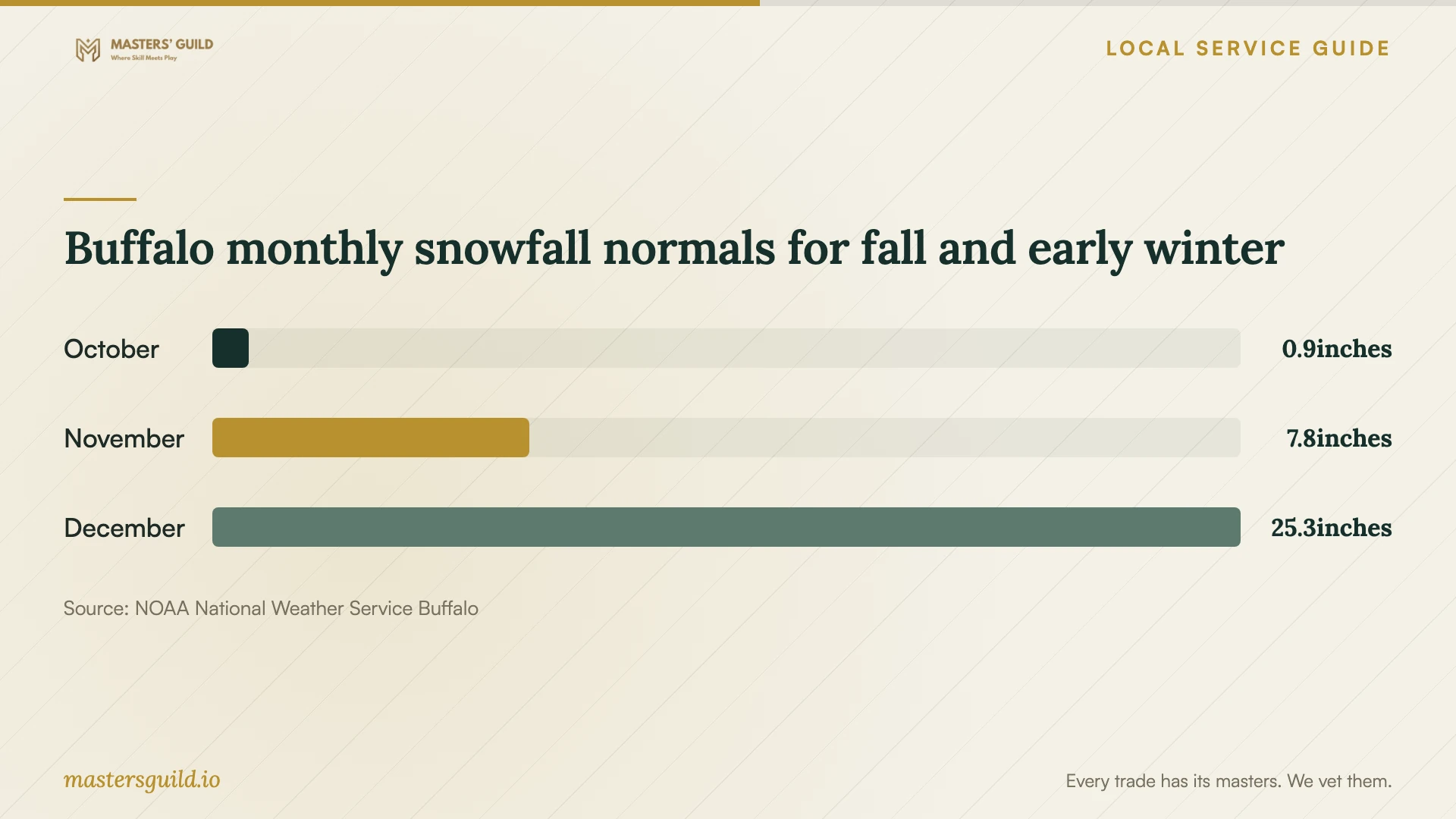
The Buffalo primary climate station's 1991–2020 monthly snowfall normals rise from 0.9 inches in October to 7.8 inches in November and 25.3 inches in December. Use that seasonal context to ask about a backup date, the contractor's conditions for proceeding, and arrangements if the crew cannot finish the agreed work. [2]
Check the forecast with the contractor before the appointment. Ask who will notify you of a delay and whether rescheduling changes the price. For work involving an opened roof area, request a written plan for temporary protection and overnight conditions. Avoid treating a calendar month as permission to proceed.
Before the crew leaves, request completion photographs, a list of materials or treatments used, cleanup confirmation, and the written terms for any follow-up. Keep the scope, approved changes, invoice, and applicable permit records together. Ask the contractor how to report a concern after the job and who will respond.
Buffalo monthly snowfall normals for fall and early winter
Local details that affect your job
Register and track a permitted project
Buffalo accepts project registration in Room 301 at City Hall or through ePermits and provides application status through My Dashboard. For a repair requiring a permit, name the agent of record in your agreement and ask that person to handle inspection scheduling. Confirm permit issuance before construction starts. [1]
Check historic and structural review before ordering materials
The city identifies possible Preservation Board approval for historic buildings and properties in historic districts. It requires a licensed New York architect's or engineer's seal and signature for structural or public safety-related alterations or repairs. Ask Permit and Inspection Services about these requirements before approving material changes or structural repairs. [1]
Separate New York tax classification from the job label
New York's statewide guidance distinguishes repair and maintenance from qualifying capital improvements and explains the use of Form ST-124. Ask the bidder to identify the classification of your specific work and show how it affects the invoice. This is state guidance applicable here, rather than a Buffalo-specific tax exemption. [3]
Choose the next step for your roof concern
| Situation | Next step | Clarify before approval |
|---|---|---|
| You want staining or debris addressed | Request a cleaning assessment | Roof material, manufacturer guidance, method, and cleanup |
| You see damage or water indoors | Request an assessment and a separate repair scope | Documented findings, temporary work, and completed repair price |
| The proposal includes structural repairs | Ask Buffalo about permit and design-document requirements | Required professional seal, application responsibility, and inspections |
| Your property is historic or in a historic district | Ask about Preservation Board approval | Approval requirements before material or appearance changes |
| The contractor describes work as a capital improvement | Ask for the New York tax classification explanation | Qualification, Form ST-124, and treatment of material costs |
Your hiring checklist
- Send photographs and describe the concern, roof material if known, and access restrictions.
- Request separate cleaning and repair scopes with supporting inspection photographs.
- Ask for manufacturer instructions supporting the proposed cleaning method.
- Confirm applicable city approvals and assign application and inspection responsibilities.
- Request proof of insurance and clarify who will perform the work.
- Compare itemized totals, tax treatment, exclusions, and additional-work approval terms.
- Agree on weather cancellation, temporary protection, and rescheduling arrangements.
- Collect completion photographs, written follow-up terms, and applicable closeout records.
Frequently Asked Questions
Does roof cleaning require a Buffalo building permit?
The supplied city page describes the permit process but does not classify roof cleaning. Give Permit and Inspection Services the proposed scope and ask whether a permit or other approval applies. Avoid assuming that the requirements for construction also apply to cleaning. [1]
Should I approve cleaning and repairs together?
Ask the contractor to describe and price each part separately. You can then approve the assessed work, compare proposals, and decide how to handle any additional findings. Request written approval terms before the contractor expands the scope.
Will the contractor charge sales tax?
New York distinguishes taxable repair and maintenance from qualifying capital improvements. Ask how the contractor classified your work. For qualifying capital improvements, the state explains the use of Form ST-124; contractors may include tax paid on materials in the project price. [3]
Can I use snowfall averages to choose an appointment?
Use the monthly normals for seasonal planning, then ask the contractor to assess the forecast and job conditions. NOAA's figures describe Buffalo's 1991–2020 climate normals. They do not forecast the weather on your appointment date or establish safe roof-access conditions. [2]
Sources and scope
This guide combines the sources below with practical planning guidance. Figures apply to the stated geography and period; request a written quote for your property.