
Local service guide
Pressure Washing in Buffalo: Hiring and Planning
Arrange Pressure Washing in Buffalo by comparing written proposals that cover each surface, the cleaning method, dirty-water handling and weather postponements. Before accepting a quote, identify nearby drains and request a test patch for graffiti on historic materials. Erie County explains that storm sewer flows receive no treatment; National Park Service guidance warns that low pressure can still damage soft historic wood or masonry. [1] [3]
Make quotes comparable
Give each contractor the same job description. Send photographs of the whole work area, close views of stains and a view of the access route. Identify the material if you know it, and point out damaged joints, peeling finishes or places where you have noticed leaks. Arrange an inspection when the contractor cannot assess the surface from photographs.
Get a written proposal naming the surfaces, methods, cleaning products and cleanup responsibilities. Include furniture moving, water access, stain treatment and wash-water management. Have the contractor list exclusions and optional work, state the total charge and explain how you will approve changes before they perform extra work.
Describe the result you want: general cleaning, treatment of a particular stain or preparation for another project. Have the contractor identify stains they cannot promise to remove and areas they recommend leaving untouched. Keep those limits in the agreement and use them when you inspect the finished work.
Review the method before approving it
Have the contractor explain the treatment for each material. For a proposed soft wash, request the cleaner name, application and rinsing plan, and precautions around adjacent finishes and plants. Use the manufacturer's instructions to discuss compatibility rather than accepting a method based on its name alone.
Graffiti on a historic feature warrants a separate assessment. The National Park Service directs practitioners to identify the graffiti and underlying material, conduct test patches and begin with the gentlest method. Its guidance explains that porous brick or stone can retain a trace of graffiti after removal. Discuss that possibility before accepting an appearance guarantee. [3]
The same national guidance warns that soft historic wood and masonry can suffer damage even at low pressure. For that work, review an inconspicuous test patch with the specialist before authorizing the full area. Treat the publication as guidance for historic graffiti removal rather than a universal pressure setting for household surfaces. [3]
Put dirty-water handling in the scope
Walk the cleaning area with the contractor and trace the downhill route toward drains or ditches. Erie County explains that outdoor washing can carry dirt and grime into stormwater systems, whose flows receive no treatment. Have the contractor describe how they will keep contaminated wash water from reaching those routes. [1]
Specify who will collect loose debris, provide containment or recovery where needed, and confirm an appropriate disposal destination. If nobody knows where a drain connects, resolve that question before work begins. Erie County's pollution guidance does not authorize discharge of pressure-washing wastewater into a particular Buffalo sewer connection. [1]
Sweep loose material before the appointment and point out automotive spills. Erie County recommends sweeping sidewalks and driveways rather than hosing them down and cleaning up vehicle-fluid spills. Discuss separate treatment of visible contamination before approving a general wash. [1]
Agree on weather terms and access
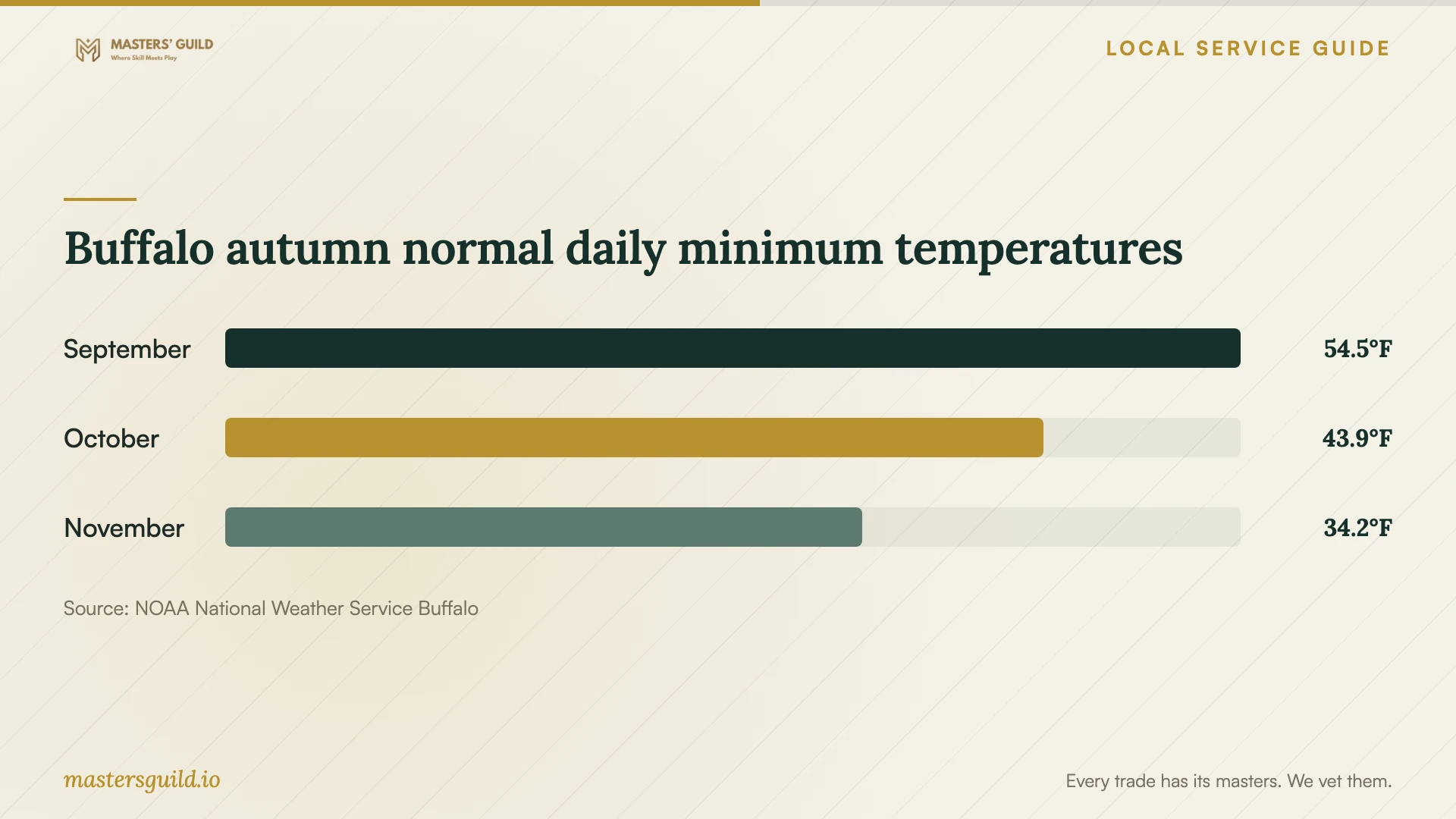
Set postponement terms before paying a deposit. NOAA publishes Buffalo's 1991–2020 normal daily minimum temperatures of 54.5°F for September, 43.9°F for October and 34.2°F for November. Use that autumn decline to prompt a discussion about the forecast, freezing conditions and the contractor's handling of standing rinse water. [2]
For the appointment decision, have the contractor assess current site conditions and product requirements. Record who decides to postpone, when they will notify you, how they handle the deposit and how they arrange a replacement date. Climate averages cannot establish conditions at your property on the day of cleaning. [2]
Confirm the water supply and hose route, move vehicles and portable belongings, and identify items you cannot move. Arrange to keep children and pets outside the work area. Photograph existing damage, then review the result with the contractor and record any follow-up work you both agree to.
Buffalo autumn normal daily minimum temperatures
Local details that affect your job
Erie County runoff guidance affects your proposal
Erie County identifies soapy wash water, motor oil and eroded sediment as stormwater pollutants and explains that storm sewer flows receive no treatment. For a driveway or patio draining toward the street, include drain identification, runoff controls and disposal responsibilities in the written proposal. Confirm the destination rather than assuming an outdoor drain leads to treatment. [1]
Buffalo autumn normals affect booking terms
At the Buffalo climate station, the 1991–2020 normal daily minimum drops from 43.9°F in October to 34.2°F in November. For a late-season booking, agree on a forecast review and a replacement-date policy before committing money. These station averages do not predict your property's overnight temperature or establish a washing equipment or product cutoff. [2]
Report unexplained dry-weather outfall flow
Erie County advises contacting your municipal stormwater contact if a storm drain outfall flows after 72 hours without rain. If you observe that condition near the work, report it and tell the contractor before washing. The guidance concerns an outfall where the system discharges, rather than water visible in any street inlet. [1]
Choose the next step for your property
| Situation | Proposal to request | Approval condition |
|---|---|---|
| Driveway or patio draining toward a storm drain | Drain identification, runoff controls and disposal responsibilities | Review how the contractor will keep soap, oil and debris from entering the drain. |
| Graffiti on historic brick or stone | Specialist assessment and an inconspicuous test patch | Review the trial and discuss the possibility of residual graffiti traces. |
| Graffiti on soft historic wood or masonry | Material-specific treatment starting with the gentlest method | Discuss damage risk even at low pressure before approving full treatment. |
| October or November appointment | Forecast review and written postponement terms | Agree on the contractor's operating conditions and replacement-date arrangements. |
Your hiring checklist
- Photograph the surfaces, stains, access route and existing damage.
- Get a material-specific method and cleaning-product plan.
- Review a test patch before full graffiti treatment on historic features.
- Identify drains and record wash-water handling responsibilities.
- Compare identical scopes, exclusions, optional work and total charges.
- Request proof of insurance and a procedure for reporting damage.
- Confirm water access, preparation duties and postponement terms.
- Inspect the result with the contractor and record agreed follow-up work.
Frequently Asked Questions
How should I set a budget?
Collect itemized quotes using the same photographs and scope. Compare surface coverage, stain treatment, preparation, wash-water handling and cleanup alongside the total. Have each contractor separate optional work and explain how they will obtain approval for additional charges.
Can rinse water run into the street?
Resolve its destination before approving that approach. Erie County explains that storm sewer flows receive no treatment and identifies soap, oil and sediment as pollutants. Have the contractor confirm runoff controls and an appropriate disposal route; this county guidance does not grant permission for a particular wastewater discharge. [1]
Should I remove graffiti from historic masonry myself?
Seek a specialist assessment before choosing a treatment. National Park Service guidance calls for testing and the gentlest method, and warns that soft historic masonry can suffer damage even at low pressure. Review an inconspicuous trial before authorizing treatment of the full area. [3]
Can I arrange washing in November?
Have the contractor assess the forecast, product requirements and site conditions. Buffalo's 1991–2020 normal daily minimum for November is 34.2°F, but that monthly average cannot determine whether your appointment day is suitable. Agree on postponement and deposit terms before booking. [2]
Sources and scope
This guide combines the sources below with practical planning guidance. Figures apply to the stated geography and period; request a written quote for your property.