
Local service guide
Lawn mowing in Buffalo, NY: Hiring and Scheduling
Lawn mowing in Buffalo starts with a clear scope: ask for a written quote covering the areas to cut, trimming, clipping handling, sales tax and weather rescheduling. Choose a provider who will adjust visits to grass growth. Cornell Cooperative Extension of Erie County recommends mowing high and removing no more than one-third of the grass blade per cut. For an overgrown yard, request a separate initial cleanup quote before agreeing to recurring service. [4]
Define the job before comparing offers
Send each provider the same photos and description. Identify the front, rear and side lawn, any separate grass strips, and the boundaries of the work. Include gate width, steps, slopes and obstacles. Ask the provider to confirm access before accepting a quote, especially if equipment must pass through a narrow gate.
Request separate prices for the first visit and recurring visits if the yard has tall grass, fallen limbs or accumulated debris. Describe what you want removed and where you expect the provider to take it. Do not assume a mowing visit includes brush removal, leaf collection, garden-bed work or disposal.
The supplied primary sources do not establish a Buffalo mowing price range. Use property-specific written offers to set your budget. Compare the per-visit total, included tasks, extra charges and payment terms. For a seasonal agreement, ask how the provider handles skipped visits, cancellation and the end of service.
Choose a schedule and mowing method
Cornell Cooperative Extension of Erie County advises using the mower's highest setting, keeping the blade sharp and cutting often enough to remove no more than one-third of the leaf blade. Ask the provider to explain the proposed cutting height and how they will handle grass that has grown beyond that limit. [4]
Choose weekly or biweekly visits only after discussing current growth. The extension explains that cool-season grasses slow growth in midsummer or drought. Ask for a way to change the interval when growth changes, and agree on who will approve an extra visit or a skipped cut. [4]
Discuss clipping handling before paying for bagging. Erie County extension recommends returning grass clippings because doing so reduces fertilizer needs. Tell the provider whether you want clippings returned or collected, and ask them to quote any collection and removal work as a separate item. [4]
Arrange autumn visits around actual conditions
For autumn service, agree on how the provider will assess grass growth and ground conditions before the next cut. Specify whether leaf work means mulching, collection or removal. Ask them to contact you before changing the scope or adding a charge.
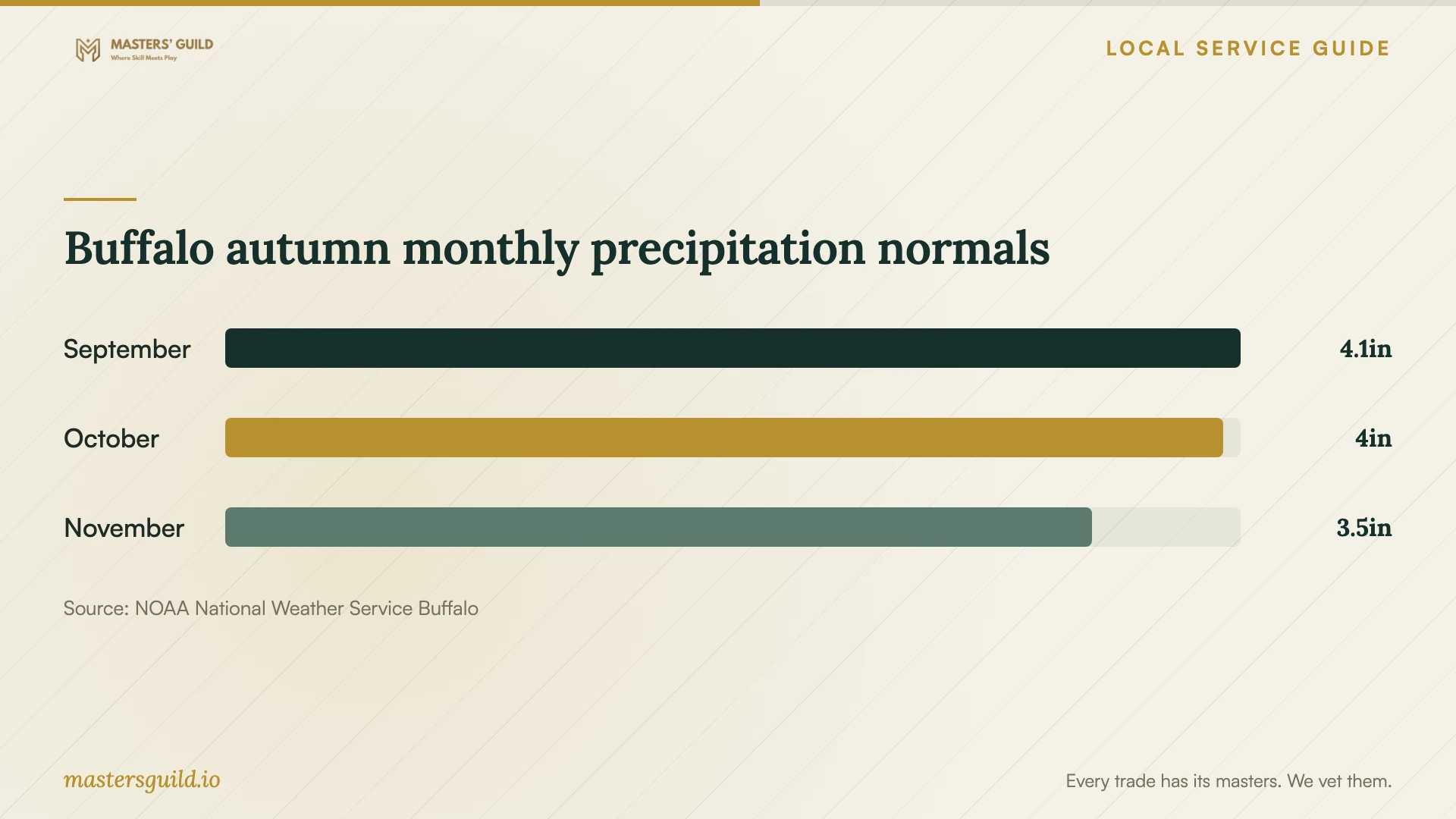
Buffalo's published 1991–2020 climate normals show monthly precipitation of 4.10 inches in September, 4.03 inches in October and 3.50 inches in November. These historical averages provide a reason to discuss weather rescheduling, but they cannot tell you whether your yard will be suitable for mowing on a booked day. [2]
Write down whether the provider will postpone a visit when you or the crew identifies unsuitable ground conditions, how they will notify you and whether they will charge for the skipped visit. Avoid committing to a final-cut date without a process for reviewing the lawn beforehand.
Confirm responsibility and check the first visit
Ask for proof of insurance and the name of the business responsible for the work. Confirm who will enter the property, how they will secure gates and whom you should contact about damage or an incomplete visit. Record these arrangements with the scope and price.
Before the crew arrives, remove toys, hoses and pet waste, and point out items you want them to avoid. Mark the agreed boundaries and explain access arrangements. If you will be away, request completion photos showing each work area.
Review the first visit before committing to a longer plan. Check whether the crew covered the agreed areas, completed trimming and cleanup, handled clippings as requested and secured the gate. Resolve any missed work with the provider and record the correction for the next visit.
Buffalo autumn monthly precipitation normals
Local details that affect your job
Buffalo's overgrowth duty affects cleanup timing
City Code section 341-1 requires owners, occupants or people responsible for land to clear overgrown weeds, grass, brush and debris between May 1 and June 1 each year, then maintain the land as needed. Section 341-2 gives an owner five days to comply after a violation notice. If you receive a notice, share it with the provider and confirm a completion date that addresses its requirements. The city can arrange the work and bill the owner after noncompliance. [3]
New York sales tax changes quote comparisons
The state tax department lists lawn mowing as taxable repair and maintenance. For this work, landscapers must charge sales tax on materials and labor, including expenses and markups, unless the customer supplies appropriate exemption documentation. They must also hold a valid sales-tax Certificate of Authority. Ask for an itemized total rather than comparing a tax-inclusive offer with a pretax figure. [1]
Erie County guidance supports a flexible mowing plan
Cornell Cooperative Extension of Erie County recommends high mowing, sharp blades and removing no more than one-third of the blade. Its guidance also identifies slower cool-season grass growth during midsummer or drought. Use those recommendations when asking a provider to explain their cutting method and schedule, rather than accepting the same interval without discussing lawn conditions. [4]
Choose the service arrangement for your yard
| Your situation | Arrangement to discuss | Confirm before booking |
|---|---|---|
| Overgrown grass and debris | Initial cleanup followed by recurring mowing | Separate cleanup scope, removal charges and completion date |
| Grass grows beyond the one-third cutting limit between visits | A shorter interval | Cutting height and approval for additional visits |
| Growth slows during midsummer or drought | A flexible interval | Who approves skipped cuts and how billing changes |
| You want to return grass clippings | Mowing with clippings left on the lawn | Clipping handling and pavement cleanup |
| You received a city overgrowth notice | Cleanup timed to the notice | Availability, required work and completion evidence |
Your hiring checklist
- Photograph each lawn area and identify the work boundaries.
- Measure gate openings and describe steps, slopes and obstacles.
- Separate initial overgrowth cleanup from recurring mowing in the quote.
- Specify trimming, pavement cleanup and clipping handling.
- Request an itemized total with sales tax and any extra charges.
- Agree on weather postponements, skipped visits and schedule changes.
- Confirm insurance, access arrangements and a contact for problems.
- Review the first visit before accepting a longer agreement.
Frequently Asked Questions
How much should I budget for mowing?
Request a written price for your property. The sources here do not establish local market rates. Compare the same lawn areas and tasks, then check sales tax, initial cleanup charges and the cost of optional collection or removal.
Should I book weekly or biweekly visits?
Discuss current growth with the provider. Erie County extension recommends cutting often enough to remove no more than one-third of the blade and notes slower growth during midsummer or drought. Agree on how to change the interval as conditions change. [4]
Does Buffalo's code specify a maximum grass height?
The cited section 341-1 requires clearing overgrown vegetation and maintaining sanitary, orderly land; it does not give a numeric grass-height limit. Follow the requirements in any notice you receive and ask the city about unclear instructions. [3]
Should the provider charge sales tax?
New York's landscaper guidance lists mowing as taxable maintenance. Providers must charge tax on the job's materials and labor, including expenses and markups, unless the customer provides appropriate exemption documentation. Ask them to show the tax on your quote. [1]
Sources and scope
This guide combines the sources below with practical planning guidance. Figures apply to the stated geography and period; request a written quote for your property.