
Local service guide
Interior design in Buffalo, NY: Hiring and Planning
Interior design in Buffalo, NY starts with choosing the help you need: furnishing advice, a room plan with purchasing help, or renovation coordination. Request written proposals covering the same rooms, deliverables and responsibilities. For structural or building-system design, identify appropriate architectural or engineering support because New York interior-design certification does not authorize those practices. [3]
Define the help you want
Write a brief around the problem you want to solve. Describe awkward circulation, furniture you want to keep, missing storage or a kitchen layout you want to reconsider. Include photographs, approximate dimensions, your spending limit and the decisions you want help making. Have the designer confirm measurements before you approve purchases or construction.
For advice alone, request a consultation with a written summary. For a room plan, specify the furniture layout, finish selections and shopping list you expect. If the designer will order products, agree on who approves substitutions, checks deliveries and handles damage or returns. Include revision limits and the price of additional work in the proposal.
Match credentials to the work
New York permits only people certified under Article 161 to use the title certified interior designer. The article regulates that title; it does not require you to hire a title holder. Its definition of interior design includes furnishings, layouts, cabinetry, lighting, finishes and interior construction that does not materially affect building systems. [3]
Certification does not authorize architecture or engineering, including design of structural, electrical, plumbing, heating, ventilation or other building systems. For a renovation, identify who will assess proposed changes and prepare any architectural or engineering documents. The interior design plans described in Article 161 are not the municipal filing plans required under architecture or engineering laws. [3]
Request credential details from anyone claiming state certification so you can check the claim with the state. Review projects resembling your scope and ask what the designer handled. A sample deliverable can help you compare the detail you will receive. Discuss references, insurance, site visits and responsibility for measurement or ordering errors before signing.
Resolve Buffalo approvals before ordering
Buffalo requires a preservation certificate before covered work affecting the exterior of a landmark, landmark-site structure or historic-district property. For building-permit applications involving work that does not affect the exterior, the city requires neither the listed preservation certificates nor Preservation Board review. This preservation exemption does not remove separate building-permit requirements. [1]
Flag replacement windows, altered exterior-door openings and other exterior changes in your brief. Ask the city to confirm the property's designation and the approval route before you order affected items. Keep approved plans with your project records. Buffalo prohibits deviations from plans or modifications approved by the Preservation Board. [1]
Give the city your building type when discussing fees. Buffalo applies its residential construction fee schedule to detached one- and two-family dwellings; its commercial construction schedule covers other buildings. For an apartment or mixed-use building, confirm the applicable schedule before using a detached-house permitting allowance. [2]
Compare the complete budget
Request written proposals for your rooms and deliverables to establish your design budget. Separate the designer's fee from furniture, delivery, installation and construction. Have each candidate state whether they charge by the hour, a fixed scope or purchasing markups, and document the amounts. Compare matching deliverables and exclusions.
New York tax guidance includes layout drawings, furniture arranging, staging and finish selection among taxable decorating and design services. For on-site advice, the state uses the property's location to determine the sales-tax rate. Request the applicable tax in the proposal and an explanation of how the provider treats plans, advice and implementation. The state's bulletin distinguishes design services from contracts that include physical implementation. [4]
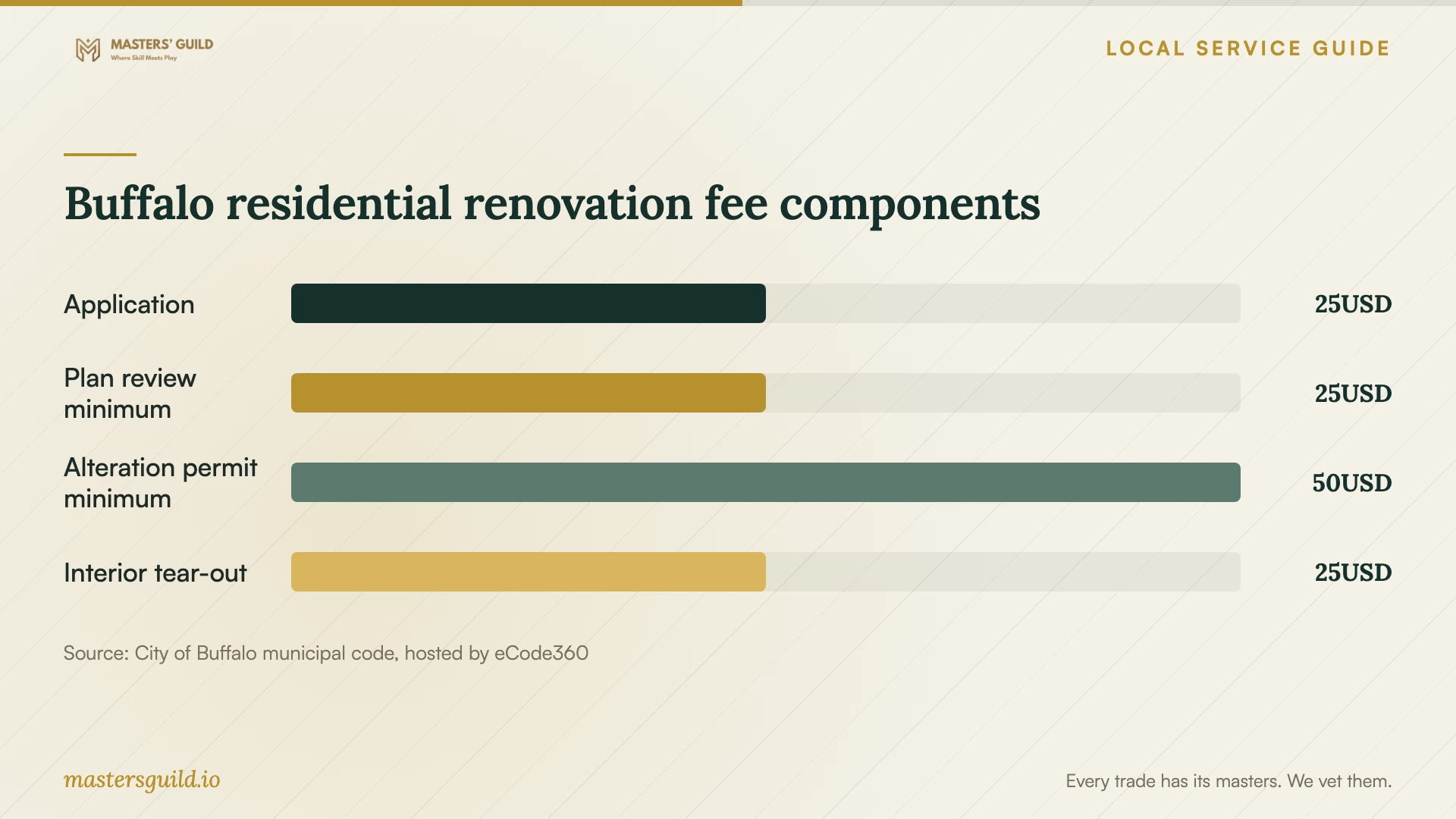
For detached one- and two-family residential alterations and repairs, Buffalo lists a permit charge of $5 per $1,000 of construction cost, with a $50 minimum. The city also lists a $25 application fee and, when plans are required, a plan-review charge of 20% of the permit fee, with a $25 minimum. Confirm applicable charges with the city before setting your permitting allowance. [2]
Agree on approvals, purchases and handover
Request a sequence covering design approval, any required submissions, ordering, delivery and installation. Have the designer identify dates that depend on approvals or supplier availability. Before authorizing orders, review dimensions, finishes, quantities, return terms and the total commitment, including delivery and tax.
For construction, name the person who answers contractor questions and approves changes. Require written approval before substitutions or extra purchases. Keep selections, invoices and unresolved items in a shared record. Arrange a final walkthrough against the agreed scope and assign responsibility for outstanding work.
Buffalo residential renovation fee components
Local details that affect your job
Separate interior work from preservation review
Buffalo exempts building-permit applications for work without exterior effects on a landmark or historic-district property from preservation certificates and Board review. Have the city assess your actual scope if the redesign includes windows or exterior doors. Resolve preservation approval and building-permit questions before ordering those items. [1]
Building classification changes your fee allowance
Buffalo reserves its residential construction fee schedule for detached one- and two-family dwellings. Other buildings fall under its commercial construction schedule. Give the city your address, building type and work description when requesting a fee allowance, including for an apartment renovation. [2]
Match your project to the proposal
| Your project | Help to request | Resolve before signing |
|---|---|---|
| Furniture and finish decisions | Consultation or room plan with named deliverables | Written recommendations, revision limits and purchasing responsibility |
| Room design with ordering | Design and procurement scope | Markups, deliveries, returns and substitution approval |
| Structural or building-system design | Designer with appropriate architectural or engineering support | Who provides work beyond interior-design certification |
| Exterior changes to a landmark or historic-district property | Design coordinated with Buffalo preservation requirements | Property designation and the required preservation certificate |
Your hiring checklist
- Describe the rooms, daily-use problems and furnishings you want to keep.
- Set separate allowances for design, purchases and construction.
- Request matching deliverables, revision limits and exclusions.
- Review credential claims, project examples, references and insurance information.
- Assign responsibility for measurements, professional drawings and approval inquiries.
- Document purchasing markups, tax, delivery charges and return responsibilities.
- Approve selections and changes in writing before committing funds.
Frequently Asked Questions
Must I hire a certified interior designer?
No. Article 161 regulates use of the title certified interior designer; it does not require homeowners to hire someone holding that title. Verify any certification claim. Certification does not authorize architecture or engineering, so identify appropriate professional support for structural or building-system design. [3]
Does an interior project in a historic district need preservation review?
Buffalo exempts building-permit applications for work that does not affect the exterior from preservation certificates and Board review. Covered exterior changes require a certificate. Have the city confirm your proposed scope and address building-permit requirements as a separate matter. [1]
Should my design proposal include sales tax?
Request the applicable tax in writing. New York taxes decorating and design services, with treatment depending on delivery location and contract structure. Contracts combining plans and physical implementation can receive different treatment from advice or plans alone. [4]
Can the city-fee chart estimate my designer's price?
No. It shows selected municipal fee components and minimums for detached one- and two-family residential construction. Request design and purchasing charges in a separate proposal, then confirm which city charges apply to your project. [2]
Sources and scope
This guide combines the sources below with practical planning guidance. Figures apply to the stated geography and period; request a written quote for your property.